
Old School Film & Guerrilla Filmmaking part 2
Splicing, Tape, and Razor Blades

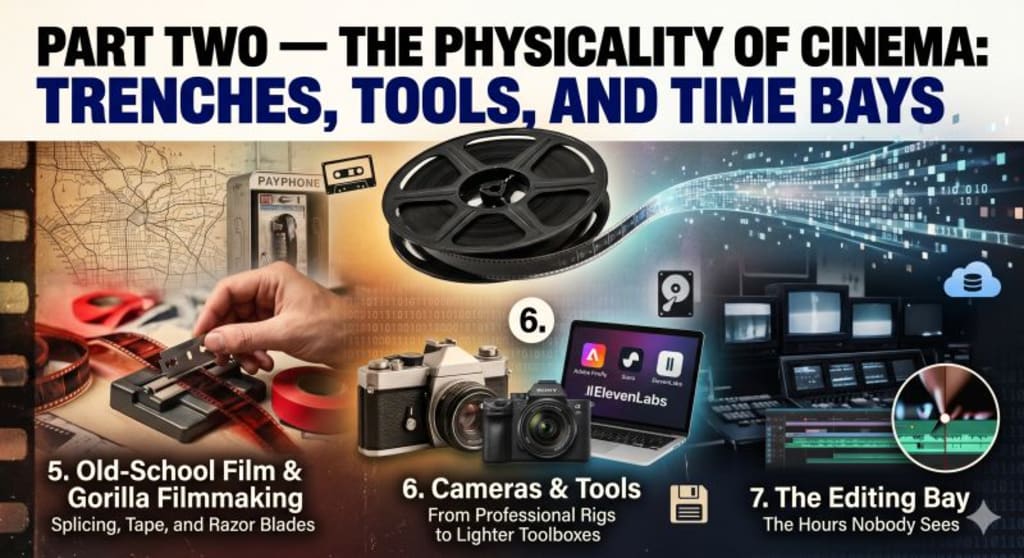
Before digital technology transformed the creative landscape, filmmaking was a fundamentally physical process. Every stage of production required manual skill, mechanical understanding, and a deep respect for the limitations of analog tools. This section examines the historical, technical, and artistic realities of pre digital filmmaking, highlighting how these physical practices shaped both workflow and creative decision making.
Part Two explores three interconnected dimensions:
1. Old School Film & Guerrilla Filmmaking — the hands on techniques of splicing, taping, threading film, and improvising solutions with limited resources.
2. Cameras & Tools — the evolution from heavy, highly specialized equipment to today’s lightweight, accessible digital toolkits.
3. The Editing Bay — the often-invisible labor of post production, where narrative structure, pacing, and emotional impact are engineered frame by frame.
Understanding these foundations is essential for students and creators studying modern media. While today’s tools are faster and more accessible, the core principles of visual storytelling timing, intention, rhythm, and emotional design remain unchanged. The physical challenges of the analog era developed instincts and disciplines that continue to inform contemporary digital workflows.
This section provides historical context, technical insight, and practical perspective on how filmmaking has evolved and how the physicality of the past continues to influence the precision of the present.
Old School Film & Guerrilla Filmmaking: Splicing, Tape, and Razor Blades
In the 1990s, filmmaking in Los Angeles wasn’t a vibe or an aesthetic. It was a full contact sport. A heat drunk, analog, high friction discipline carried out under the relentless Southern California sun.
Old film wasn’t retro. It wasn’t vintage.
It was simply film.
Super 8 was the lifeline of indie kids running through concrete alleys.
Beta Cam SP and SVHS were the industrial beasts of the era.
And nobody had a cell phone.
If a crew member vanished, you didn’t text them you hunted down a payphone outside a liquor store that smelled like hot asphalt, fed quarters into the slot, and prayed someone’s landline picked up.
This was the last decade where filmmaking demanded muscle, mechanical precision, and nerves long before apps, presets, or digital forgiveness softened the edges.
The Physicality of Editing
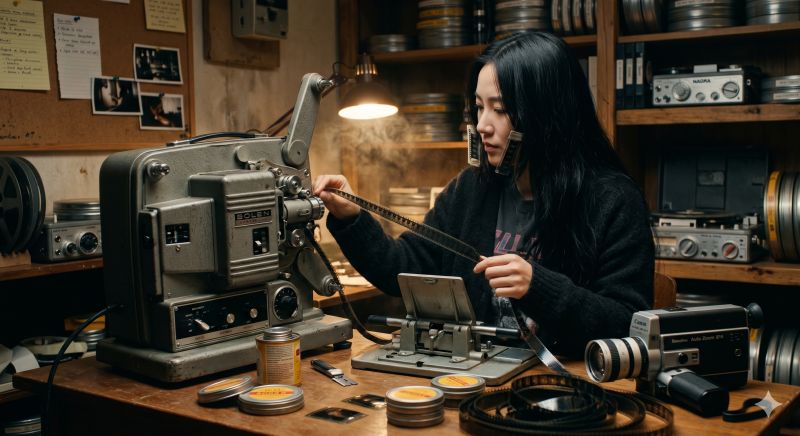
Editing meant touching the film literally putting your fingerprints on the story.
Dual system audio meant your sound lived on one machine and your picture lived on another. Syncing them was a ritual of patience and math: lining up the physical clapper on the film strip with the sharp “snap” on the audio tape. One frame off and your actors looked dubbed, so you unspooled, rewound, and tried again.
Cutting Super 8 by hand meant leaning over a warm viewer light, hunting for the exact frame where the moment breathed. Then came the razor blade, a tiny guillotine that could ruin a day or slice a thumb. You pressed tape onto the splice with perfect pressure, threading reels through metal guides, listening for the sprockets to catch.
And always, the smell that sharp, vinegar chemical scent of acetate that soaked into your clothes and hair.
Editing wasn’t symbolic.
Editing was manual labor.
The Guerrilla Workarounds
Indie filmmaking meant inventing solutions because you couldn’t afford the real ones.
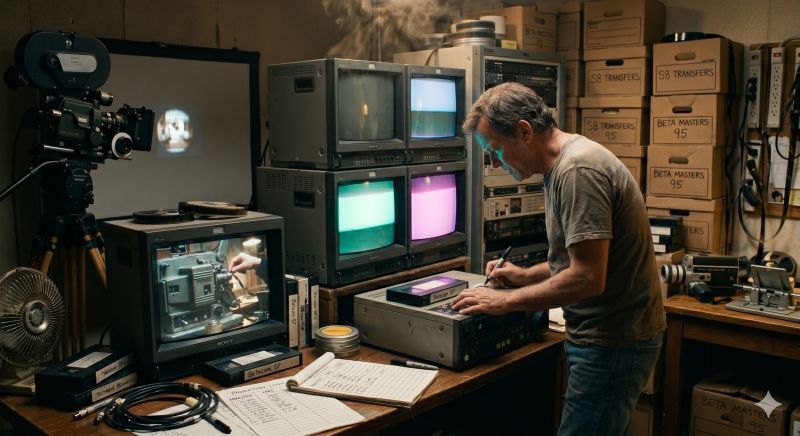
To transfer Super 8 to video, you didn’t use telecine. You projected the film onto a tiny matte screen in a dark room and pointed a studio camera at it, praying the shutter timing didn’t create a strobe nightmare.
On set, Beta Cam rigs bruised your shoulder.
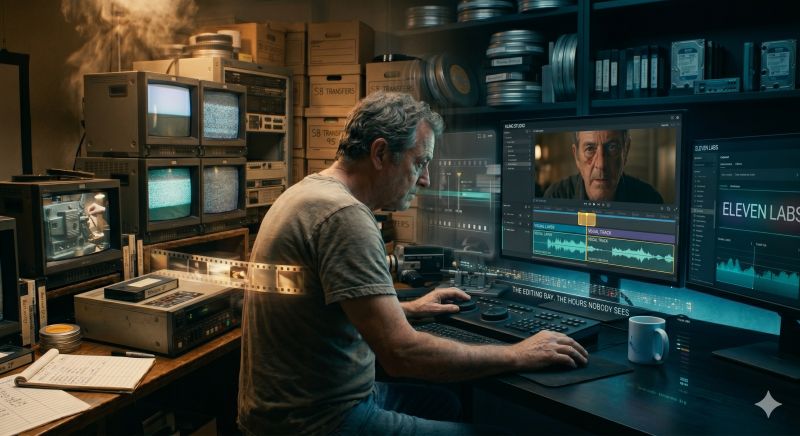
In the editing bay, stacked CRT monitors radiated heat like a furnace.
Tape to tape editing was linear, permanent, and merciless.
One mistake at minute ten meant redoing everything after it.
You logged into the takes by hand.
You labeled tapes with Sharpies.
You stored everything in cardboard boxes because there was no cloud, no backup, no safety net.
This was filmmaking before democratization when creativity required sweat, improvisation, and stubbornness.
The Price Tag of a Mistake
Writers delete sentences.
Filmmakers in the 90s risked losing entire scenes.
A bad splice could shred irreplaceable Super 8 inside a projector.
A misaligned tape to tape edit could overwrite your only copy of a performance.
A Beta Cam dropout a literal flake of magnetic oxide could kill a moment forever.
There was no undo.
There was only commitment.
“Before digital shortcuts existed, editing was a physical workout and a high stakes gamble. We didn’t have an undo button; we had razor blades, tape, and machines that could eat your footage alive.”
Cameras & Tools: From Professional Rigs to Lighter Toolboxes
To understand the liberation of modern creation, you first must understand the intimidation of the old gatekeepers. In the analog era, a professional camera wasn’t just a tool, it was a fortress. A barrier. A test of worthiness.
The Weight of the Machine
A studio 35mm camera or a full-scale professional digital rig was a massive, temperamental beast, a cold architecture of steel, glass, gears, and mechanical secrets. These machines weren’t designed for accessibility; they were designed to keep amateurs out.
They were heavy enough to bruise your shoulder.
Expensive enough to bankrupt you.
Complicated enough to require a crew just to breathe near them.
If you wanted the cinematic look, you didn’t just “pick up a camera.”
You rented gear that cost more than a house.
You bought insurance policies that made your stomach drop.
You hauled cases that sagged the suspension of your car.
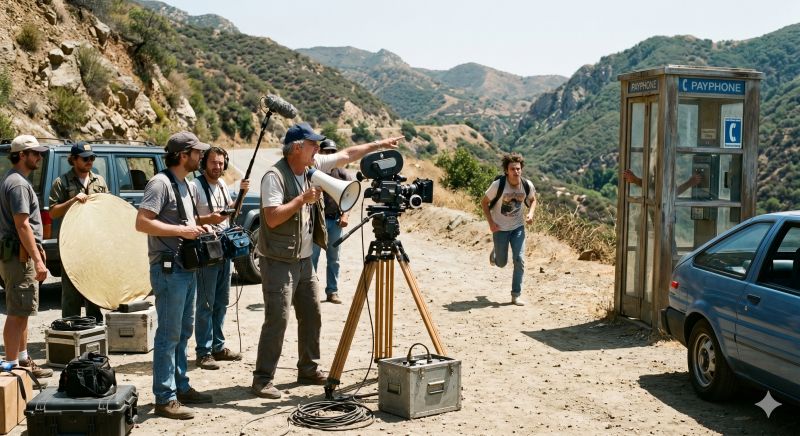
Even loading a film magazine was a ritual of precision one wrong move and you fogged the stock, destroying hundreds of dollars in a single breath. The physical weight of the machine dictated the weight of your storytelling. Every movement had to be planned, budgeted, and sweated over.
The Modern Shift
And then the world tilted.
The metal began to melt away.
The gatekeepers lost their grip.
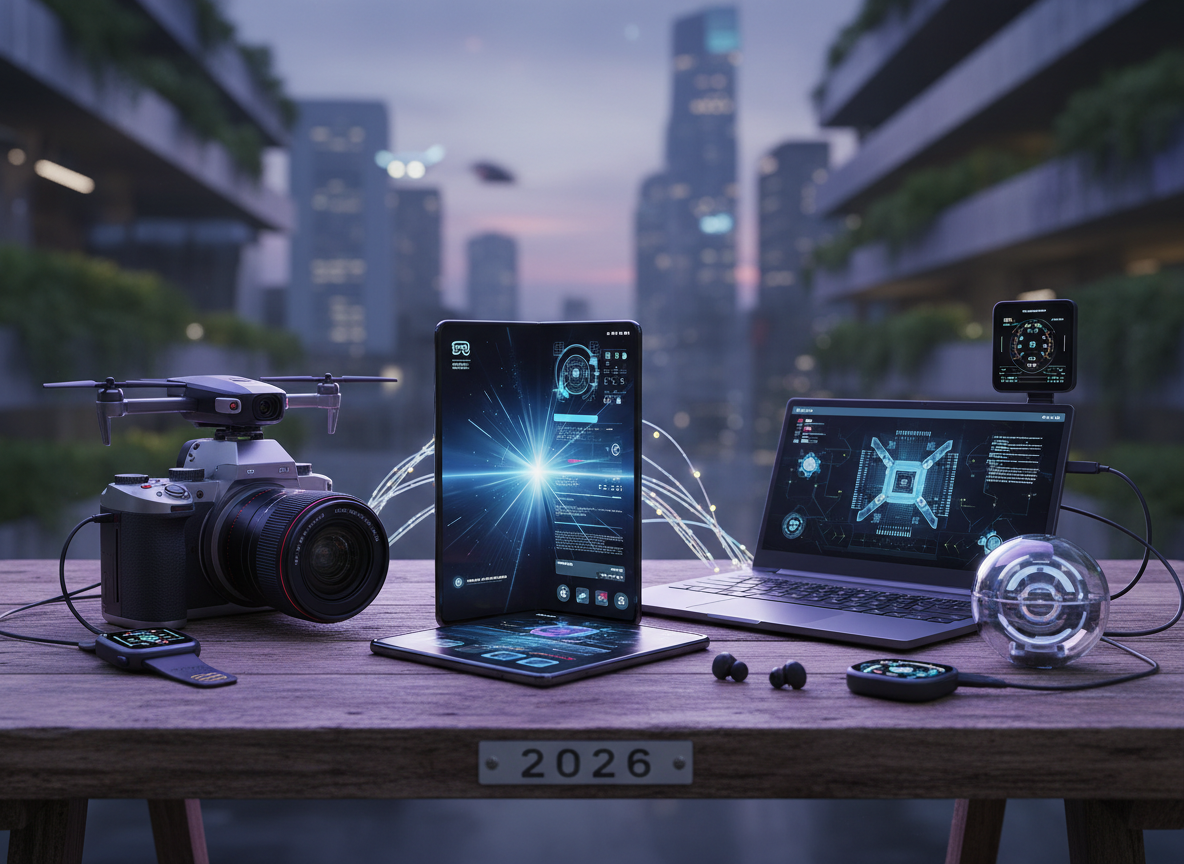
DSLRs put cinema-grade sensors into bodies you could hold in one hand.
Mobile filmmaking proved that a pocket device could capture a feature film.
And then the real revolution arrived when the tools left the physical world entirely.
Today, my entire production studio lives inside my computer, Sonji Rosa.
When I need atmosphere, I don’t wait for a six-hour lighting set up under a burning sun.
I collaborate with Adobe Firefly and Gemini, sculpting worlds frame by frame.
When a scene needs a haunting baritone or a whisper-soft narration, I don’t book a studio.
I open Eleven Labs and engineer the exact voice the story demands.
When the editing needs a bluesy midnight riff or a 1970s rock pulse, I don’t hire a band.
I compose original music in Suno, tuned to the emotional frequency of the cut.
My grip truck is gone.
My crew of ten is gone.
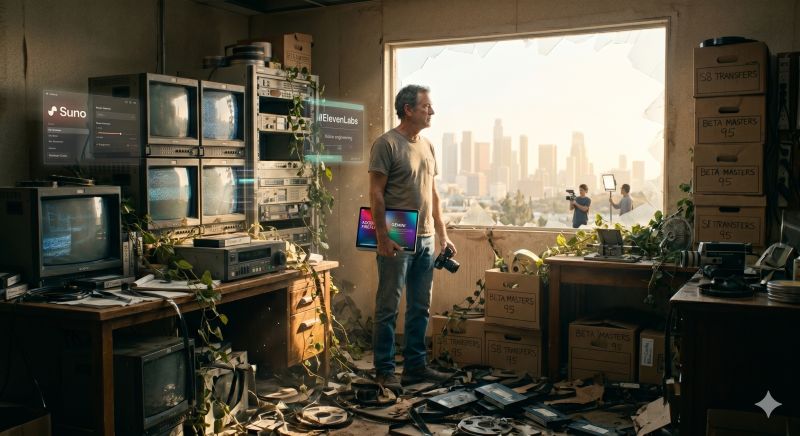
My vault of fragile film stock is gone.
What remains is the vision and the freedom to execute it without physical chains.
The Illusion of the Button
There’s a lazy critique floating around the culture that claims modern tools make art “automatic.” People who have never sweated through a 12-hour shoot or sliced their thumb on a Super 8 splice look at generative software and assume creativity is now effortless.
They think pressing a button is all it takes.
They couldn’t be more wrong.
The software doesn’t have a vision.
The prompt box doesn’t understand heartbreak.
No algorithm knows the way evening light hits an alley in Los Angeles.
If you don’t have storytelling in your bones, the most advanced AI in the world will only help you make garbage faster.
The tools became weightless
but the gravity of the storytelling stayed the same.
AI didn’t give me talent.
It just gave me a lighter toolbox.
The Editing Bay: The Hours Nobody Sees
The editing bay is where the romantic illusion of filmmaking goes to die and where actual art is born. It doesn’t matter if you’re sweating in a cramped 1990s room surrounded by hot tape decks or sitting today in a quiet space lit only by the glow of a monitor. The editing bay is a sanctuary, a prison, and an invisible endurance test. It is the place where the final pulse of the story is engineered.
The Invisible Labor
People see the finished film the seamless river of images and sound but they never see the dam that held it all back. They don’t see the hundreds, sometimes thousands, of hours spent alone in the dark, wrestling with raw material that refuses to behave.
Editing is a brutal, microscopic game of decisions.
It’s matching continuity so a character’s hand lands in the exact same position from shot to shot.
It’s trimming two frames from the end of a clip because a pause lasted a fraction of a second too long and killed the tension.
It’s sculpting a performance out of thin air a line from take three, a glance from take five, a silence from take one stitched together so flawlessly the audience believes it happened in a single breath.
You sit there until your eyes are bloodshot and your coffee has gone cold, staring at the same three seconds of footage fifty times in a row, waiting for the cut to land with the right emotional weight.
It is lonely, grueling, anonymous labor.
If you do your job perfectly, the audience will never notice a single thing you did.
The Counter Argument to Flat Writing
This is why it’s maddening when prose writers skim or casually judge a complex multimedia piece. They look at a digital video or an audio visual narrative and treat it like it’s lightweight as if modern tools made it effortless.
They don’t understand that a filmmaker isn’t stringing words together.
We are constructing an entire psychological reality, frame by frame.
A prose writer controls the words, but the reader controls the pacing. They can skim, skip, or speed through a paragraph.
In cinema, the editor controls time.
We decide when the viewer breathes.
We engineer the exact millisecond a music cue drops to break their heart.
We manipulate shadows, vocal cadences, textures, and frequencies to bypass the analytical brain and strike directly at the nervous system.
To skim a multimedia piece and judge it like an essay is to miss the symphonic architecture behind it.
It isn’t flat writing.
It is lived experience.
The Heartbeat of the Piece
Ultimately, the editing bay is where my 1990s Los Angeles grit and my modern digital vision finally shake hands.
The platforms have changed, but the instinct hasn’t shifted an inch.
When I’m adjusting a visual layer in Kling Studio or aligning a haunting vocal track from Eleven Labs, I’m using the same muscles I built thirty years ago sweating over a tape to tape deck, holding a razor blade under a tiny viewer light, syncing audio by hand.
The digital workspace hasn’t made me lazy.
It has made me a surgeon.
It lets me apply that old school guerrilla ingenuity with a level of precision we could only dream about in the 90s.
Every piece of art I release today is anchored by that history.
The tools are weightless now, but the stamina required to sit in the dark and engineer an experience frame by frame remains unchanged.
“You don’t look at a film; you live through it. And every second of that experience was bought with hours of invisible engineering in the editing bay.”
Vicki Lawana Trusselli is a filmmaker/author, who learned her craft in the analog trenches of 1990s Los Angeles splicing Super 8 by hand, wrestling Beta Cam rigs, and cutting tape in overheated editing bays. Today she creates multimedia narratives using modern digital tools, blending old-school discipline with new-school innovation. She writes to preserve the physical history of filmmaking for the next generation.
About the Creator
Vicki Lawana Trusselli
I am 76 year old California mythic storyteller blending lived truth, technology, and sovereign survival into multimedia art.
Enjoyed the story? Support the Creator.
Subscribe for free to receive all their stories in your feed. You could also become a paid subscriber, letting them know you appreciate their work.
Comments
There are no comments for this story
Be the first to respond and start the conversation.