
.Net Development Guide 2023: Everything For Beginners
.Net Development Guide

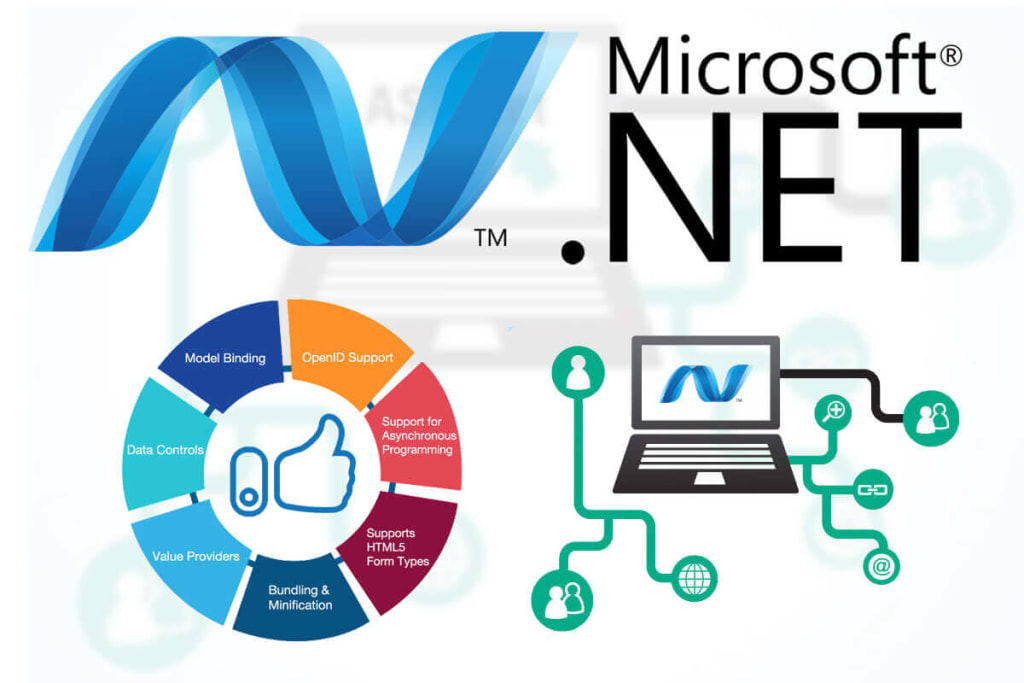
.NET is a widely used software framework developed by Microsoft for building and running various applications. In this guide, we will cover the basics of .NET, its implementation, architecture, programming languages, runtime, application model frameworks, and how AWS can be used by .NET developers. Whether you are a beginner or an experienced developer, this guide will provide valuable insights into the world of .NET and help you understand its key concepts and components. So, let's dive in and explore the exciting world of .NET!
What Is .NET?
.NET is a software development framework developed by Microsoft. It provides a programming platform for building Windows applications, web applications, and other types of software. The framework consists of a large library of pre-written code, as well as a virtual machine called the Common Language Runtime (CLR), which manages the execution of the code. Developers can write code in several programming languages, including C#, Visual Basic, and F#. .NET also includes tools for creating and managing databases, as well as for developing and consuming web services. It is widely used by developers and businesses for building enterprise-level applications and software systems.
What is .NET Development Services?
.NET Development Services refer to the range of services offered by software development companies or professionals that specialize in developing applications and solutions using the .NET framework. These services can include web application development, desktop application development, mobile app development, software integration, database management, cloud-based solutions, and more, all utilizing the .NET technology stack. .NET Development Services help businesses leverage the capabilities of the .NET framework to create robust, scalable, and secure software solutions tailored to their specific needs.
What is a .NET implementation?
The .NET platform is a software framework that enables developers to create a variety of applications. However, the .NET framework itself is just a specification, and it needs an implementation to actually be used for development.
A .NET implementation is essentially a software implementation of the .NET framework specification. It provides the necessary components to execute .NET applications, such as the Common Language Runtime (CLR), class libraries, and other tools.
There are several .NET implementations available, including:
Microsoft .NET Framework: This is the original implementation of the .NET framework, developed by Microsoft. It is widely used for developing Windows desktop applications and web applications using ASP.NET.
.NET Core: This is a newer, open-source implementation of the .NET framework developed by Microsoft. It is designed to be more lightweight and modular than the original .NET Framework, and it can be used to develop applications for a variety of platforms, including Windows, Linux, and macOS.
Mono: This is an open-source implementation of the .NET framework that was developed by Xamarin (now owned by Microsoft). It is designed to enable .NET development on a variety of platforms, including Linux, macOS, and mobile platforms like Android and iOS.
.NET Standard: This is a specification that defines a set of APIs that should be available on any .NET implementation. It is designed to make it easier to create libraries that can be used across multiple .NET implementations.
Why choose .NET?
There are several reasons why one might choose to use the .NET framework for software development:
Cross-platform development: .NET provides the ability to create applications that can run on different operating systems, including Windows, Linux, and macOS. This makes it easier to develop and deploy software across multiple platforms.
Large community and support: .NET has a large community of developers and users who contribute to its development and provide support through forums, documentation, and other resources. This means that developers can find help and guidance when needed, and stay up-to-date with the latest advancements in the framework.
Security: .NET provides several security features, including code access security, role-based security, and encryption. This helps to protect against common security threats and vulnerabilities.
Performance: .NET is known for its high performance and scalability, which makes it well-suited for developing complex and high-performance applications.
Versatility: .NET can be used to develop a wide range of applications, including web applications, desktop applications, mobile applications, gaming applications, and more. This versatility allows developers to choose the right tool for the job and create applications that meet their specific needs.
Integration with other Microsoft technologies: .NET is closely integrated with other Microsoft technologies, including Visual Studio, SQL Server, and Azure. This integration makes it easier to develop, deploy, and manage applications that use these technologies.
What are the components of .NET architecture?
The .NET architecture is composed of several key components that work together to provide a framework for developing and running applications. These components include:
Common Language Runtime (CLR): The CLR is the runtime environment that manages the execution of .NET applications. It provides services such as memory management, security, and exception handling.
Class Library: The .NET Class Library is a collection of reusable code that developers can use to build applications. It provides a wide range of functionality, including file I/O, network communication, and user interface controls.
Common Type System (CTS): The CTS defines a set of rules that all .NET languages must follow to ensure that objects created in one language can be used in another.
Common Language Specification (CLS): The CLS is a set of guidelines that .NET languages must follow to ensure that code written in one language can be used by other .NET languages.
Just-In-Time (JIT) compiler: The JIT compiler is responsible for compiling .NET code into machine code that can be executed by the computer's processor.
Garbage Collector: The Garbage Collector is responsible for managing the memory used by .NET applications. It automatically frees up memory that is no longer being used by an application.
Integrated Development Environment (IDE): Microsoft provides a powerful IDE called Visual Studio that developers can use to build .NET applications. The IDE provides tools for debugging, testing, and deploying .NET applications.
These components work together to provide a powerful and flexible framework for developing and running applications on the .NET platform.
What are .NET programming languages?
.NET is a versatile and widely-used software development platform that supports several programming languages. Some of the most popular programming languages used with .NET are:
1. C#
C# (pronounced "C sharp") is a modern, object-oriented programming language developed by Microsoft. It is designed to be simple, powerful, and expressive, with features that make it easy to write efficient and reliable code. C# is a popular choice for developing Windows desktop applications, games, and enterprise applications.
2. Visual Basic .NET
Visual Basic .NET, or VB.NET, is a programming language that is part of the .NET framework. It is an evolution of the original Visual Basic language, with added features and support for modern programming concepts such as object-oriented programming. VB.NET is a popular choice for developing Windows desktop applications and enterprise applications.
3. F#
F# is a functional programming language that is part of the .NET framework. It is designed to be a simple and efficient language that allows developers to write concise and expressive code. F# supports both object-oriented and functional programming paradigms, making it a versatile language for developing a wide range of applications.
4. C++/CLI
C++/CLI is a programming language that combines the power and flexibility of C++ with the features and benefits of the .NET framework. It allows developers to write native code in C++, while still being able to take advantage of the .NET framework's libraries and services. C++/CLI is often used for developing high-performance applications and games.
5. IronPython
IronPython is a programming language that allows developers to use the Python language with the .NET framework. It is a popular choice for developing applications that require a combination of Python's ease of use and the performance and capabilities of the .NET framework.
6. IronRuby
IronRuby is a programming language that allows developers to use the Ruby language with the .NET framework. It is a popular choice for developing web applications and other applications that require dynamic programming features.
Each of these programming languages has its own strengths and weaknesses, and the choice of language will depend on the specific needs of the project. However, all of these languages share the common benefit of being able to take advantage of the powerful and flexible features of the .NET framework.
What is .NET runtime?
.NET runtime is a core component of the .NET framework responsible for executing compiled .NET code. It provides a common language runtime (CLR) that is responsible for managing the execution of the .NET applications and ensuring that they have access to the resources they need. The CLR is responsible for loading and executing the .NET code, providing memory management, security, and exception handling features.
The .NET runtime consists of the following components:
Common Language Runtime (CLR): This is the heart of the .NET runtime. It provides a managed execution environment that ensures that the .NET code is executed securely and efficiently.
Just-in-Time (JIT) Compiler: The JIT compiler is responsible for converting the intermediate language code generated by the compiler into native machine code that can be executed by the computer's processor.
Garbage Collector: The garbage collector is responsible for managing the memory used by .NET applications. It automatically frees up memory that is no longer needed by the application, ensuring that the application runs smoothly without running out of memory.
Base Class Library (BCL): The BCL is a set of pre-built classes and functions that provide a wide range of functionality to .NET applications. It includes classes for working with strings, arrays, collections, file I/O, network communication, and more.
What are .NET application model frameworks?
The .NET application model frameworks are a set of libraries and tools that are designed to provide a higher level of abstraction for building applications on top of the .NET platform. These frameworks make it easier for developers to build complex and scalable applications, as they provide pre-built modules for common tasks such as data access, authentication, and web development.
Some of the popular .NET application model frameworks are:
1. ASP.NET:
ASP.NET is a web application framework used to build dynamic web applications and services. It provides developers with the ability to create web pages, services, and APIs using a wide range of programming languages, including C#, Visual Basic, and F#. ASP.NET is built on top of the .NET framework and includes features such as built-in security, data access, and web page templates.
2. Windows Communication Foundation (WCF):
WCF is a framework for building distributed applications that communicate over a network. It allows developers to create services that can be accessed by different applications running on different platforms, using different communication protocols. WCF provides support for messaging, data transfer, and security.
3. Windows Presentation Foundation (WPF):
WPF is a framework for building desktop applications that provide rich user interfaces. It enables developers to create visually stunning user interfaces using a wide range of features, such as 3D graphics, animations, and multimedia. WPF applications can be built using a variety of programming languages, including C# and Visual Basic.
4. Entity Framework (EF):
EF is a framework for building data access layers in .NET applications. It provides a set of tools and libraries that allow developers to interact with databases using a high-level, object-oriented API. EF supports a wide range of database platforms and provides support for features such as database migration and object-relational mapping.
5. Windows Workflow Foundation (WF):
WF is a framework for building workflows in .NET applications. It allows developers to create complex workflows by defining a set of activities that can be executed in a specific order. WF provides support for features such as branching, looping, and exception handling.
How can AWS help .NET developers?
AWS, or Amazon Web Services, provides a wide range of cloud-based services and tools that can greatly benefit .NET developers. Here are some ways in which AWS can help .NET developers:
Hosting .NET applications: AWS provides a range of compute services, such as EC2, Elastic Beanstalk, and Lambda, that allow .NET developers to easily deploy and run their applications in the cloud.
Scalability: AWS allows .NET developers to scale their applications quickly and easily, without having to worry about infrastructure management. Services such as Amazon SQS, Amazon SNS, and Amazon Kinesis allow for easy scaling of messaging and streaming applications.
Database services: AWS provides a range of database services that integrate with .NET applications, including Amazon RDS for SQL Server, Amazon DynamoDB, and Amazon ElastiCache. These services provide scalable and highly available databases for .NET applications.
Security and compliance: AWS provides a range of security and compliance services, such as AWS Identity and Access Management (IAM), AWS Certificate Manager, and AWS Key Management Service (KMS), which help .NET developers to build secure and compliant applications in the cloud.
DevOps tools: AWS provides a range of DevOps tools, such as AWS CodeCommit, AWS CodeBuild, and AWS CodePipeline, which enable .NET developers to automate the building, testing, and deployment of their applications.
Analytics and monitoring: AWS provides a range of analytics and monitoring services, such as Amazon CloudWatch, AWS X-Ray, and AWS AppInsights, which allow .NET developers to monitor and analyze their applications and infrastructure in real-time.
Conclusion
.NET is a powerful and versatile platform that offers a wide range of benefits for developers, including access to a variety of programming languages, efficient runtime execution, and a robust set of application frameworks. With the help of AWS services, .NET developers can take advantage of the cloud to improve scalability, reduce infrastructure costs, and streamline their development process. By leveraging the capabilities of both .NET and AWS, developers can build innovative and high-performance applications that meet the evolving needs of today's businesses and users.
About the Creator
Clickysoft
ClickySoft: Your one-stop for expert web development & web design Dallas services. We excel in .NET development services & Shopify, delivering stunning websites that elevate your online presence. Let's make your digital dreams a reality!
Enjoyed the story? Support the Creator.
Subscribe for free to receive all their stories in your feed.
Comments
There are no comments for this story
Be the first to respond and start the conversation.