
Navigating Pakistan’s Economic Crisis: The Role of Structural Reforms
Arooj Fatima
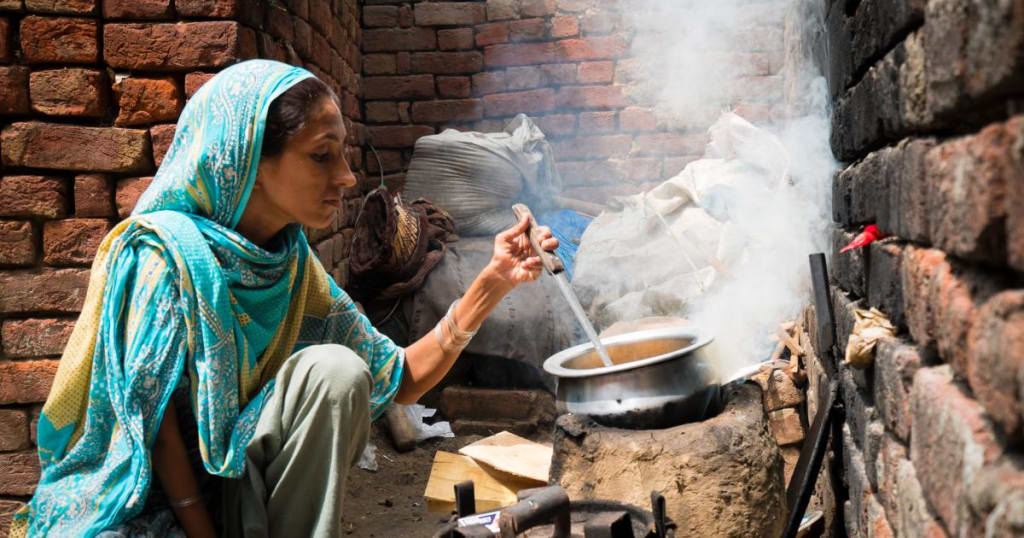
Pakistan's economy is in the doldrums , with up to 2 million citizens losing their jobs since last year. Experts are warning that this is the worst cost-of-living period the country has experienced since its inception, plunging it into a crisis that cuts across social, political, health, and security sectors. Week-on-week inflation measured by Sensitive Price Indicator (SPI) is recorded at 41.54% reported Dawn, while stagflation, and food inflation followed suit. Foreign reserves have also plummeted to a mere US$3.09 billion. Likewise, the country’s economic discomfort index, which is calculated by combining unemployment and inflation rates, stood at 19.7% as of March 2022 but has since nearly doubled to 36.7% in January 2023. Additionally, currency devaluation, skyrocketing fuel and gas prices, and a trade deficit of US$50 billion due to exports worth only US$30 billion against imports of US$80.02 billion during the fiscal year 2021/2022, are all factors contributing to this unparalleled economic crisis since 1971.
Pakistan is at verge of an economic default and even the International Monetary Fund (IMF) bailout looks unlikely to fix country’s economic woes which are worsened by worsening political and security crises. The current state of affairs in Pakistan is indeed a cause for great concern, as no resolution to the ongoing crisis appears to be on the horizon, with the situation only expected to worsen. Pakistan has always imported petroleum products and NGL but now the country’s import bill also consists of raw cotton, and wheat as well. This means the situation has gone from bad to worse now that affording food has gone out of hands of the poor with food imports making a significant portion of Pakistan’s import bill. Despite being an agricultural country, food imports including wheat, palm oil, and soybean oil, went up by 64.45% in July and August 2022, data issued by the Pakistan Bureau of Statistics. Pakistan has imported wheat worth Rs68.49 billion in 2022, while the wheat import bill for July and August 2021 was only Rs2.70 billion.
In retrospect, the roots of Pakistan’s economic deterioration involve many structural malfunctions. However, the menace of elite capture tops the list. According to UNDP's Pakistan National Human Development Report 2020, the Pakistani elite consumes US$17.4 billion of the country’s economy, equivalent to 6% of the total economy. The country’s class gap is so intense that, Khawaja Asif, the Defense Minister, has highlighted that more than 200 golf courses, which are reserved for a privileged few, have been constructed on government lands. He suggested that if these lands were reclaimed and auctioned off, Pakistan could repay a significant portion of its foreign debts. These rich mafias dominate the politics and control the economy at the expense of public welfare and country’s progress, they avoid structural reforms that could end their capital realm.
The legacy of elite capture in Pakistan can be traced back to the nation's very inception, as evidenced by Dr. Mahbub-ul-Haq's seminal observation in 1968 that a mere 22 families possessed 66% of the country's industrial assets, 70% of its insurance, and 80% of its banking. While the identities of these oligarchs may have shifted over time, the number and extent of their holdings have remained stubbornly static, serving as a damning indictment of the inequitable distribution of wealth and power in the country. As the economist Daron Acemoglu and political scientist James A. Robinson noted in their work "Why Nations Fail," a nation's poverty is inextricably linked to the rule of a narrow elite that has systematically organized society to their exclusive advantage at the expense of the vast majority of citizens. Unfortunately, this is precisely the case in Pakistan, where the absence of inclusive political and economic institutions has perpetuated elite capture and deprived masses of equal opportunities and access to essential services.
The disparity between the haves and have-nots in Pakistan is distressing, with the wealthiest 1% comprises a coterie of feudal lords, industrialists, parliamentarians, judges, and civil and military bureaucracy collectively owning a staggering 9% of the country's overall income. To make matters worse, these privileged few escape the tax net, placing an unfair burden on the salaried class, who make up the bulk of the meager 3.5 million registered tax filers out of a population of 200 million. It is a clear indictment of Pakistan's flawed tax system that caters to the wealthy at the expense of the rest of the population.
The 2020 NHDR Report paints a bleak picture, with the middle class shrinking to a paltry 37% of the total population, down from 42% a decade earlier, due to rising inflation because of unfair taxes and unemployment. It is imperative to end this elite capture of the country by addressing the widening income inequality gap and implementing a fairer, more equitable tax system.
Giving economy the highest priority, Imran Khan’s govt drafted the National security policy (2022-2026), the document which channeled Pakistan pivoted from geo-strategy to geo-economy to achieve economic security. However, the question that lingers is whether the government showed the necessary political will to translate these aspirations into reality. The shift to geo-economic was taken more seriously when the former army chief General (R) Qamar Javed Bajwa explained national security in terms of regional integration, and economic connectivity. His speech was welcomed in India too, Indian Premier Narendra Modi was also interested to visit Pakistan in April 2021. Following suit, the Commerce Ministry put out plans to resume, albeit selectively, trade with India. However, within two days, a Khan-presided cabinet meeting annulled the ministry’s decision. Khan sacrificed his mission geo-economic for political scoring and to polish his war of narratives.
Another problem is of incompetence, as the country runs on patronage politics therefore usually incompetent individuals get the most important ministries, with little regard for meritocracy. Such as former Aviation Minister Ghulam Sarwar Khan’s ignorant remarks in the National Assembly about a third of Pakistani pilots having fake licenses led to the International ban of the Pakistan International Airlines (PIA) and PIA operations got suspended all over Europe. Former Punjab Chief Minister Usman Buzdar ineptitude resulted in many scandals; the Rawalpindi Ring Road Scandal—a scheme of corruption, and the multi-billion-rupee sugar scam evinced that pittance performance accompanied with corruption is order of the day under such inept ministers which are imposed through client-patron relationships.
To elevate Pakistan's economy, a fundamental paradigm shift to end the culture of political dynasty making is requisite. The elite-dominated economy of Pakistan is not transitioning to a globalized high finance economy because it feeds on the Pakistani state through subsidies. An open and rule-based economy that lifts up the middle class in order to stir competition in higher ranks is the need of the hour.
To improve the economy, the notion of merging Pakistan’s Ministry of Foreign Affairs and Commerce can be one solution. For example, by doing so Pakistan’s business community will be jazzed not only for sustainable market trading but a culture of international branding among the private sector will also flourish. On the one end, merging the two ministries will correct the new anomaly in Pakistan's economy, where private investors have begun to prioritize real estate over other sectors, resulting in the colonizing of the country to a greater extent than during British rule. Bad private investments are equally responsible as bad fiscal and monetary policies for the creation of the capital deadlock, exacerbating the social class divide. However, on the other end, the million-dollar question is what will the ministry of commerce export to International markets?
Pakistan’s economy is driven by consumption, and when it comes to exports the textile industry is often the sole sector that comes to mind, albeit one that generates limited profits. However, due to anti-industry macro-economic policies of government there have been a significant decline in textile industry, resulting in a drop of exports. Unfavorable business conditions have led to many industries curtailing their production. Under such conditions, and bearing the torch of geo-economics in hand we are only left with the option to export donkeys.
The way forward?
The political reality cannot be detached from the economy, more than a charter of economy Pakistan needs a consensus of her economists—the Dar Disaster could have been avoided if Miftah Ismail was given longer to serve. Free market economy? Import substitute Industry? Subsidies for poor not for rich? And much more has been authored till I write these lines to make the economy work. But all this points back to the elephant in the room; political will. With No consensual political will, inclusive political and economic institutions, tax reforms, and an end to patronage politics Pakistan will keep on going the road of free fall.
About the Creator
Arooj Fatima
Student of International Relations, who is a published writer as well.
Enjoyed the story? Support the Creator.
Subscribe for free to receive all their stories in your feed.
Comments
There are no comments for this story
Be the first to respond and start the conversation.