
Navigating Languages for Android App Development
Choosing the Right Language to Elevate Your Android App Development Journey

85% of shoppers prefer mobile apps over mobile websites, which shows the exponential rise in the demand for mobile applications for any business. And 85% is a big number when considering the online shopping community.
Developing a mobile app is a challenging task to complete. Especially in Android app development, numerous factors are involved, like features, functionality, and programming languages.
Selecting a programming language is also challenging. Every language has a unique set of features and abilities, and development should align with these. This selection can even help in the rapid development of the app.
What Are the 4 Components of an Android App?
An Android app comprises of various components, but 4 among them are majorly considered during the development phase. Here are some of them:
Activities
The single-screen user interface that acts as an entry point for users to interact with an app is called the activity. Independent activities create a cohesive user experience and facilitate critical interactions between the system and the app.
Services
Services act as a general-purpose entry point for keeping an app running in the background while another application is in use or the user is not actively navigating the device. An example of a service is music playing in the background while a user is in another app.
Content Providers
A content provider manages shared sets of data that can be stored in the file system and later accessed by an app. Content providers allow approved apps to query or modify data.
Broadcast Receivers
A broadcast receiver allows the system to deliver events to an app outside its regular user flow, such as system-wide broadcast announcements. An example is an app scheduling an alarm that notifies the user of an upcoming event.
Why It is Important to Choose the Correct Language for Android App Development?
Choosing the ideal programming language is essential when building apps for multiple reasons. Think about it: your developer's productivity, app's maintainability, scalability, functionality, and performance are significantly influenced by the language you choose. Following are some apt justifications for selecting the ideal one:
Performance Optimization
For an app to succeed, it must work at its pinnacle. The ideal language allows your development teams to benefit from features that optimize performance, including low-level memory management.
Adaptability to Project Needs
The right language is the one that fits your app's specific requirements. You can improve efficiency and code readability by choosing the language that aligns with your project's main objective.
Developer Productivity
The best programming languages for Android app development should have an extensive library, a short structure, and a large supportive community that can help accelerate the development process.
A Comparative Analysis of Languages
Kotlin
Kotlin’s meteoric rise is no exception. As we venture into 2024, Kotlin cements its status as one of the foremost Android app development languages, garnering widespread adoption across various industries and use cases.
Kotlin has enjoyed a steady ascent fueled by its concise syntax, seamless integration with Java, and robust tooling support.
After Google endorsed it as the official programming language for Android app development in 2017. This pivotal backing from Google turbocharged Kotlin’s adoption among Android developers, leading to a surge in its usage and community backing.
Pros
Here at Designveloper, we’ve harnessed Kotlin’s contemporary features, such as null safety, extension functions, and coroutines, in our endeavors, propelling its integration in corporate and open-source projects. Our team has found Kotlin to offer numerous advantages, including enhanced code readability, reduced verbosity, a concise array of libraries, seamless refactoring, and expedited compilation times.
Cons
Nevertheless, like any technological tool, Kotlin isn’t without its challenges. Debugging in Kotlin may pose complexities, and compatibility issues with older Android versions and development tools have surfaced. Some users have also cited a lack of comprehensive documentation for certain features.
Java
Java is a versatile general-purpose programming language with minimal implementation dependencies. This makes it adaptable across diverse mobile application development platforms. Its compatibility with any operating system equipped with a virtual machine underscores its ubiquity.
As a premier web and software development firm based in Vietnam, Designveloper acknowledges Java’s pivotal role in Android app development. Its simplicity, widespread adoption, and wealth of learning materials make it ideal for novices and seasoned developers.
Learning and coding Java can be overwhelming, but it is considered better than Kotlin in modern times. Also, there are tons of resources online to get ‘help with Java coding.‘ With intuitive learning, you can excel in Java programming.
Cheaper Java Hosting will reduce developers' costs and foster innovation, competitiveness, and community growth within the Android app development landscape by 2024.
Pros
Selecting Java hosting proves cost-effective compared to other solutions. With budget-friendly hosting plans, harnessing Java’s prowess for your website or application is within reach. Whether a novice or seasoned developer, Java hosting guarantees scalability, reliability, and affordability.
Cons
Mastering Java programming presents challenges, but proficiency is attainable with the right resources and approach. An array of online tools and tutorials exists to facilitate Java proficiency.
C++
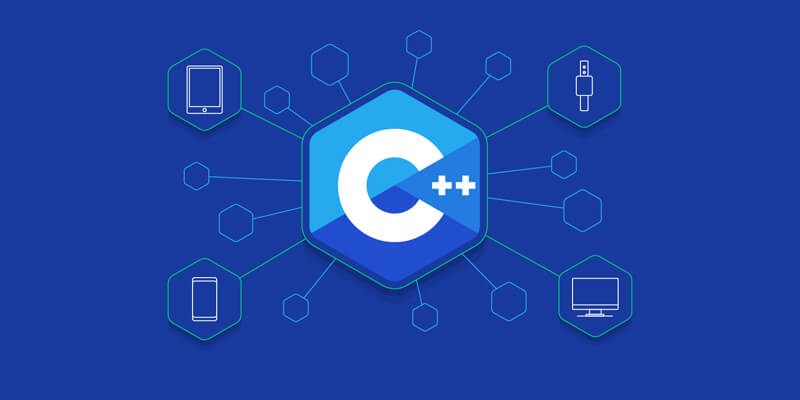
C++ retains its formidable presence within the Android app development domain. Recent statistics affirm Android’s global dominance as the most prevalent operating system, boasting over three billion active users spanning across 190 countries. This extensive Android user base presents a lucrative market for app developers, with C++ standing out as a potent language to harness this potential.
Pros
One of the prime advantages of employing C++ in Android app development is its performance efficiency. C++ empowers developers to craft high-performance apps, making it an optimal choice for game development or any application where performance is a pivotal criterion.
Furthermore, Android Studio, the designated Integrated Development Environment (IDE) for Android app creation, extends support to C++. This means developers can integrate C++ seamlessly with the Android Native Development Kit (NDK) within Android Studio. For instance, computationally intensive tasks like audio, video, and graphics processing can leverage C++ for enhanced performance.
Cons
Nevertheless, it’s imperative to acknowledge that while C++ finds utility in Android app development, it may not universally emerge as the optimal selection for every project. Alternative languages such as Kotlin and Java typically offer greater ease of use and robust support for Android APIs. Hence, the decision to opt for C++ or another language hinges upon the specific requisites and constraints of the project.
While C++ may not inherently leap to mind in the context of Android app development, its relevance is undeniable. Whether crafting a resource-intensive game or a native application demanding optimal device performance, C++ merits consideration as a formidable language choice.
C#
C# is a formidable asset within the Android app development sphere. Recent statistics affirm Android’s global dominance as the most prevalent operating system, boasting over three billion active users across 190 countries. This extensive Android user base presents a lucrative market for app developers, with C# emerging as a potent language to leverage this potential.
Pros
A pivotal advantage of employing C# in Android app development lies in its performance efficiency. C# empowers developers to craft high-performance apps, making it an optimal choice for endeavors such as game development or any application where performance is a pivotal criterion.
Furthermore, Android Studio, the designated Integrated Development Environment (IDE) for Android app creation, extends support to C#. This means developers can seamlessly integrate C# with the Android Native Development Kit (NDK) within Android Studio. For instance, computationally intensive tasks like audio, video, and graphics processing can leverage C# for enhanced performance.
Cons
Nevertheless, it’s imperative to acknowledge that while C# finds utility in Android app development, it may not universally emerge as the optimal selection for every project.
Alternative languages such as Kotlin and Java typically offer greater ease of use and robust support for Android APIs. Hence, the decision to opt for C# or another language hinges upon the project's specific requisites and constraints.
Dart (the newest Android app development language)

Dart emerges as a burgeoning programming language tailored for the Java Virtual Machine (JVM), gaining traction as a trending tool in the tech landscape.
Originating from Facebook’s experimental endeavors to probe software performance, Dart transcends its initial confines, proving adaptable beyond its roots in tandem with the open-source Datalog big data analysis language.
Pros
Dart stands out as a premier game development software tool, making Dart programming language (Dart) an optimal choice for swift prototyping and game creation. With its user-friendly interface, expedited learning curve, and emphasis on rapid development, Dart facilitates seamless progression from concept to execution.
An enticing aspect of Dart is its versatility. It enables developers to integrate multiple technologies seamlessly, such as HTML5, JavaScript, and C++. This versatility empowers creators to craft anything from simplistic applications to intricate gaming experiences.
Cons
Despite its promising trajectory in Android app development, Dart exhibits a few drawbacks. First, it is exclusively compatible with Android Studio 3.0 and higher, limiting accessibility for those utilizing older versions.
Moreover, while Dart harbors immense potential, it lacks the robust library support characteristic of established languages. The absence of libraries for graphics or networking may pose challenges for developers seeking comprehensive functionality.
Challenges You Will Face During Android App Development
Selecting the correct programming language for Android app development is a critical decision affecting the project's performance, scalability, and maintainability. Here are some challenges developers face when choosing the appropriate language:
Knowledge and Proficiency in Languages
The programming languages used for Android development, such as Java, Kotlin, Flutter, and others, maybe the only ones that developers are skilled in. A lack of proficiency with the selected language might cause errors and slow development.
Aspects of Performance
Certain languages might require greater efficiency in memory management or runtime performance. For instance, cross-platform frameworks like Flutter may incur overhead even when Kotlin and Java provide native performance.
Native vs. Cross-Platform Development
One of the main challenges is deciding between native (like Kotlin, Java) and cross-platform (like Flutter, React Native) development. Although cross-platform frameworks make development faster, they may restrict access to native Android functionality or degrade performance.
Adaptability to the Android Environment
The Android ecosystem, which includes the Android SDK, Google Play Services, and other Android-specific technologies, must be seamlessly integrated with the language or framework of choice.
Libraries and Community Support
Languages with weak community support could require assistance locating third-party libraries, frameworks, and instructional materials.
Maintenance and Scalability
Specific languages could make it difficult to scale or maintain the program over time. In contrast to Kotlin's more concise syntax, Java's verbosity can make managing sizable codebases difficult.
Making Apps Platform Independent
Creating an app offers several technological possibilities. Hybrid or cross-platform apps allow you to design a mobile app for iOS and Android simultaneously.
Therefore, hybrid mobile applications are independent of OS. Only one unique code base is needed for all platforms. Like native apps, they are eligible for Apple and Google Stores. The user feels little difference between the two.
Hybrid apps are halfway between native mobile apps and web apps. They are geared towards responsive web design (RWD) and mobilize smartphones' essential functions, such as the camera.
In a technical sense, they integrate native and web tools. Certain frameworks create connections with the smartphone's native code. React Native shows the most promise. It offers a shared API for accessing necessary features. The iOS or Android SDK will be able to interface with the hybrid SDK. The mobile web browser handles other elements. The majority of this is server data.
Various hybrid development technologies are available. The web programming language is still used. After compilation, the source code is linked to native packages. Mobile development is fairly easy for a beginner. The most well-known frameworks are Cordova, Ionic, and React Native.
How can Appventurez help you?
At Appventurez, we recognize the complexity of this choice and offer valuable tips to guide you through this challenging task.
As an app development company, Appventurez is excited to help you adopt the latest technology. Contact us today! We provide all of the development services needed for businesses of any size.
Also, our product development service includes web and mobile application design and consulting. Connect with our team for a cost estimate or consultation about any web and app development services!
Conclusion
Selecting the most suitable language for Android app development in 2024 is a crucial decision that requires careful consideration.
Above all, your decision should align with your project's particular needs. Whether your app is a commercial application or a game, it is crucial to understand its nature because different languages specialize in different areas of development.
Given the language's popularity and the strength of its community, support is yet another crucial factor. Development times are shortened by the abundance of resources and third-party libraries that languages with active communities frequently offer.
Performance is important, especially for applications needing much computing power. Certain languages are more suited for applications requiring high performance because of their reputation for speed and efficiency.
Lastly, if cross-platform development is on the horizon, exploring languages like Flutter or React Native or JavaScript can be a strategic choice, enabling you to release your app on multiple platforms seamlessly.
About the Creator
Appventurez
Appventurez provide powerful product development solutions blended with state of-the-art technology to transform ideas into legacies.
Enjoyed the story? Support the Creator.
Subscribe for free to receive all their stories in your feed.
Comments
There are no comments for this story
Be the first to respond and start the conversation.