
Microneedling vs Plasma Pen: Which Treatment Is Better for Your Skin?
Skin Treatment Showdown

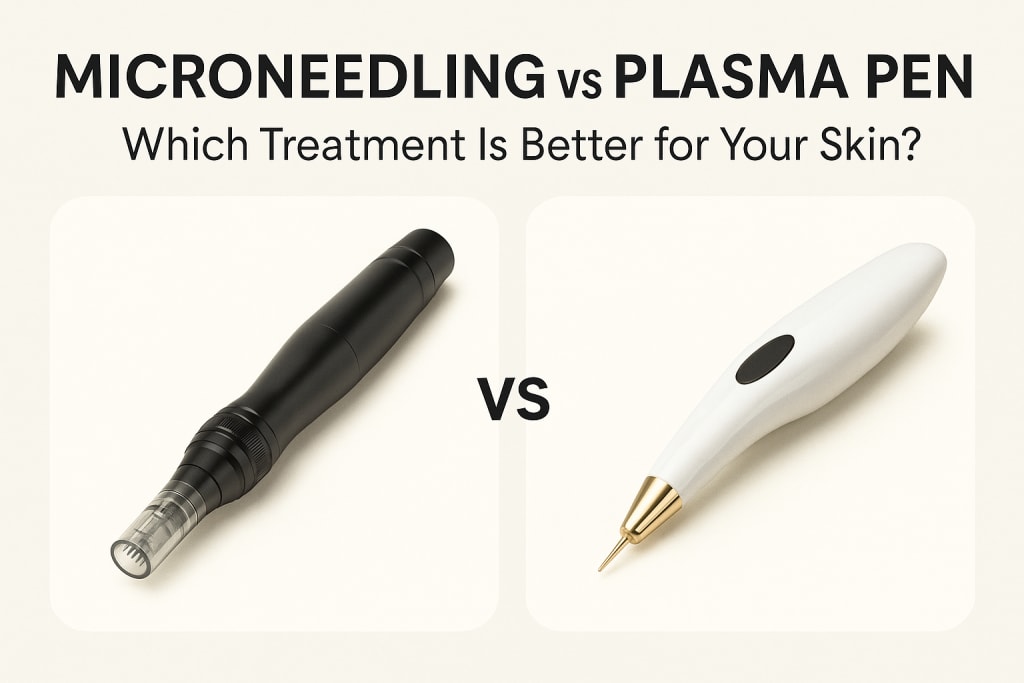
Trying to fix sagging skin, fine lines, or uneven texture—but not sure if microneedling or plasma pen treatment is the smarter move?
You’re not the only one. These two non-surgical skin treatments are trending everywhere, from TikTok to med spas across the U.S. But here's the thing—while both claim to smooth wrinkles and boost collagen, they don’t work the same way. And depending on your skin type, one might give you much better results than the other.
Let’s look at the numbers. According to industry data:
- Microneedling is exploding in popularity—with over 2.8 million procedures done in the U.S. in 2023 alone. And the market isn’t slowing down. It’s projected to reach nearly $960 million by 2032, driven by growing demand for affordable, low-downtime treatments.
- Plasma Pen treatments are catching up fast. Globally, the market is growing at a CAGR of 8.5% between 2021 and 2026, thanks to their reputation for delivering more dramatic tightening and lifting effects in just one or two sessions.
But numbers only tell part of the story.
What really matters is which treatment works best for your skin. If your goal is long-lasting firmness, fewer wrinkles, and a smoother look overall, then knowing how these two options compare—by treatment depth, recovery time, cost, and risk—will help you make the right decision for your face, not just your budget.
Let’s break it down.
First, What Do Microneedling and Plasma Pen Treatments Actually Do?
Both microneedling and plasma pen work by creating micro-damage to your skin, which sounds scary—but here’s the point:
That controlled damage triggers your body’s natural healing response. And when your body repairs the skin, it boosts collagen and elastin production.
Collagen = firm, smooth skin. Elastin = bounce and tightness.
That’s why both treatments can help reduce wrinkles, scars, stretch marks, and sagging. But how they get there is very different.
What Is Microneedling?
Microneedling (also called collagen induction therapy) uses a device with fine, sterilized needles to puncture the skin at a controlled depth.
These tiny “wounds” trigger your skin’s healing response. Over the next few weeks, your body produces more collagen and elastin, improving skin texture, firmness, and tone.
Benefits of Microneedling:
- Reduces acne scars and stretch marks
- Smooths fine lines and wrinkles
- Shrinks large pores
- Improves skin texture
- Can treat hyperpigmentation
It’s also safe for all skin tones, including darker skin.
How many sessions?
You’ll likely need 3 to 6 sessions, spaced 4–6 weeks apart, for the best results.
What Is a Plasma Pen?
Plasma pen therapy uses a pen-shaped device that converts electrical energy into plasma gas. When the pen tip hovers close to your skin, it creates a tiny arc of plasma (like a spark).
This spark creates a thermal reaction that evaporates surface skin and tightens tissue. It also stimulates fibroblast cells, which are responsible for collagen production.
Benefits of Plasma Pen:
- Lifts drooping eyelids or sagging jowls
- Smooths deeper wrinkles and crow’s feet
- Treats skin laxity in neck, jawline, and décolleté
- Reduces stretch marks and scars
- Long-lasting tightening results
How many sessions?
Most people only need 1–2 sessions, but healing takes longer.
Microneedling vs Plasma Pen: Key Differences

Let’s get practical. Here’s how the two treatments compare in real-world terms.

Which Is Safer for Your Skin Tone?
Here’s something people overlook.
Microneedling is safe for all skin tones. Plasma pen is not.
If you have Fitzpatrick skin type IV–VI (medium to dark skin), plasma pen carries a higher risk of post-inflammatory hyperpigmentation (dark spots).
That’s because plasma pen uses heat, and melanin-rich skin is more reactive to thermal damage.
If you’re not sure about your skin type, book a consultation with a licensed professional. Don’t guess.
How Much Does Each Treatment Cost?
Microneedling costs anywhere from $200 to $700 per session, depending on the treatment area. With 3–6 sessions recommended, you’re looking at $600 to $3,000 total.
Plasma Pen is more expensive upfront—usually $600 to $2,000 per area—but you often only need 1–2 treatments. That can make it more cost-effective in the long run.
What’s the Recovery Like?
Microneedling:
- Redness for 1–2 days
- Some flaking or tightness
- Can wear makeup after 24 hours
Plasma Pen:
- Visible scabs for 7–10 days
- Swelling for 2–3 days (especially around eyes)
- Must avoid sun and heavy skincare products
If you need to be “event-ready” fast, microneedling is your better bet.
So, Which One Should You Choose?
Here’s a simple breakdown based on goals and skin type:
Choose microneedling if:
- You have sensitive or darker skin
- You want overall skin rejuvenation
- You’re treating acne scars, pores, or surface wrinkles
- You prefer faster recovery
Choose plasma pen if:
- You’re targeting sagging skin or deep-set wrinkles
- You want longer-lasting results
- You can handle a longer recovery
- You have fair to medium skin
Still not sure? Get expert advice from professionals who understand skin science.
Final Thoughts: What’s Right for You?
Both microneedling in Suffolk and plasma pen can transform your skin—when used the right way for the right person.
The key is not just choosing the “strongest” option. It’s choosing the smartest one based on your skin tone, goals, budget, and lifestyle.
About the Creator
Jessica Belz
Jessica Belz's passion for beauty and skincare is evident in her writing, where she skillfully combines expertise with empathy to guide readers on a journey of self-discovery and self-love, celebrating the unique beauty in each individual.
Enjoyed the story? Support the Creator.
Subscribe for free to receive all their stories in your feed.
Comments
There are no comments for this story
Be the first to respond and start the conversation.