
Mental Time Travel System
learn How Your Brains Time Travels

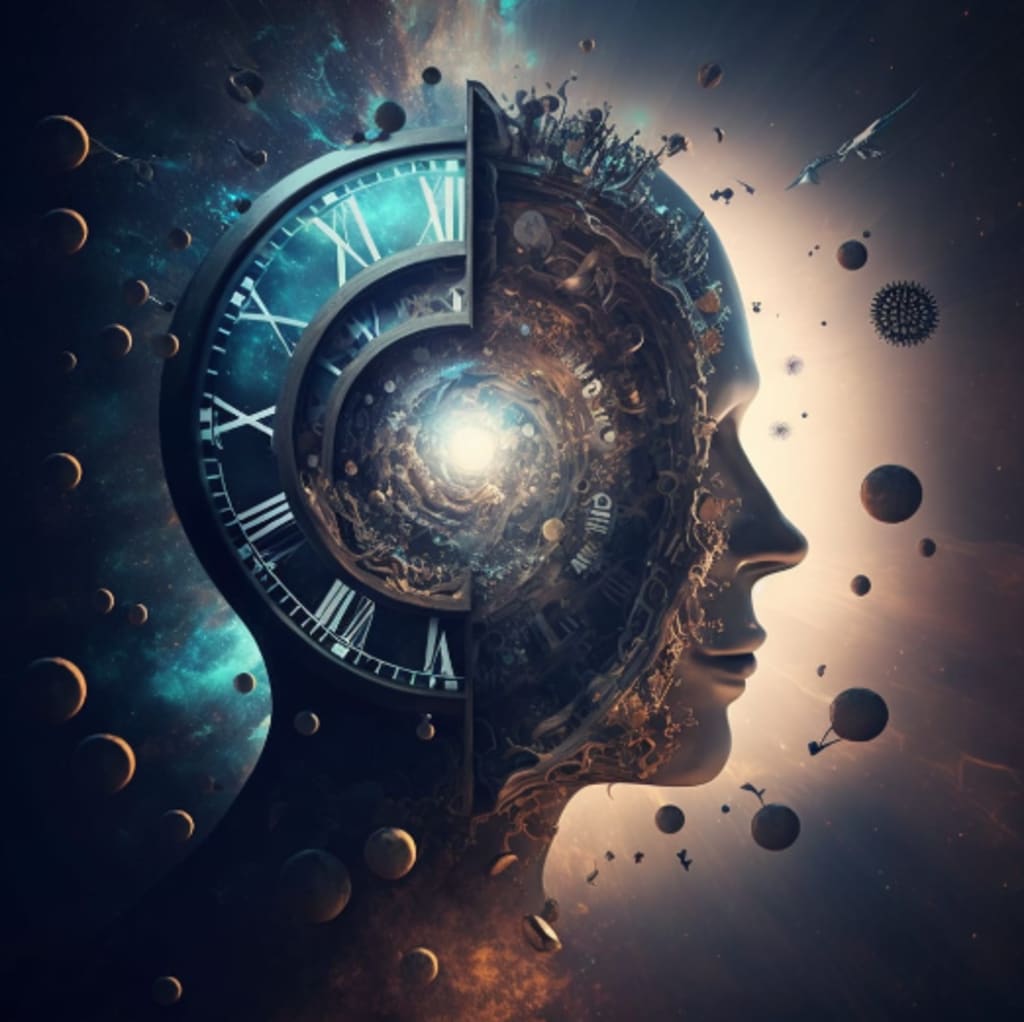
As human beings, we have the remarkable ability to mentally transport ourselves to another time and place - to relive memories of the past, imagine future scenarios, or explore alternative realities. This cognitive process, known as "mental time travel," is a fundamental aspect of human consciousness and has important implications for our understanding of the self, memory, and imagination.
Mental time travel refers to the ability to mentally project oneself backwards or forwards in time and to re-experience past events or pre-experience future ones. This process involves a complex interplay between memory, imagination, and attentional processes, and is thought to be mediated by a network of brain regions that includes the prefrontal cortex, hippocampus, and parietal cortex.
One of the key features of mental time travel is the subjective experience of "being there" - of feeling like we are truly present in the past or future event that we are imagining. This sense of presence is supported by the vividness and richness of the mental images that we generate, which can be enhanced by factors such as emotion, sensory detail, and personal relevance.
Mental time travel is not limited to conscious, deliberate forms of imagination, but can also occur spontaneously, as when we suddenly recall a forgotten memory or find ourselves daydreaming about a future scenario. These spontaneous forms of mental time travel are thought to reflect the automatic activation of associative networks in the brain, which can link current experiences with past or future events.
Research on mental time travel has revealed a number of fascinating insights into the nature of memory and imagination. For example, studies have shown that mental time travel is not a unitary process, but can be divided into distinct components such as mental time travel for episodic memories (e.g. "remembering" a specific event from one's past) and mental time travel for future events (e.g. "imagining" a specific scenario that may or may not occur in the future). These components may be mediated by different neural networks, and may have different implications for psychological well-being.
Another important finding is that mental time travel is not always accurate or reliable. Our memories can be distorted by various factors such as time, emotion, and suggestion, leading to false or incomplete recollections of past events. Similarly, our future predictions may be influenced by biases and heuristics that can lead to unrealistic expectations or poor decision-making.
Despite these limitations, mental time travel remains a powerful tool for understanding ourselves and our place in the world. By reflecting on our past experiences and imagining future possibilities, we can gain insights into our values, goals, and priorities, and can make more informed choices about how to live our lives.
Furthermore, mental time travel can play an important role in mental health and well-being. For example, research has shown that engaging in positive future thinking (e.g. imagining positive outcomes and goals) can enhance mood, reduce anxiety, and improve motivation. Similarly, reminiscing about positive past experiences can boost self-esteem and promote feelings of social connection.
In conclusion, the ability to mentally travel through time is a remarkable feature of human consciousness that has important implications for memory, imagination, and well-being. By understanding the underlying cognitive and neural mechanisms of mental time travel, we can gain insights into the nature of the self and the human condition, and can develop new strategies for promoting psychological health and flourishing.https://www.digistore24.com/redir/463688/annamayabharath/
About the Creator
annamayabharath
WRiter......cOnTENt writer.......................
Enjoyed the story? Support the Creator.
Subscribe for free to receive all their stories in your feed.
Comments
There are no comments for this story
Be the first to respond and start the conversation.