
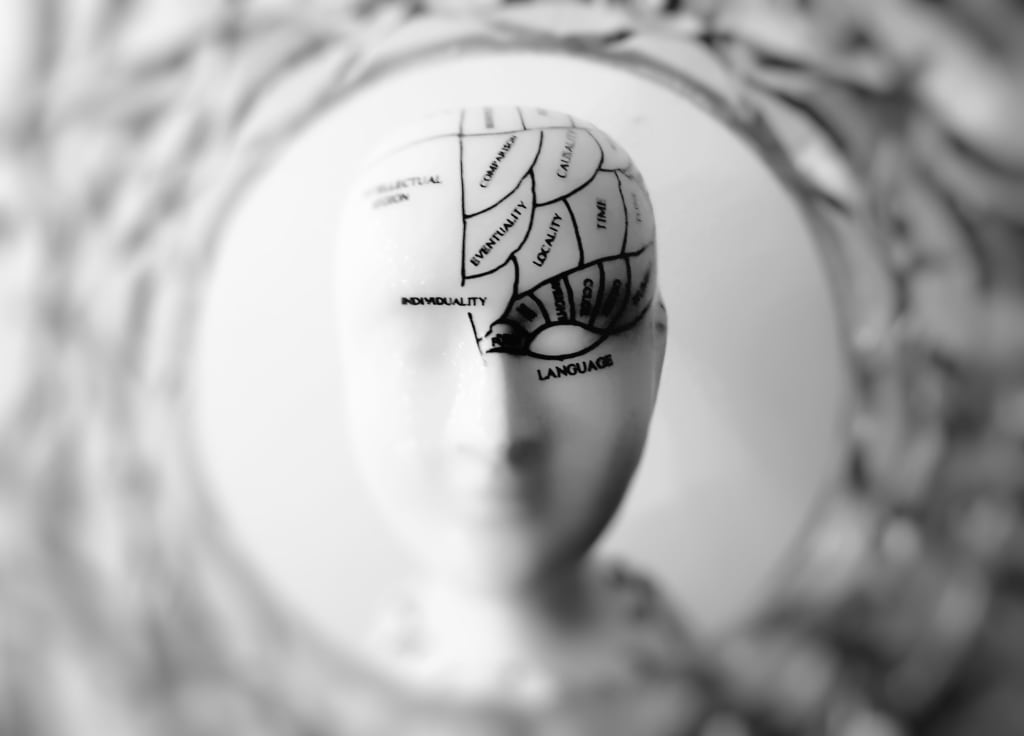
Sherlock Holmes, the renowned detective, once proposed a theory comparing the brain to an attic, suggesting that it has limited storage capacity for memories. When Dr. Watson informed him about the Earth revolving around the sun, Holmes replied with indifference, stating, "Now that I do know it, I shall do my best to forget it." According to Holmes, filling the attic of the mind with trivial facts would leave little room for crucial matters, such as discerning subtle differences between lethal poisons.
This raises the question: Is Holmes correct? Does our memory possess finite capacity, similar to a computer's storage? Or is our memory limitless? Furthermore, if we were to possess perfect memory, how would life be if we never forgot anything?
The animated film "Inside Out" depicted memories as luminous spheres neatly arranged in the brain, resembling books in a library. However, the reality is far more intricate. Our memories are not stored in a single location within the brain; instead, they are scattered throughout various regions. Multiple brain cells from different areas collaborate to form a single memory. For instance, recalling the memory of savoring grandma's apple pie involves specific cells for visualizing its appearance, cells for remembering the aroma of cinnamon, and even cells for relishing its delicious taste, among others. In truth, a memory is not a tangible entity residing in a specific brain cell; it is an action rather than an object.
Analogous to baseball fans participating in "the wave," where no individual represents the wave itself, memories come to life when numerous interconnected neurons fire in a specific pattern. Since the same cells can generate multiple unique patterns, a group of neurons can encode numerous memories. This increases the brain's capacity for memory storage. Deep within the brain's core lies a cluster of seahorse-shaped cells, aptly named the "hippocampus" by 18th-century scientists. This structure plays a crucial role in memory formation. Without it, the ability to remember might be severely impaired.
Our comprehension of memory owes much to a well-known patient known as H.M., identified by his initials for many years. In 1953, H.M. underwent epilepsy surgery that damaged most of his hippocampus. Consequently, he experienced a severe form of amnesia, rendering him unable to form new factual or event memories. However, he retained the ability to recall information acquired before the surgery. This discovery indicated that while the hippocampus is vital for memory formation, it is not the storage site for memories. So how do experiences transform into memories? By examining the brain of a mouse navigating a maze, researchers can create a map illustrating the activation of specific brain cells during the mouse's experience.
Later on, these brain cells replay the same patterns, rapidly recollecting the experience in both forward and backward sequences, strengthening the connections between cells. This process, known as consolidation, allows animals, including humans, to store new memories in long-term storage. Days or weeks later, a particular smell might trigger the same pattern of nerve cell firing in the mouse's brain, eliciting a recall of the maze memories. Similarly, the scent of cinnamon might evoke memories of one's grandmother. However, the brain's method of memory creation is not foolproof. Sometimes, vivid mental replays of imagined scenarios can feel as real as genuine experiences. When we vividly picture the sights, smells, and sounds of a crime scene described by someone else, our brain networks activate similarly to if we had actually been present. The more we replay the scene in our minds, the more it assumes the characteristics of a genuine memory. This phenomenon explains how leading questions posed by detectives can inadvertently implant false memories in witnesses.
While our memory capacity is considerable, we forget far more than we remember.
In conclusion, the workings of the brain are intricate and fascinating. Memories are not stored in a single location but are distributed throughout various regions, with interconnected neurons firing in specific patterns to form memories. The hippocampus plays a crucial role in memory formation, although it is not the storage site for memories. Consolidation, the process of replaying and strengthening neural connections, helps commit new memories to long-term storage. The brain's ability to forget is just as vital as its ability to remember, allowing us to move past traumatic events, clear out unnecessary information, and update our mental models of the world. While perfect memory remains elusive, understanding and harnessing the mechanisms of memory formation and forgetting can enhance our learning, perception, and overall experience of life.
About the Creator
Armand
Reading and writing enthusiast. Love finding new things to learn about the world and life in general.
Enjoyed the story? Support the Creator.
Subscribe for free to receive all their stories in your feed.
Comments