
Lose Weight in 7 Days: Quick & Easy Tips
Losing weight in 7 days is possible with the right diet and exercise. You need to eat less and move more. Experts say to aim for 0.5-2 lbs. of weight loss each week for a healthy pace. Crash diets are not safe and can cause weight gain later. Instead, make small changes that you can keep up with for a long time.

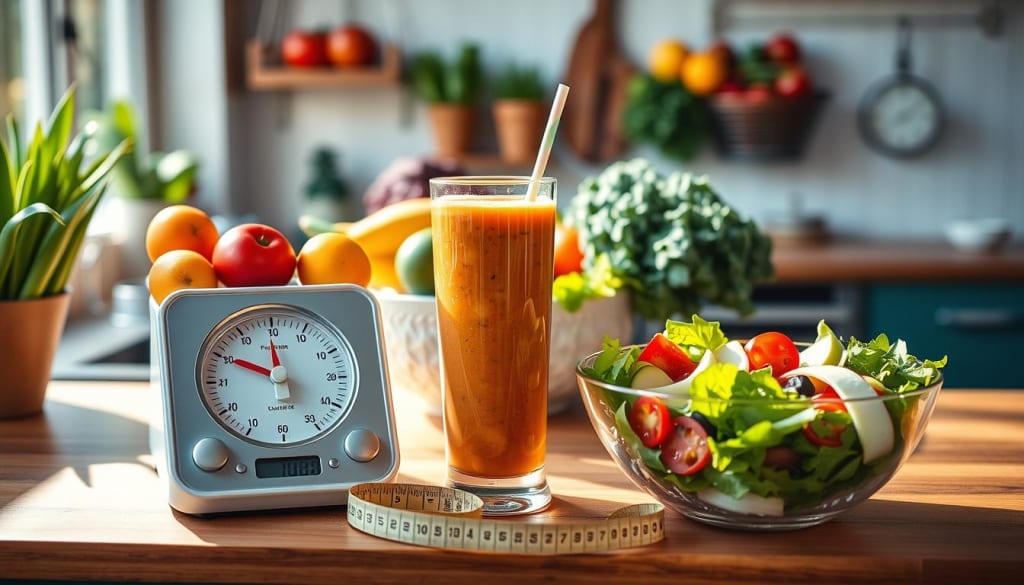
Lose Weight in 7 Days: Quick & Easy Tips
Losing weight in 7 days is possible with the right diet and exercise. You need to eat less and move more. Experts say to aim for 0.5-2 lbs. of weight loss each week for a healthy pace.
Crash diets are not safe and can cause weight gain later. Instead, make small changes that you can keep up with for a long time.
Key Takeaways
Aim for a calorie deficit of 500-1000 calories per day to lose 1-2 lbs. per week
Incorporate high-intensity interval training (HIIT) like Tabata to burn up to 15 calories per minute
Eat a diet rich in protein, fiber, and healthy fats to keep you feeling full and satisfied
Stay hydrated by drinking water instead of sugary beverages
Prioritize 7-9 hours of quality sleep per night for optimal weight loss
Eat Protein, Fat, and Vegetables
For lasting weight loss, you need a balanced diet. Focus on protein, healthy fats, and veggies. They keep you full and happy on your weight loss path.
Protein Sources
Go for 5-7 ounces of protein daily from lean foods like chicken, fish, beans, and lentils. Protein helps keep your muscles strong while you're eating fewer calories. This supports a healthy metabolism.
Vegetable Portion Sizes
Make half your plate non-starchy veggies like leafy greens, broccoli, and bell peppers. These foods are low in calories but high in fiber. They give you the nutrients you need and keep you full.
Healthy Fats
Add healthy fats like olive oil, avocado, nuts, and seeds in small amounts. These foods are full of nutrients and keep you satisfied. Stay away from processed carbs and sugary foods, as they can slow down weight loss.
By mixing protein, healthy fats, and veggies on your plate, you'll follow a clean eating plan. This plan supports your weight loss goals.
"Healthy eating isn't about strict limitations, staying unrealistically thin, or depriving yourself of the foods you love. Rather, it's about feeling great, having more energy, and stabilizing your mood." - Healthline
Move Your Body
Getting regular exercise is key for losing weight. Try to do at least 150 minutes of moderate aerobic exercise or 75 minutes of vigorous aerobic exercise each week. Walking, jogging, swimming, cycling, or dancing are all good ways to get your heart rate up and burn calories. Also, doing strength training 2-3 times a week can help build muscle and increase your metabolism. It's important to mix up your workouts to keep your body challenged and avoid getting stuck in a rut.
Tracking your physical activity can really help with weight loss. Studies show that keeping an eye on your movement helps you stay on track and motivated. Try using a fitness app or wearing a tracker to see how you're doing and celebrate your achievements.
It's crucial to find exercises you enjoy so you'll keep doing them. Whether it's a quick walk around the block or a dance class, make sure to move regularly. Your body will be grateful!
"Physical activity is not only great for your physical health, but it can also boost your mood and mental well-being. Make movement a daily habit, and you'll be on your way to a healthier, happier you."
Eat More Fiber
Boosting your fiber intake can help you lose weight. Foods high in fiber make you feel full longer. They also help control blood sugar and aid digestion. Studies found that eating more fiber from fruits, veggies, and whole grains leads to more weight loss.
The daily fiber goal is 28 grams, but most Americans only get 16. To increase your fiber, add fiber-rich foods to your meals. Good options include:
Fruits with skin and seeds (e.g., pears, apples, berries)
Vegetables (e.g., broccoli, Brussels sprouts, spinach)
Whole grains (e.g., oatmeal, quinoa, brown rice)
Legumes (e.g., chickpeas, lentils, black beans)
Nuts and seeds (e.g., chia seeds, walnuts, almonds)
Registered dietitians have made high-fiber meal plans for you. These plans offer 1,200 calories and 38-42 grams of fiber daily. They also include protein, healthy fats, and vitamins for your health and weight loss.
Start adding more fiber slowly to avoid digestive issues. With some planning, you can easily eat more fiber and lose weight.
"Fiber plays a crucial role in lowering LDL cholesterol, improving blood sugar management, promoting a healthy gut, and aiding in weight loss." -
By choosing fiber-rich foods, you can make a healthy eating plan. This plan supports your weight loss and improves your overall health.
Meal Plan Calories Fiber (g) Sodium (mg)
1,500 calories 1,486 33 1,115
2,000 calories 1,515 42 1,718
These meal plans, made by dietitians, offer a balanced, fiber-rich diet. They support your weight loss goals and meet your calorie and nutrient needs.
Eat Mindfully
Mindful eating is a powerful way to help you lose weight. It makes you more aware of when you're hungry or full. This leads to better portion control and less overeating. Studies show it's as good as traditional diets for losing weight, with an average loss of 4 pounds (1.9 kilograms) in 12 weeks.
Mindful Eating Techniques
To practice mindful eating, try these simple techniques:
Eat without distractions, such as TV, phones, or laptops. This allows you to fully focus on the experience of eating.
Eat slowly and savor each bite, taking time to notice the flavors, textures, and aromas of your food. Chewing each mouthful 25-30 times can contribute to feelings of satiety and reduce overconsumption.
Tune in to your body's physical sensations of hunger and fullness. Stop eating when you feel comfortably satisfied, rather than continuing to clean your plate.
Avoid eating in response to emotional triggers, such as stress or boredom. Mindful eating can help you distinguish true hunger from emotional eating.
By using these mindful eating techniques, you can improve your relationship with food. You'll manage your weight better and enjoy your meals more. Mindful eating also helps you be kinder to yourself, reducing self-criticism and promoting calmness.
Remember, the key to successful weight loss is finding a method you can stick to. Try different mindful eating strategies to find what fits your lifestyle.
Stay Hydrated
Drinking plenty of water can help you lose weight. It has many benefits that support your weight loss goals. Studies show that 26.3% of people drink more water to lose weight.
Water boosts your metabolism and helps you feel full. It keeps your body working well.
Drink at least 11.5 cups (for women) or 15.5 cups (for men) of water daily. Switching from sugary drinks to water can cut calories and keep you hydrated. It also improves your workout and helps you recover faster.
Drinking water can greatly impact your weight loss. A study found that drinking 200–250 mL of warm water after meals helped people lose more weight. Another study showed drinking cooled water burned 23 calories more each day.
A 2013 study found that drinking one extra cup of water daily reduced weight gain by 0.13 kg (0.23 lb) every 4 years. Replacing sugary drinks with water reduced weight gain by 0.5 kg (1.1 lb) over 4 years.
Staying hydrated can lead to impressive weight loss results. A 2019 review found that drinking more water was linked to weight loss of 0.4–8.8 kg, with a mean of 5%. So, make sure to drink plenty of water and enjoy its benefits.
Health experts suggest drinking about 2 liters (8 glasses) of water daily. However, a 2017 study found no direct link between this amount and weight loss in overweight or obese adolescents. The right water intake varies based on age, gender, size, and activity level.
To stay hydrated, aim for at least 128 ounces (1 gallon) of water daily during your 7-day weight loss challenge. Use a mobile app or schedule to drink water throughout the day. Adding lemon, lime, mint, or berries can make water more fun to drink.
"Staying hydrated is crucial for overall health and can be a game-changer in your weight loss journey. Drink up and watch the pounds melt away!"
Make water a key part of your weight loss plan. With the right hydration strategies, you can enjoy the benefits of drinking water, support water for weight loss, and achieve your hydration tips for a healthier, slimmer you.
Get Plenty of Sleep
Getting enough sleep is key for losing weight. It helps burn fat, recover muscles, and keeps you healthy. Lack of sleep can mess with hormones that control hunger and metabolism, causing weight gain. Try to sleep 7-9 hours each night for best results.
Benefits of Adequate Sleep
Good sleep is vital for managing weight and metabolism. About 35% of US adults sleep less than 7 hours most nights. This can raise obesity risk by 41%. Plus, more sleep can lower your BMI scores.
Not sleeping enough can make you hungrier and eat more calories. People who don't sleep well might eat 385 extra calories daily, mostly from fat. They also tend to eat more calories, fats, and sugars. Eating late at night can lead to more weight gain and a higher BMI.
Not sleeping well can slow down your metabolism. At first, it might lower your resting metabolic rate (RMR), but it goes back to normal after good sleep. It can also reduce fat burning and muscle growth, affecting RMR. Poor sleep can make you less active, starting a cycle of less sleep and less activity.
It's important to have a regular sleep schedule and a cozy sleep space. Avoid eating big meals, drinking alcohol, and caffeine before bed to sleep better.
Studies show that more sleep can help with weight loss. A study found that sleeping more by 1.2 hours a night led to eating 270 fewer calories daily. This means more sleep could help prevent or reverse obesity.
Create a Calorie Deficit
Achieving a calorie deficit is key to losing weight. You can do this by eating less and moving more.
Start by eating 500-1000 calories less each day. Choose foods that are full of nutrients but low in calories. This can help you lose about 1 pound a week. Also, exercising regularly will help you burn more calories and speed up your weight loss.
To boost your metabolism, try interval training and strength training. These workouts burn calories even after you finish.
Don't try to eat too little. Eating too few calories can harm your health. Aim for a calorie deficit of about 500 calories a day for safe weight loss.
To find out how many calories you need, use the Mifflin-St Jeor equation. It calculates your Basal Metabolic Rate (BMR) based on your sex, weight, height, and age. Then, add an activity factor to find your Total Daily Energy Expenditure (TDEE). Subtract 300-500 calories from your TDEE to create a calorie deficit for weight loss.
Remember, weight loss is not a one-size-fits-all approach. People with health conditions like diabetes need special diet advice. Talk to a healthcare professional to get a plan that fits your needs and goals.
Lose Weight in 7 Days
Trying to lose a lot of weight in just 7 days needs hard work, discipline, and a balanced plan. The military diet promises to help you lose up to 10 pounds in a week. But, this extreme diet can be hard to follow and might harm your health. A better plan is to cut 500-600 calories a day, which is safer and more doable.
Eat foods high in protein, veggies, and healthy fats to stay full and happy. Women should aim for 1,600-1,800 calories a day, while men should aim for 2,200-2,400. By choosing better foods and moving more, you can lose weight safely and well over a week.
Long-term weight loss isn't about quick fixes, but a steady, healthy lifestyle. Stay away from processed foods, which can harm your health. Instead, eat whole, natural foods that feed your body well. With time and effort, you can reach your weight loss goals and live a healthier life.
FAQ
What are the key steps to lose weight in 7 days?
To lose weight in 7 days, focus on eating less and moving more. Eat a balanced diet with lots of protein, veggies, and healthy fats. Also, do regular exercise like cardio and strength training.
What are some good protein sources for weight loss?
Good protein sources for weight loss include chicken, fish, beans, and lentils. Aim for 5-7 oz. of protein daily to keep muscle while losing weight.
How much of my plate should be vegetables?
Make half your plate veggies like leafy greens, broccoli, and bell peppers. They're low in calories but full of fiber and nutrients, key for weight loss.
What are some healthy fats I should include?
Add healthy fats like olive oil, avocado, nuts, and seeds in small amounts. They help you feel full and support your weight loss goals.
What types of exercise are best for weight loss?
Do at least 150 minutes of moderate exercise or 75 minutes of vigorous exercise weekly. This includes walking, jogging, swimming, or cycling. Also, do strength training 2-3 times a week to build muscle and boost metabolism.
How much fiber should I aim for to support weight loss?
Try to get 25-30 grams of fiber daily from fruits, veggies, whole grains, beans, lentils, and nuts. It helps you feel full and control blood sugar.
What are some mindful eating techniques that can help with weight loss?
Use mindful eating by eating without distractions, slowly, and savoring each bite. Pay attention to hunger and fullness cues to control portions and avoid overeating.
How much water should I drink for weight loss?
Drink at least 11.5 cups (for women) or 15.5 cups (for men) of water daily. Staying hydrated boosts metabolism, suppresses appetite, and supports bodily functions.
How much sleep do I need for successful weight loss?
Aim for 7-9 hours of quality sleep nightly. Adequate sleep aids in fat burning, muscle recovery, and overall health, regulating hunger and metabolism hormones.
How can I create a calorie deficit for weight loss?
To create a calorie deficit, eat 500-1000 calories less daily and exercise regularly to burn more calories. Use strategies like interval training and strength training to boost metabolism and fat loss.
About the Creator
Samiya Islam
Hey,
I am Samaya Islam, I am an experienced digital marketer with nearly 8 years of expertise. I am the founder of Digital 200, a successful digital marketing agency. I also provide consultancy services to multiple businesses.
Enjoyed the story? Support the Creator.
Subscribe for free to receive all their stories in your feed.
Comments
There are no comments for this story
Be the first to respond and start the conversation.