
Kneeling Quad Stretch: How to Do It, Benefits, and Why It Belongs in Every Routine
Improve lower body flexibility, reduce muscle tightness, and support better posture with the kneeling quad stretch for daily mobility and recovery.
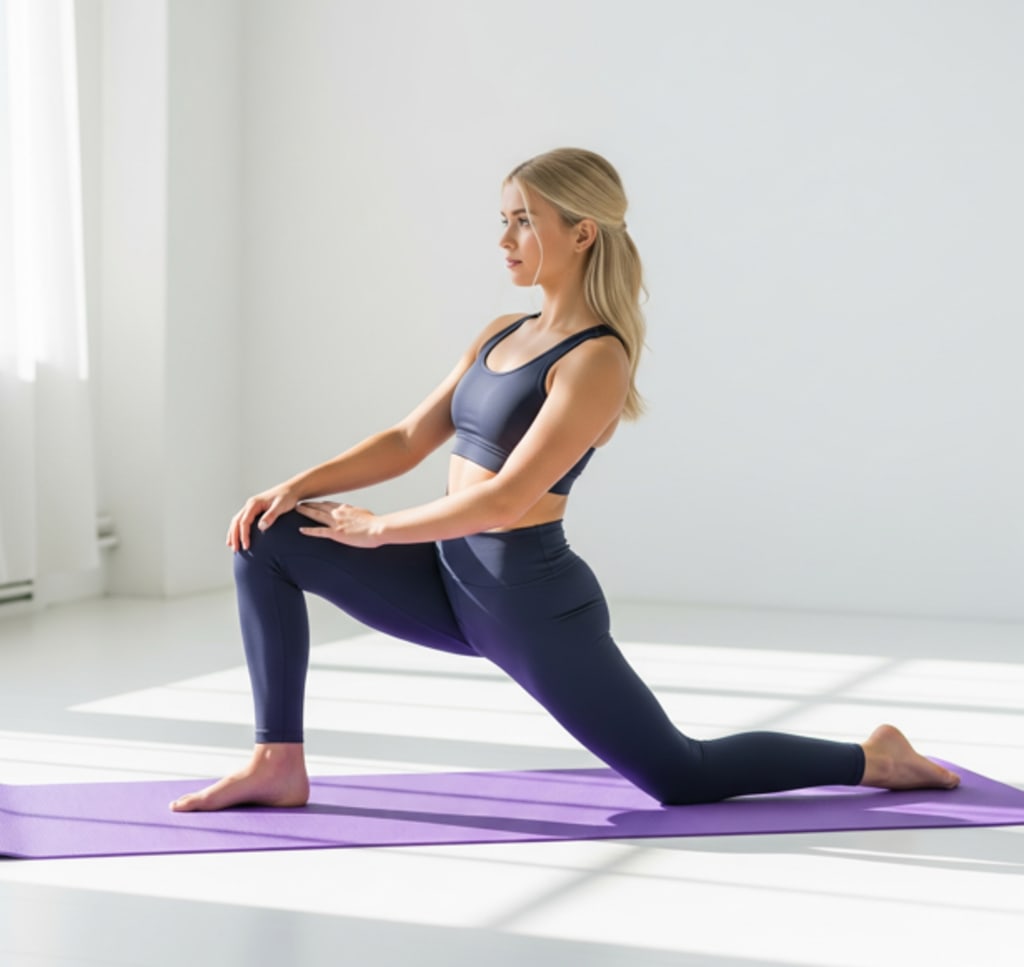
The kneeling quad stretch might be the most helpful in your arsenal if your quads are always tight, from running, cycling, squatting, or sitting for hours. The kneeling quad stretch is different from standing stretches, which test your balance, and lying stretches, which take up a lot of floor space, because it stretches the hip flexors while also stabilizing your body. This guide will teach you how to do the quadriceps stretch while kneeling, what it does to the body, and where to fit it in your workout so you can see long-term results.
What is The Kneeling Quad Stretch?
Kneeling Quad Stretch is a static flexibility exercise with one knee on the floor and the other foot in front. The half-kneeling position, also known as the half-kneeling position, provides a stable base for you to go deeper into the stretch than most standing positions. It works all four heads of the quadriceps muscle group, focusing on the rectus femoris muscle that runs across the hip and knee and is the most frequently tight of the four.
The rectus femoris muscle is not stretched as much during knee exercises because of this dual-joint responsibility. The kneeling position will eliminate this by straightening the hip and bending the knee at the same time, thus stretching the whole muscle from both ends.
How to Do the Kneeling Quad Stretch
The form is as important as you think. The little tweaks that you make in muscle reach can add up to a big difference.
Step-by-step instructions:
Place your right knee on the floor and your left foot flat in front of you, left knee bent at approximately 90°.
Maintain an upright torso and a light core braced. Don't lean forward from the hips.
Slightly tuck your pelvis under — remember this is the most important thing most people miss! If there is no posterior pelvic tilt, the hip flexors contract, and the stretch is never completed in the rectus femoris.
To take the kneeling quad exercise to the next level, extend your right arm back and grab your right ankle, bringing your heel toward your buttocks.
Gently press the right hip forward in the upright torso position.
Breathe slowly and relax the muscle with each exhale, holding the stretch for 30-45 seconds.
Repeat on the other side.
Modifications: If it is hard on a hard floor, place a folded mat or towel under the knee. If it's hard to reach back for the ankle initially, just hold the stretch passively with the hands not assisting the movement and gradually increase the range over time.
The benefits of Kneeling Quad Stretch
The benefits of the kneeling quadriceps stretch are not just limited to flexibility. This is what regular practice really yields:
1. Greater muscle lengthening than standing options
The half-kneeling position helps to level the pelvis and takes away the balance demand, which means you can relax into the stretch. The relaxation is what enables the muscle fibres to extend themselves instead of bracing against the motion.
2. Simultaneous hip flexor release
In this position the primary hip flexor muscles, the psoas and iliacus are also stretched. Short hip flexors are associated with anterior pelvic tilt, back pain, and a shorter stride. The kneeling quad stretch targets all these while simultaneously opening the front of the hip along with the quad.
3. Reduced knee discomfort
The tighter the quadriceps, the more compression on the patella, which is the cause of the type of knee pain that develops over time when you are active. Stretching the quads on a regular basis helps to alleviate that tension and can help to prevent patellar tracking problems over time.
4. Better squat mechanics
If the quadriceps and hip flexor are not very flexible, depth is limited and compensations such as heel rise or forward lean of the trunk will be required. The deeper and cleaner squats come from a better range of motion in the kneeling quadriceps stretch.The deeper and cleaner squats are the result of the better range of motion in the kneeling quadriceps stretch.
5. Quick recovery from training.
Static stretching of tired muscles helps to improve circulation and helps to decrease post-exercise stiffness. This stretch is great to do after leg day or any lower body heavy workout to speed up recovery and decrease the next-day soreness.
Stretch when and how often
The kneeling quad stretch is best done as a cooldown, after the workout when muscles are warm and ready to lengthen. However, it is also an effective and good morning or evening routine, particularly for those who spend long periods of time sitting during the day.
Recommended frequency:
Post-workout: 2-3 sets on each side, 30-45 seconds on each set
Daily mobility work: 1-2 sets per side, for up to 60 seconds.
Desk recovery: 1 set on each side, 30 seconds each, every few hours
The kneeling quad exercise is best combined with hip flexor stretches and hamstring exercises to ensure the anterior and posterior chain are balanced.
Final Thoughts
The kneeling quad stretch is a popular exercise for lower body flexibility for a reason – it actually targets the quadriceps. It's more complete than most single muscle options, thanks to the stable base, dual joint stretch, and hip flexor bonus. This stretch is one of the easiest things you can do to support your mobility for the long haul, whether you're an athlete looking for a performance boost, a desk worker who wants to avoid stiffness, or anyone who wants to move better as they get older.
About the Creator
Stretch Burner
Stretch Burner provides expert stretching tips to improve flexibility, relieve pain, and boost performance. Perfect for all fitness levels to move better, feel stronger, and stay active with confidence.
Enjoyed the story? Support the Creator.
Subscribe for free to receive all their stories in your feed.
Comments
There are no comments for this story
Be the first to respond and start the conversation.