

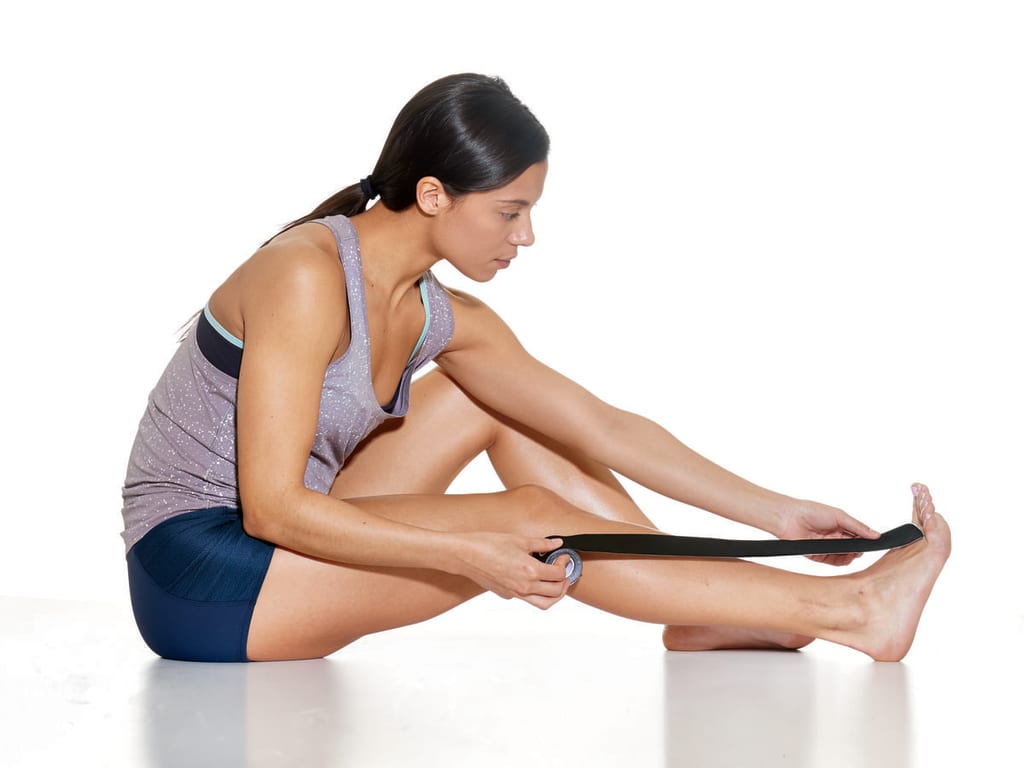
Kevin likes to run and could do it all day if he didn't have other things to do. However, here is the thing, he runs anywhere, no matter the nature of the ground.
One evening, after running along uneven terrain, he felt a sharp pain in his shin. He later found the place swollen and painful even when he wasn't moving. After visiting the doctor, he discovered that he had a shin splint.
During recovery, he made use of a therapeutic tape called Kinesio tape. It was mostly for support and pain relief.
You could be Kevin tomorrow, but this article can help prevent that. It will teach you how to manage the condition if you ever experience it. You will learn about the causes, symptoms, and treatments of shin splints. You will also learn about the uses of Kinesiology sports tape in preventing and treating shin splints.
What are Shin Splints?
Also known as tibial stress syndrome, shin splints are most common in athletes. They are characterized by pain in front of your lower leg or the muscles surrounding the shinbone.
Shin splints occur when the muscles and other tissues attached to your shin are inflamed. This can be a result of overuse or incorrect use. Some major causes include running on uneven terrain, rolling the ankle joint in an unnatural direction, wearing unfitting shoes, a sudden increase in the intensity of movement, etc. Usually, the pain gets worse when you move, but mild exercise may improve it as you continue.
There are two types of shin splints depending on the muscles affected or the area in pain. The types are:
Anterior tibial stress syndrome: In this type, pain is felt along the front and outer edge of the shin.
Medial tibial stress syndrome: Here, pain occurs along the lower part of the inside edge of the shin. It is the most common type of shin splint.
To prevent shin splints, exercise at a comfortable pace, wear fitting shoes, do not run on uneven terrain, do not force your leg to move suddenly in an unnatural direction, warm up before physical activity, and do not push yourself too hard during said activity.
If you have already sustained a shin splint and think the pain is intense, you should see a doctor who will conduct a scan for you and provide solutions. However, in the case of mild shin splints, you can manage the condition at home by:
Applying a reusable ice pack on your shin for 15 to 20 minutes daily to manage the swelling.
Using anti-inflammatory pain relief to reduce inflammation.
Applying kinesiology tape to relieve pain and provide support.
We will now discuss this third method- kinesiology tape- in detail in the following paragraphs.
What is Kinesiology Tape?
Kinesiology sports tape is an elastic, often waterproof, therapeutic tape designed to support the body and relieve musculoskeletal pain. It was designed decades ago by a Japanese chiropractor for his patients who had joint and bone problems.
How Does Kinesiology Tape Work?
Below are some functions of kinesiology tape and the mechanisms through which it achieves them:
Relieves Musculoskeletal Pain
Let's go back to Kevin's story. You will remember that he used kinesiology tape to reduce the pain he felt in his shin. How did this happen?
Well, kinesiology tape is usually made of light material with skin texture, making it seem like a second skin. This means it will attach firmly to your body, depending on the adhesion. A quality kinesiology tape will cause a decompression beneath your skin when applied. This decompression creates space beneath your skin, which separates it from underlying structures. It reduces friction between skin and bone, reduces irritation, and, ultimately, relieves pain.
Kinesiology tape will not completely rid you of the pain of a shin splint or any other injury, but if perfectly combined with other forms of treatment, it may be exactly what you need.
Provides extra support
Tape, generally, is used to hold things together. Kinesiology tape is no different. You can use it to support your joints after an injury or before a taxing activity.
Athletes may wrap kinesiology tape around their knee joints or ankles before or after engaging in their respective sports. This is a way of preventing injuries or reducing their intensity.
Reduces inflammation
By creating space between your skin and the underlying structures, kinesiology tape allows for easy passage of accumulated fluid like blood or lymph, thereby reducing swelling and inflammation.
Even in the absence of an injury, kinesiology tape can be used to improve blood circulation. It is, however, not advised for people who just underwent lymph node removal surgery, as it may have the opposite effect on them.
Improves Posture
Keeping kinesiology tape on your skin can be a gentle reminder if you want to be conscious about improving your posture. Imagine applying kinesiology tape to your back while standing perfectly upright. What do you think will happen when you slouch? You will feel the tape behind you. As you remember to stand up straight, your body will feel the flex of the tape release, and your posture will improve with time.
What Other Conditions Can Kinesiology Tape be Used For?
Apart from the shin splints mentioned above, kinesiology tape can also be used for:
Patellofemoral pain syndrome: This is a condition in which the cartilage underneath the kneecap is damaged, causing a dull ache in the patellar region. It is usually due to overuse or injury. Also called runner's knee, this condition is common in runners and athletes who play sports that involve running or jumping.
The pain usually increases during movement, while walking, jogging, or descending a flight of stairs. Susceptibility increases with age, gender (females are more susceptible), and activities. Kinesiology tape can be used to support the knee joint and make movement easier while at the same time relieving some of the pain.
Apply the tape while your knee is slightly bent. Make sure it is firm and that it spans both sides of your kneecap.
2. Iliotibial band syndrome: The iliotibial tract is a fibrous band in the thighs that runs from your hip down to your knee. It is called iliotibial band syndrome, when this fibrous connective tissue becomes too tight and starts to run against the bone.
The condition is characterized by an ache or a burning pain on the outer side of the hip down to the knee region. It is common in basketball players, skiers, hockey players, runners, and cyclists. It is usually caused by excessive exercise, wearing inappropriate footwear, running on uneven terrain, medial compartment arthritis, muscle weakness, and sudden movement.
Iliotibial band syndrome can be very painful, and kinesiology tape is one way to combat this pain. Combine it with other forms of physical therapy as your doctor prescribes for better management.
While applying tape for this, apply enough stretch to account for the varying width of the affected areas.
3. Hamstring strain: The hamstrings are a group of muscles at the back of the thigh that extend the hip and flex the knee. Hypertension, among other causes, can cause a strain which, depending on the degree of the stretch, can cause microscopic to macroscopic tears in one or more of the muscles.
The strain comes in grades, with grade III being the highest and most painful. For a grade I strain, you can treat yourself at home using ice packs, ensuring adequate rest, and applying kinesiology tape.
We have talked about the functions of kinesiology tape and how it is related to shin splints and other general injuries. That's not all, however. We have also brought you the most suitable brand of Kinesiology tape for your needs. Hampton Adams is the perfect place to get your quality kinesiology tape from, and here's why:
Flexibility: One of the core traits of any quality kinesiology tape is its ability to bend in many directions, and Hampton Adams offers you exactly that. Our tape is made of flexible materials that can fit every crook and curve of your body. Worried that the tape won't stick to your heels because of its slope? You don't have to worry about that with us.
Comfortability: Kinesiology tape isn't good enough if it makes you feel any way other than comfortable. You can avoid itchiness, rashes, and any other forms of discomfort by using Hampton Adams 16ft kinesiology tape. This is achieved by using only quality materials in production to manufacture a tape that feels like a second skin. Our tape does not contain any latex or other allergy-inducing material. Every ingredient is hypoallergenic and medical-grade. By getting our tape, you reduce your risk of allergies and infections.
No-sticky residue policy: A common problem with many kinesiology tapes is that their adhesives leave a sticky residue after removal. Not only is that distasteful, but it can also be difficult to remove. We have completely eradicated this in our production process. Our tape comes with a 100% no-sticky residue policy. This does not mean it has poor adhesion, only that it is easy to remove without any complications like tearing off your skin or leaving behind some waxy residue.
There you have it: the solution and where to get it. If you are looking for the perfect Kinesiology tape to fit your injury needs, Hampton Adams has it. You can direct any further questions you have to our customer service here at Hampton Adams.
About the Creator
Steve
Publisher based in Texas
Enjoyed the story? Support the Creator.
Subscribe for free to receive all their stories in your feed.
Comments