
Is It Okay to Store Silver in Ziploc Bags? The Honest Technical Answer
Is It Okay to Store Silver in Ziploc Bags? The Honest Technical Answer

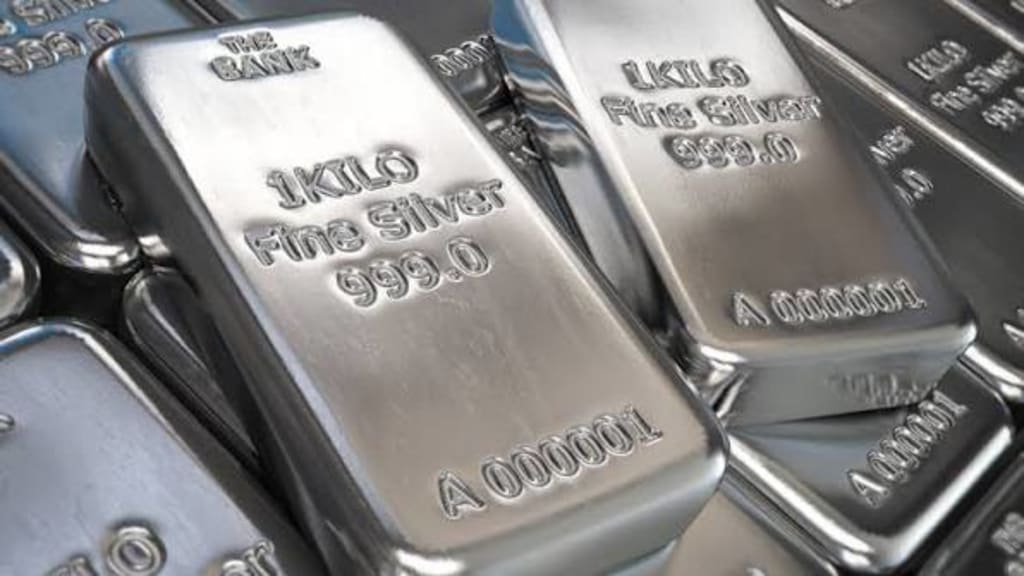
A man buys twenty silver rounds, drops them into a zip-top sandwich bag, presses the seal, and puts the bag in a drawer. Four years later he opens it and finds the rounds gone gray at the edges, a few of them fogged over completely. He concludes what most people conclude: the bag did it. The plastic was the problem.
He is wrong, and the reason he is wrong is worth understanding, because the correct answer changes what you do next.
Yes, it is acceptable to store silver in zip-top polyethylene bags. The plastic is chemically inert toward silver and is explicitly endorsed by conservation authorities.
But a zip-top bag by itself is not tarnish protection, because it is not gas-tight, and a press-to-close zipper is not a hermetic seal. The bag is a dust and handling barrier that mildly slows gas exchange. Treated as the whole solution, it will disappoint you. Treated as one layer of three, it works fine.
The Difference Between Polyethylene and PVC, and Why the Folk Wisdom Got Scrambled
The advice that “plastic ruins coins” is not made up. It comes from a real disaster, and the disaster involved a completely different plastic.
Soft PVC flips, the flexible vinyl sleeves that were once standard for storing coins, are made pliable by plasticizers. Those plasticizers migrate out of the plastic over time as an oily film, the residue collectors call green slime, which leaves a ghostly outline of the coin on the flip.
In the presence of moisture that residue can generate hydrochloric acid, which permanently scars the surface. Grading services have been warning about this for decades. The damage can begin within roughly six months.
Polyethylene has none of that chemistry. It is a pure hydrocarbon, flexible because of its own molecular structure, requiring no plasticizer at all. No sulfur. No chloride. Nothing to migrate.
The Canadian Conservation Institute recommends holders made of polyethylene, polypropylene, polyester, polystyrene, and acrylic for coins and medals, and in its guidance on caring for silver it specifically endorses “placing individual silver objects inside polyethylene bags and then sealing the bags using tape, heat sealing, or a self-sealing bag.”
So the conservators who care for museum silver collections use the same material your sandwich bag is made from. The confusion in online forums comes almost entirely from people applying a PVC warning to a non-PVC product.
One caveat worth respecting: unbranded bags of unverified composition can carry antistatic or anti-fog additives. Stick to plain food-grade bags from a known manufacturer, or purpose-made archival polyethylene.
Why the Bag Still Fails If You Rely on It Alone
Here is the part almost no article mentions, and it is the technically decisive point.
Low-density polyethylene is among the worst gas barriers in commercial packaging. Measured oxygen transmission runs roughly 450 to 500 cubic centimeters per hundred square inches per day at one mil thickness.
For comparison, polyester film comes in at 2 to 6 in the same units, and specialty barrier films measure in hundredths. Hydrogen sulfide, a small and polarizable molecule, moves through polyolefins readily.
Meanwhile the zipper on a press-to-close bag is a mechanical interference fit. It is designed to keep a sandwich together, not to hold a vacuum. It leaks along the track and at the ends.
So the sulfur gases that cause tarnish walk through the wall of the bag and around the seal. And they do not need much. Silver exposed to about one part per billion of hydrogen sulfide will typically tarnish within a year, a concentration well below what a human nose can detect.
The second failure mode is moisture. Seal a bag in a humid room and you have permanently enclosed air at that humidity. Temperature swings can push the interior relative humidity higher and, against a cold surface, produce condensation.
Since adsorbed water is the medium that lets silver ions dissolve and migrate, trapped humidity accelerates whatever sulfidation does occur. If you are going to bag silver, do it on a dry day, in a dry room.
Which brings us back to the man with the gray rounds. The bag did not tarnish his silver. The bag simply did nothing to stop the air in his house from tarnishing it, and he had assumed it would.
What to Actually Do, in Order of Increasing Protection
Level one, the baseline. A plain polyethylene zip-top bag, sealed in dry conditions, one item per bag or with pieces separated. Better than loose in a drawer. Not a tarnish solution.
Level two, the practical answer for most holders.
The same bag with an anti-tarnish strip or a silica gel desiccant packet inside, or both. Silica gel manages humidity. Anti-tarnish strips actively neutralize the sulfur compounds that permeate the plastic.
Manufacturers rate strips at roughly six months in loosely closed storage and up to twelve months or more in a well-sealed enclosure. Those figures are vendor claims, so err toward replacing them early.
Level three, for anything you intend to hold for decades.
Heat-sealed polyethylene rather than a press-to-close zipper, or a purpose-made anti-tarnish bag, with a desiccant and a sulfur absorber inside. Silver-loaded anti-tarnish cloth works on a sacrificial principle: the silver particles embedded in the fabric react with incoming sulfur before it reaches your object, and the cloth darkens as it loads, so it tells you when it is spent.
Level four, for graded or premium product.
Leave it in the mint capsule or original tube. Put that inside the sealed enclosure. Do not introduce a new variable to something that arrived properly housed.
And in every case, never bag rounds loose together
. Metal on metal contact produces rim dings and hairline scratches, and those are permanent in a way that toning is not. A stack of rounds sliding against each other in a bag will do more damage to the surfaces than four years of tarnish would.
The Worries Behind the Question
“I have had silver in bags for years. Did I ruin it?”
Almost certainly not, in any way that matters financially. On generic .999 rounds and bars, value is a function of weight and fineness. Tarnish is a micron-thin surface conversion that removes no silver and that a refiner recovers regardless. It may cost you a little on the retail premium if a buyer wants pristine product, and heavily spotted material can be bid closer to spot. The melt value is untouched. What you lost is cosmetic.
“Should I clean it now?”
No, and this is the objection worth pressing hardest on. On bullion you gain essentially nothing. On any coin carrying a numismatic or condition premium, cleaning is the irreversible error. Grading services treat detected cleaning as surface damage, including faint hairlines visible only at certain angles, and a cleaned coin drops out of the numeric grading scale into a details designation, usually at a steep discount. Attractive original toning often sells above an untoned equivalent. Fix the environment. Leave the metal alone.
“So what should I have bought instead of bags?”
Nothing exotic, and this is the reassuring part. Mint tubes, hard capsules, and inert flips are inexpensive. Desiccant packets and anti-tarnish strips cost a few dollars. The total outlay to store a serious silver position correctly is trivial next to the value of the position, which is a rare thing to be able to say about protecting an asset.
“Is this something dealers should have told me?”
Frankly, yes. The industry sells a great deal of metal and offers very little guidance on what happens to it after the box arrives. A buyer who researched premiums carefully and then lost the finish on four years of accumulation was not badly served on price. They were left alone with the part that came after.
The Bottom Line
Zip-top polyethylene bags are safe for silver. They are not the same thing as protection.
The plastic will not hurt your metal, and the widespread warning against it is a misapplied PVC story. But polyethylene is a poor gas barrier and a press-to-close zipper is not a seal, so sulfur gases reach your silver anyway. The fix is not a different bag. It is putting something inside the bag that removes what gets through, and sealing it on a dry day in a room that stays dry.
Get that right and the bag becomes what it was always suited to be, which is a clean, inert, inexpensive container doing one part of a job that takes three.
About the Creator
Stefan Gleason
Stefan Gleason is President and CEO of Money Metals, the company recently named "Best Overall Online Precious Metals Dealer" by Investopedia. A graduate of the University of Florida, Gleason is a seasoned business leader and investor.
Enjoyed the story? Support the Creator.
Subscribe for free to receive all their stories in your feed.
Comments
There are no comments for this story
Be the first to respond and start the conversation.