
Iconic Indian Monuments: Discovering Their Hidden Histories
Indian Monuments
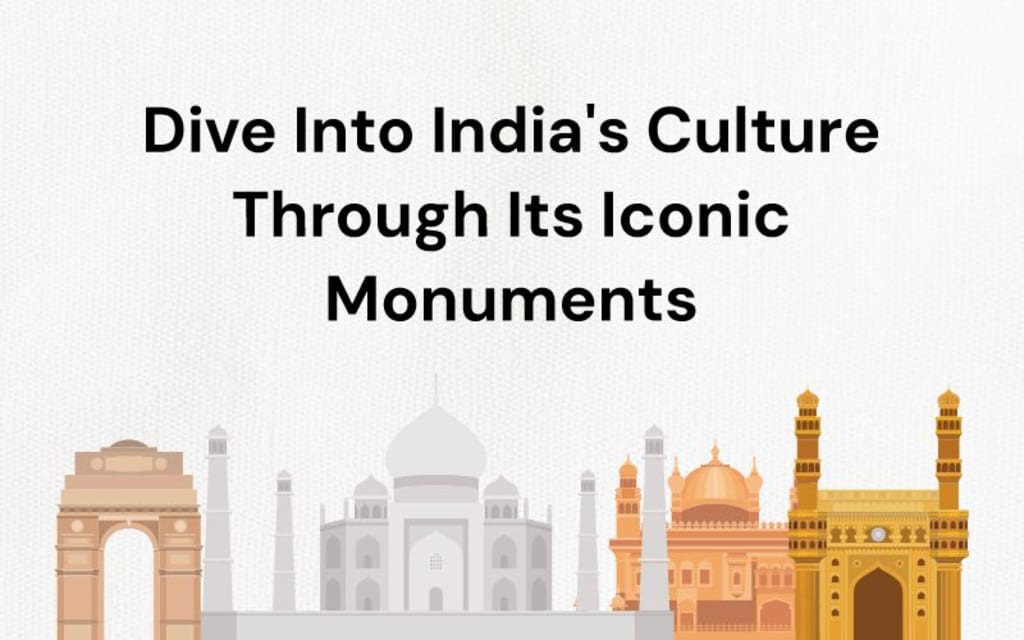
Steeped in old culture and heritage, India is dotted with some iconic monuments etching out the tales of yesteryear. Each monument speaks of a different history of people, their rulers, and the architects who created such masterpieces.
From architectural wonders to symbols of love and power, India's historical places conceal histories that get held hostage by travelers, history buffs, and culture lovers.
This blog goes deeper into some of the most exciting and lesser-known stories about famous monuments in India, aiming to give a vision of cultural heritage and ancient architecture that makes India a must-visit place for anyone who loves history.
The Hidden Stories Behind India’s Iconic Monuments
India’s monuments are beautiful, but they are also mysterious. Let us use some of the country's most iconic sites to uncover their untold tales.
Taj Mahal, Agra
Renowned as the world’s finest example of love, Emperor Shah Jahan built the structure in memory of his most loved wife, Mumtaz Mahal. The legend has it that Shah Jahan wanted to make a second black marble Taj Mahal opposite the Yamuna River over the other side, which was to be a mausoleum for him.
No one has ever built this, but local historians insist that some black marble proofs still exist across the river. This very majestic Taj has a lot of myths and legends attached to its construction—for example, how the hands of the artisans were cut off, so this kind of beauty was not reproduced elsewhere.
Red Fort, Delhi
As a shining example of opposition to the Raj, an icon of India’s freedom struggle was the Red Fort, behind whose red sandstone walls are stored full of tales of power and intrigue. The corridors themselves were built in the 17th century by Shah Jahan, and the tales that run through these halls and corridors include court politics, treacherous plots, and a dose of royal splendor.
A safe passage in an emergency would have been a hidden tunnel connecting the Red Fort to other Mughal structures.
Qutub Minar, Delhi
The purpose of the one constructed by Qutb-ud-din Aibak in 1193 has been widely debated—a guaranteed victory tower or prayer minaret? Next to the minaret stands the Iron Pillar, far older than itself and yet rustless for all these years. It still puzzles scientists and historians what kind of ancient metallurgical skill is unbeaten today.
Ancient Monuments and Their Cultural Significance
India’s cultural beliefs and expressions have found a form in India’s ancient monuments, which are more than structural works.
Khajuraho Temples, Madhya Pradesh
The Chandela dynasty was famous for its elaborate sculptures (10th to 12th centuries) and, often, erotic monuments, notably the Khajuraho Temples. According to Ch'ing, these carvings represent a harmony of spiritual and worldly life, of human passions and their culmination—by desire.
The provocative artwork shocked horror fans, and hardly half of the carvings displayed such things, while most were about the daily lives and beliefs of the people at that time.
Ajanta and Ellora caves, Maharashtra
They are masterpieces of Buddhist Jain and Hindu art and architecture. They are cut into the hillside cliff face that holds the stories of the ancient Indian epics and tall tales and detailed sculptures of deities, bodhisattvas, and historical figures.
Ajanta caves are dated to the 2nd century BCE and were abandoned for a millennium when rediscovered in 1819. Their rediscovery paved the way for new light on early Indian civilization and its spirituality.
Hampi, Karnataka
Hampi is a populated place that includes its temples, palaces, and marketplace ruins and is the capital of Hampi. However, Hampi was built on the principle of the grandeur of a lost empire, and with its vast boulder landscape, it's the grandeur itself.
Under them, its temples and palaces are rumored to hide hidden treasures guarded by the spirits of warriors. The army that landed to invade the city destroyed many parts, but the remaining vestiges itemize how glorious the empire once was.
Architectural Marvels and Their Hidden Histories
For centuries, Indian architecture has amazed visitors with its mysteries, making it more intriguing.
Sun Temple, Konark
The Sun Temple in Konark, in Kerala, is a massive chariot with engineering marvels written all over it. It was an architectural fixture constructed in the 13th century and set to catch the sunlight first.
It is said that the tower was so magnetic at its apex that it caused shipwrecks by pulling on metal objects. Today, the temple is not even intact, but recent studies reveal the ancient Indians knew such precision in astronomical engineering.
Mehrangarh Fort, Jodhpur
Mehrangarh Fort was marked with big marks from cannon balls shot by centuries of battles. Legends of heroes making sacrifices abound in the fort; one warrior was buried alive to ensure the fort could not be conquered.
Fatehpur Sikri, Uttar Pradesh
The Muslim Emperor Akbar made Fatehpur Sikri the Mughal capital. Finally, the city was abandoned due to a lack of water and is now a ghost town. Rumors of haunted palaces and spirits roaming courtyards make its otherwise splendid architecture more enticing.
Modern Discoveries and Restoration Efforts
There are new archaeological finds, and the restoration continues the understanding of India’s monuments.
Recent Archaeological Finds: Recent excavations around monuments, which have unearthed relics, structures, and inscriptions, provide new information about historical sites like Hampi and the Red Fort.
Restoration Projects: Famous monuments undergo extensive restoration projects to maintain their grandeur. Restoring monuments like the Qutub Minar and Ajanta Caves has been one of ASI’s important works, while international collaboration helped care for the Taj Mahal, inspiring many throughout.
Technological Advancements: Modern technology is bringing ancient architecture to a global audience; from 3D scans to virtual reality tours, technology reveals new interior and exterior aspects of these sites.
Explore popular literary works in Hindi, which you must read for modern discoveries!
The Cultural Heritage of India Through Its Monuments
India's monuments are monuments to its rich cultural heritage, and its diversity is a window into the past.
Historical Context: These monuments frame the beliefs, values, and traditions of various phases, from ancient to medieval.
Cultural Traditions: These structures make perfect pictures of the architecture, carvings, and layouts and, indeed, speak volumes about the people who created them. This is how India’s diverse cultural fabric is perfectly captured.
Impact on Modern India: These monuments today affect India’s national identity, attracting tourists, students, and historians who seek a link with the country’s roots.
Travel Tips, Cultural Exploration, and Language Etiquette
For those planning to explore India’s historic sites, here are some tips to enhance your visit:
Travel Tips: Visit monuments early in the morning or late afternoon with fewer crowds. Wear comfortable footwear and carry water.
Cultural Customs: Follow local rules, avoid touching or climbing on ancient structures, and dress modestly.
Language Etiquette: Learning a few words in Hindi or a local language enriches your experience of your reach; they can help bridge the cultural gap and make your experience all the more enriching.
Explore the Different Countries That Speak Hindi!
Key Takeaways
India’s monuments are a kaleidoscope of lost histories, culture, and architectural beauty. These structures are a sound of the country's artistic and spiritual heritage, and they call visitors to explore them.
If you are a history buff, a culture snob, or a generally sentimental person, visiting these sites gives you a slightly different way to sample India’s past. So that is why you should pack your bags and learn the secrets behind these famous monuments.
About the Creator
Enjoyed the story? Support the Creator.
Subscribe for free to receive all their stories in your feed.
Comments
There are no comments for this story
Be the first to respond and start the conversation.