
Howard Bloom’s Big Questions: From Rock and Roll to the Origins of Everything
The author behind The Lucifer Principle and Global Brain has built a writing career around a restless curiosity about what makes people—and the universe—tick.


A rock concert might seem an unlikely place to investigate human evolution. But think about what happens when the lights go down. Thousands of strangers turn toward the same stage. They sing the same words, move to the same rhythm, and briefly feel part of something larger than themselves.
For Howard Bloom, the distance between that experience and the questions explored in his books is surprisingly short.
Before becoming known for ambitious works about history, evolution, economics, and the cosmos, Bloom worked as a music publicist. His career included work with Prince, Michael Jackson, Billy Joel, and Styx. That background gives his writing an unusual point of entry: he has approached collective behavior through both intellectual inquiry and the emotionally charged business of popular music.
Read across his books and a recurring question emerges: how do separate individuals become part of something powerful enough to create, transform, or destroy?
The Troubling Pull of the Group
Published in 1995, The Lucifer Principle: A Scientific Expedition into the Forces of History established the scope of Bloom’s interests. Drawing connections among biology, psychology, and history, he examines the darker possibilities of social organization. His argument gives a central role to the “superorganism”—the larger collective to which individuals belong.
Belonging usually sounds like a good thing. We seek community, celebrate teamwork, and encourage people to find their place. Bloom asks what happens when those same attachments intensify aggression. A group can offer purpose and protection while also encouraging its members to accept cruelty they might otherwise resist.
That tension gives the book its force. Bloom presents destructive behavior as something entangled with the natural processes that build social life. It is an unsettling argument, and readers should approach it as an interpretation to examine rather than a settled explanation of every human conflict. The book’s central challenge remains compelling: understanding people requires looking closely at the groups that shape their loyalties.
A World That Learns Together
In Global Brain: The Evolution of Mass Mind from the Big Bang to the 21st Century, published in 2000, Bloom develops the constructive possibilities of interconnected life. He describes organisms as participants in an immense adaptive learning system, with information passing through relationships that extend far beyond any single individual.
The title may suggest computers and digital networks, but his argument reaches deeper into biological history. In Bloom’s account, collective learning did not begin when people connected their computers. Technology extends patterns of connection already present in living systems.
Placed beside The Lucifer Principle, the book raises an interesting problem. The networks that help a population learn can also spread destructive behavior. Connection alone offers no guarantee of wisdom. What matters is what moves through those connections—and what the collective does with it.
The Imagination Inside Economics
With The Genius of the Beast: A Radical Re-Vision of Capitalism, Bloom brings his attention to human invention and economic life. Published in 2010, the book emphasizes the role of imagination, persistence, and desire in turning unlikely materials and ideas into things people value.
There is a recognizable human question underneath that enormous subject. How does something that exists only in someone’s imagination become part of everyday life?
A product, a business, or a creative project begins with a possibility that other people cannot yet see. Bloom’s approach places that imaginative effort inside the economic conversation. Money matters, but so do the hopes and impulses that persuade people to attempt something uncertain.
It is an angle that helps explain the connection between his business interests and his broader fascination with creativity.

Taking the Question Into Space
The God Problem: How a Godless Cosmos Creates moves to an even larger scale. Here, Bloom explores how a universe can generate complexity and novelty without a divine designer. The book ranges through science, mathematics, and philosophy, and includes his own proposed cosmological model. Those proposals belong to Bloom’s argument; their presence in the book should not be confused with established scientific consensus.
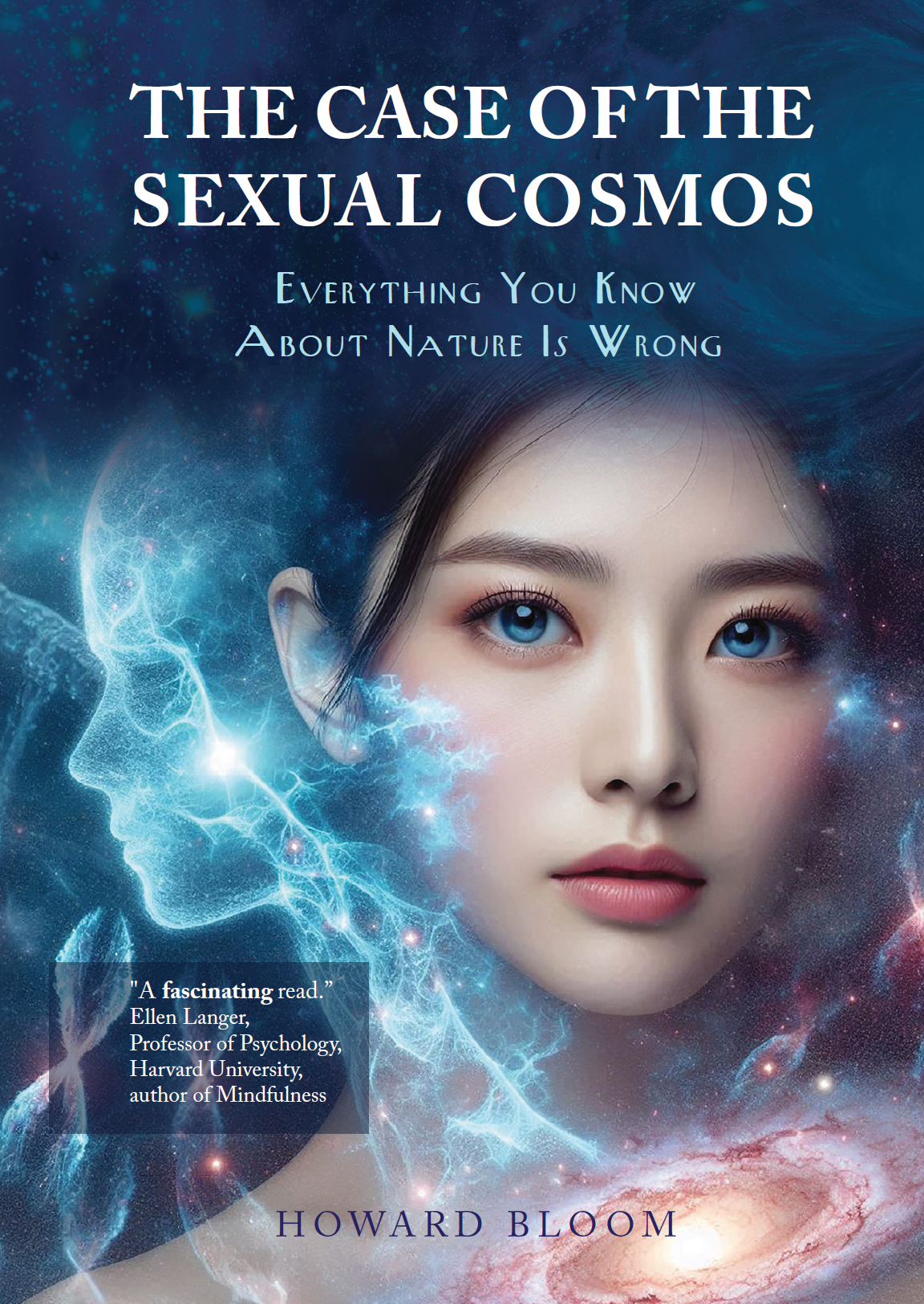
His The Case of the Sexual Cosmos: Everything You Know About Nature Is Wrong continues his interest in invention within nature. Bloom presents life as an active agent of planetary transformation and emphasizes its extravagance, experimentation, and capacity to produce new possibilities.
Even the titles reveal something about his approach. Bloom makes large claims and invites large arguments. Readers looking for narrowly bounded subjects may find that scope demanding. Readers drawn to connections across disciplines will recognize the appeal.
The Person Behind the Ideas
Bloom’s autobiographical books offer another way into his work.
How I Accidentally Started the Sixties follows his youthful explorations through places including Buffalo, California, Israel, and New York. Its account of discovery and rebellion brings his own experiences into the cultural questions that occupy his other writing.
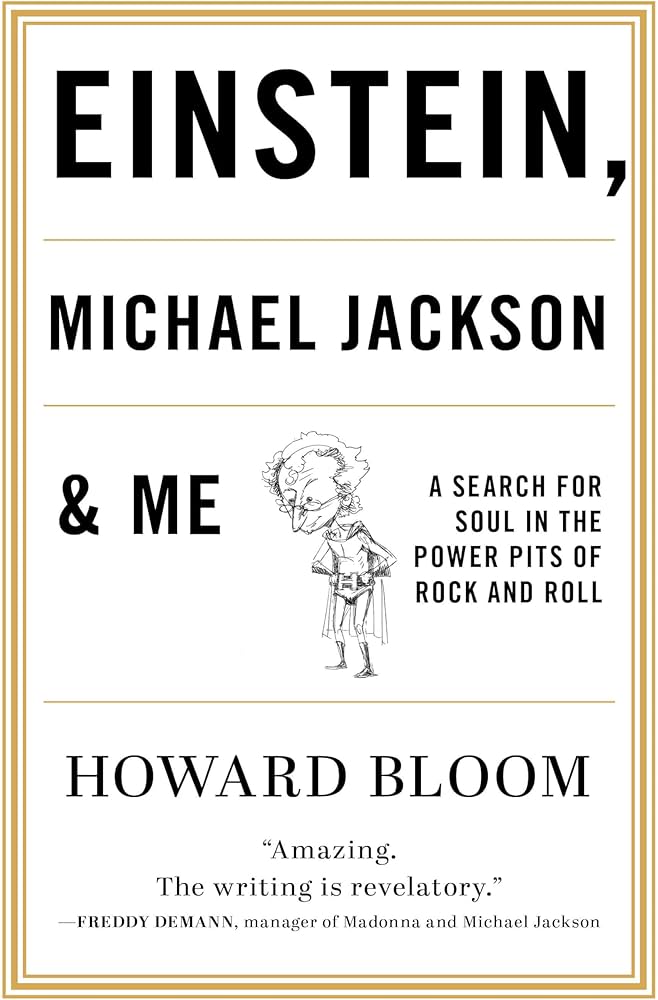
Then there is Einstein, Michael Jackson & Me: A Search for Soul in the Power Pits of Rock and Roll. The book draws on his music-industry years to explore fame, meaning, and the making of cultural myths. For readers who know the artists but have never encountered Bloom’s wider work, it offers an accessible starting point.
Taken together, these books reveal an author repeatedly returning to the relationship between individual experience and larger forces. A performer and an audience. A person and a society. An organism and its environment.
Bloom’s appeal lies in the scale of his curiosity and his willingness to follow a question across unfamiliar territory. Agreement is never a requirement for engagement. His books give readers plenty to question—and plenty to keep thinking about after they close the cover.
About the Creator
Marquee Current Entertainment News
Marquee Current covers music, movies, television, & pop culture, with artist interviews, fresh releases, & stories about the people behind the work. From familiar faces to emerging talent, we follow what’s happening & who’s worth watching.
Enjoyed the story? Support the Creator.
Subscribe for free to receive all their stories in your feed.
Comments
There are no comments for this story
Be the first to respond and start the conversation.