
How to Safeguard Your IoT Devices: Everyday Habits for Enhanced Cybersecurity - By: Maha Ghunaim
10 Everyday Habits to Protect Your IoT Devices from Cyber Threats | Ultimate Guide

The Internet of Things (IoT) has transformed our homes with smart devices like thermostats, cameras, and voice assistants. However, this convenience comes with risks: cyberattacks on IoT devices surged by 300% in 2022, often due to overlooked security practices. By adopting simple daily habits, you can significantly reduce vulnerabilities and protect your digital life.
Ditch Default Passwords
Why it matters: Default passwords are low-hanging fruit for hackers. The 2016 Mirai botnet attack exploited default credentials to disrupt major websites.
- Replace factory passwords with strong, unique combinations (e.g., "Winter2024!" becomes "Tr#3Bark!9Frost").
- Use a password manager to track credentials.
- Avoid reusing passwords across devices.
Update Firmware Religiously
Why it matters: Outdated firmware leaves devices exposed to known exploits.
- Enable automatic updates in device settings.
- Manually check for updates monthly via the manufacturer’s app.
- Replace devices no longer supported by security patches.
Fortify Your Home Network
Why it matters: A secure network is your first line of defense.
- Rename your router from the default SSID and use WPA3 encryption.
- Create a guest network for IoT devices to isolate them from personal data.
- Disable Universal Plug and Play (UPnP) unless necessary.
Enable Two-Factor Authentication (2FA)
Why it matters: 2FA blocks 99.9% of automated attacks, per Microsoft.
- Opt for app-based authenticators (Google Authenticator) over SMS.
- Enable 2FA on router and cloud accounts linked to IoT devices.
Avoid Third-Party App Risks
Why it matters: Unofficial apps can harbor malware.
- Download apps only from official stores (Apple App Store, Google Play).
- Verify app permissions—deny unnecessary access to cameras or microphones.
- Beware of phishing emails disguised as device alerts; never click suspicious links.
Monitor Device Activity
Why it matters: Unusual activity signals a breach.
- Review device logs for unrecognized logins.
- Use network monitoring tools like Fing or your router’s admin panel to spot unknown devices.
Disable Unused Features
Why it matters: Minimize entry points for hackers.
- Turn off remote access when not needed.
- Disable voice control on smart TVs if unused.
Prioritize Physical Security
Why it matters: Physical access can lead to tampering.
- Place devices like security cameras out of easy reach.
- Secure smart locks with tamper-resistant screws.
Stay Informed and Educate Others
Why it matters: Cyber threats evolve rapidly.
- Follow cybersecurity blogs (e.g., Krebs on Security) and manufacturer updates.
- Teach household members to recognize risks, like suspicious app downloads.
Securing Your Smart Home: Everyday IoT Cybersecurity HabitsConclusion
In this eye-opening episode, we dive into the world of IoT cybersecurity and reveal everyday habits you can adopt to protect your smart home from hackers. From ditching default passwords to securing your Wi-Fi network, we break down actionable tips that anyone can follow. Whether you’re a tech enthusiast or just starting with smart devices, this episode is your ultimate guide to staying safe in a connected world. Tune in and learn how to outsmart cybercriminals—one habit at a time!
Why listen?
- Expert-backed strategies to secure your IoT devices.
- Real-life examples of cyberattacks and how to avoid them.
- Practical, easy-to-implement tips for every household.
Conclusion
Protecting IoT devices doesn’t require expert skills—just consistent, mindful habits. By strengthening passwords, updating firmware, securing networks, and staying vigilant, you can thwart most cyber threats. Remember, cybersecurity is a shared responsibility; every small step fortifies your digital fortress. Start today, and turn these practices into second nature for a safer smart home.
Key Takeaways:
- Use strong passwords and 2FA.
- Update devices and secure your network.
- Monitor activity and disable unnecessary features.
- Educate your household and stay informed.
"Don’t Let Your Habits Betray Your Privacy. Read Maha Ghunaim’s full study to secure your smart home today."
Inspired by Maha Ghunaim’s research, this article reimagines the conversation around IoT security. Dive deeper into her findings here: [Link to Study].
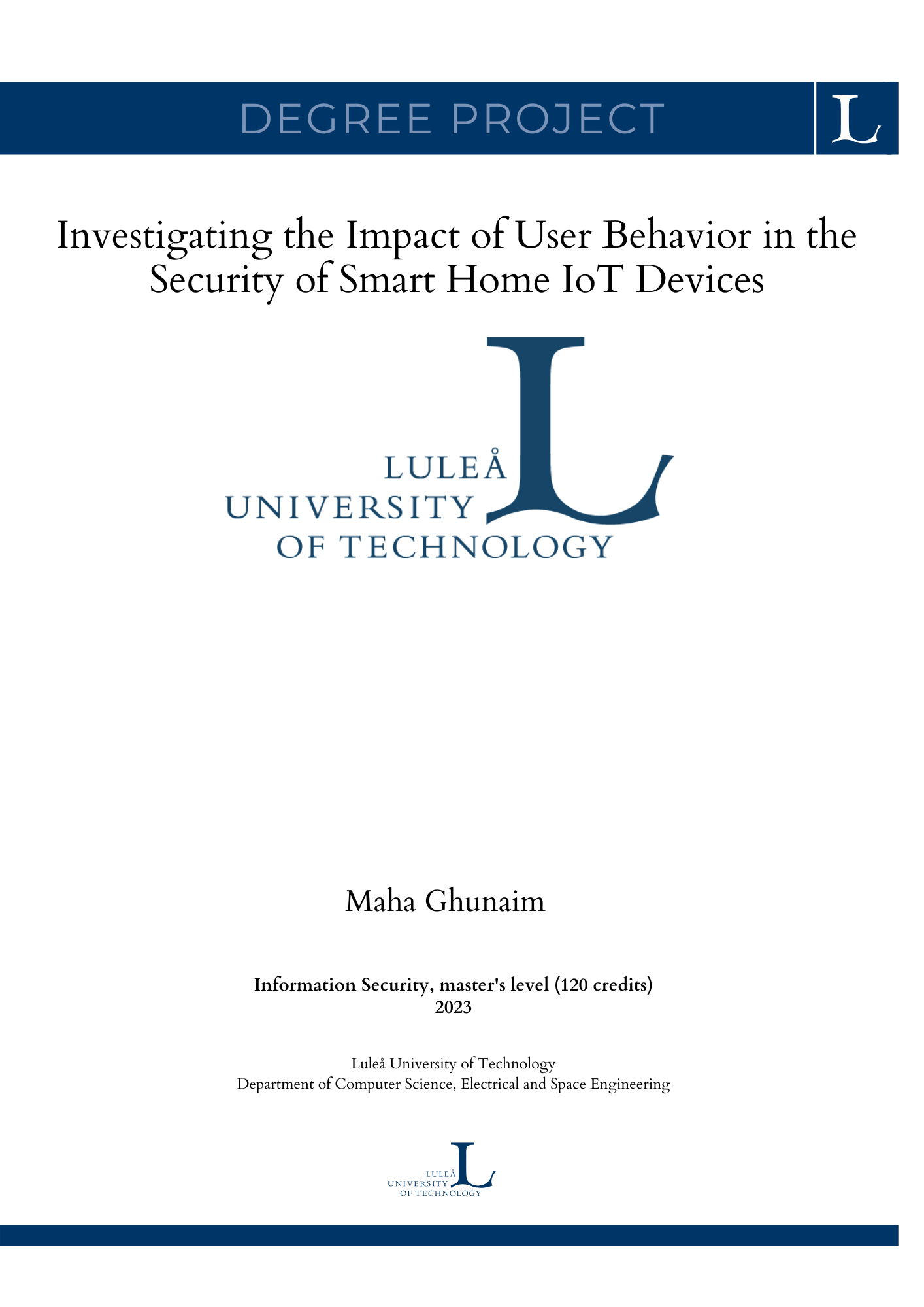
Investigating the Impact of User Behavior in the Security of Smart Home IoT Devices / By Maha Ghunaim
Luleå University of Technology Department of Computer Science, Electrical and Space Engineering
As technology is growing at a fast pace, IoT-based smart home services are increasingly adopted by people. IoT-based smart homes offer numerous unimaginable benefits, including efficiency, safety, effectiveness, scalability of services, devices, and data, among many others. However, there is another side to this technology: security threats.
As IoT-based technology is distributed in nature, implementing security measures and policies to protect the infrastructure becomes very difficult. The infrastructure faces threats such as information theft, eavesdropping, distortion, and more.
Ensuring the security of smart home IoT devices is a critical concern, and user behavior plays a major role in achieving it. Furthermore, Theory of Planned Behavior (TPB) was utilized throughout the study.
This study employed a qualitative research methodology and content analysis technique to investigate the impact of user behavior on the security of smart home IoT devices. The findings revealed several themes, such as the significance of comprehending and resolving security issues, the implementation of security measures, and the impact of user education and awareness. The study offered fresh perspectives on IoT device security and will aid in developing security best practices.
N.B.
This section ( IoT Security Starts with You ) embodies Maha Ghunaim’s commitment to bridging the gap between scientific research and practical application, empowering individuals to adopt smart technology with confidence and security.
Section Description:
In a world where technology is advancing at breakneck speed, researcher Maha Ghunaim offers a profound insight into the relationship between humans and technology through her master’s thesis: "Investigating the Impact of User Behavior on the Security of Smart Home IoT Devices."
What You’ll Find in This Section:
The Dark Side of Technological Convenience: While smart devices grant us unparalleled control over home management, the study warns of hidden security vulnerabilities stemming from daily habits—like neglecting system updates or using weak passwords.
Theory of Planned Behavior (TPB): How does this theory explain users’ decisions regarding cybersecurity? Discover the unique link between social sciences and security engineering.
Qualitative Analysis of User Awareness: Surprising results reveal the role of security education in reducing breaches and the importance of proactive measures like network segmentation and data encryption.
Proposed Security Practices: Practical recommendations to transform smart homes from "easy targets" into digital fortresses, based on the study’s field data.
Why This Thesis Matters:
The findings aren’t limited to academics or cybersecurity experts—they’re a guide for every smart homeowner striving to protect their privacy. Here, you’ll learn:
- How simple habits (like regular updates) make a radical difference in device security.
- Why security awareness is an integral part of the future user experience.
- How companies and users can collaborate to build secure smart ecosystems—from design to daily use.
Explore the Section to Discover:
- A visual summary (infographic) of key study findings.
- Interviews with IoT experts on the research’s applications.
- Links to educational resources for step-by-step digital security enhancement.
“Security isn’t just technology—it’s a mindset we live daily.”— Maha Ghunaim
About the Creator
Maha Ghunaim - مها غنيم
Unlock the Power of Resilience & Reinvention: Dive into Maha Ghunaim’s Extraordinary Journey
Enjoyed the story? Support the Creator.
Subscribe for free to receive all their stories in your feed.
Comments
There are no comments for this story
Be the first to respond and start the conversation.