
How to Know When a Property Is the Right Fit
A Practical Guide to Identifying Your Ideal Home

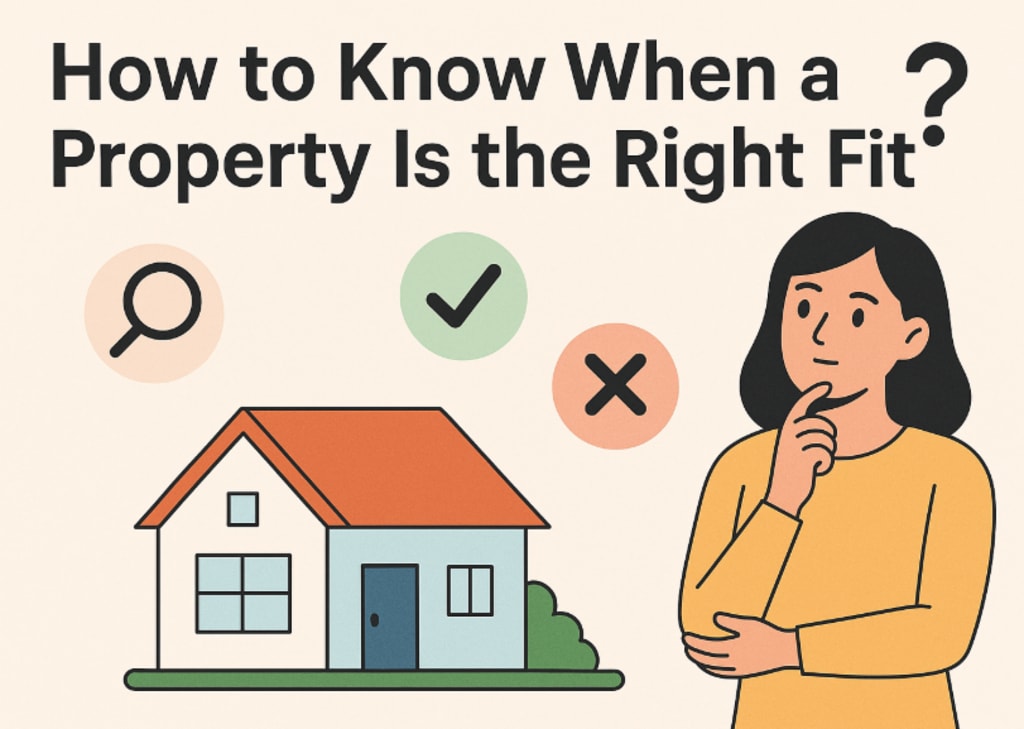
Buying a home is one of the biggest decisions most people make in their lives. It's not just about money or location—it’s about whether the house feels right, works for your lifestyle, and truly suits your long-term goals.
But let’s be real: knowing if a property is the right fit isn’t always easy. You walk into a home, the staging is perfect, the lighting is just right, and you think, “This is it.” Then, two days later, you find yourself doubting everything. Was it the right one? Did you get carried away by the mood, or was it truly a great match?
This is normal. It’s okay to feel uncertain. A lot is on the line—your money, your future, your comfort, and your peace of mind. That’s why it’s important to look beyond surface-level impressions and think clearly about what really makes a home “the one.”
So, how do you actually know when a property is the right fit for you? Let’s break this down in a simple, real way—no fluff, just real signs, questions to ask yourself, and what to look for before making the decision.
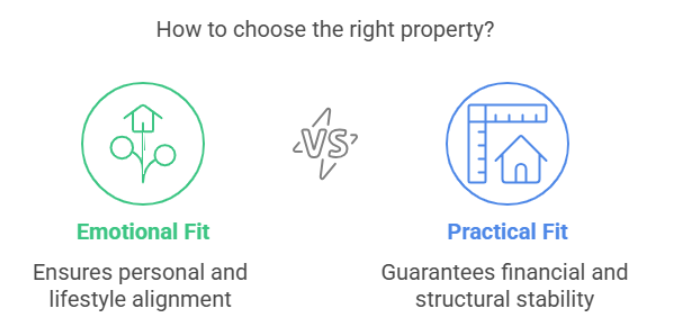
1. You Can Picture Your Life There
This might sound basic, but it matters more than people think. When you walk through a house, do you find yourself mentally placing your furniture? Can you see yourself sipping coffee by the window? Do you already know where the Christmas tree will go, or where your dog will nap in the afternoon sun?
That mental image is important. If your mind naturally starts settling in and making plans in that space, that’s your intuition trying to tell you something.
But don’t confuse staging with vision. A well-staged home is designed to make anyone picture a cozy life there. You want to look past the fresh flowers and pretty furniture. Focus on the bones of the house. Is the layout right for your routines? Do the rooms make sense for how you live?
2. The Layout Fits Your Lifestyle
Every house has a layout, and not all layouts are created equal—at least not for you.
Think about how you live day-to-day.
- Do you work from home and need a quiet office?
- Are you someone who entertains often and wants an open kitchen and living area?
- Do you need the kids' rooms close to yours, or would it be better if they were on the other side of the house?
- Are stairs going to be a problem—now or in a few years?
A house might look beautiful on the outside, but if the layout causes little daily frustrations—like a cramped kitchen, awkward hallway, or lack of storage—it’s going to wear on you over time.
You want a layout that feels natural. A good test? Ask yourself: Would I change anything major about this floor plan if I owned it? If the answer is “yes” and those changes are structural or costly, you might want to keep looking.
3. The Location Works for You
People say “location, location, location” all the time in real estate—but what does that really mean?
It means different things for different people. Some folks want peace and quiet. Others want to be in the middle of the action. The “perfect” location doesn’t exist in a universal sense. What matters is whether the area supports your lifestyle.
Here’s a simple checklist to think through:
- Commute: How far are you from work, school, or the places you go often?
- Noise levels: Is the street quiet at night? Is there construction nearby?
- Walkability: Can you walk to get groceries, coffee, or take a stroll safely?
- Safety: Have you looked up local crime stats or talked to neighbors?
- Future growth: Is the area stable, improving, or declining?
Spend some time in the neighborhood at different times of day. Visit at night. See what it feels like during school pick-up or on a Sunday afternoon. Online listings can’t show you the vibe—you have to feel it yourself.
4. Your Budget Isn’t Stretched to the Max
Let’s get honest: It’s easy to fall in love with a house that’s just outside your budget. Maybe it’s $15k more, and you start thinking, “Well… maybe I could make it work…”
But stretching yourself financially is dangerous, especially when you’re just starting out or when the economy is unpredictable. The right home will not push you to the edge of your financial comfort.
You want a place that you can afford comfortably, not barely. That way, you have money left for furniture, repairs, emergencies, and life in general.
Households spending over 30% of their income on housing are considered "cost-burdened," which can negatively impact their long-term financial health and overall well-being. A right-fit home is one that leaves room to breathe financially. It should give you peace of mind—not pressure.
Before you get emotionally attached, check these things:
- Will your mortgage be affordable after adding taxes, insurance, and maintenance?
- Do you still have money in savings?
- Will you be able to enjoy life or feel house-poor every month?
A right-fit home is one that leaves room to breathe financially. It should give you peace of mind—not pressure.
5. It Passes the “Dealbreaker” Test
Everyone has dealbreakers, even if they don’t admit it at first.
For some, it’s no natural light. For others, it’s being too far from work, or not having a yard, or an outdated kitchen. The thing is, people often overlook their dealbreakers when they’re emotionally excited.
That’s why it’s smart to write down your non-negotiables before you start seriously house hunting. That way, when you tour a property, you can see clearly whether it checks those boxes.
Don’t talk yourself into something that violates your must-haves. “We can fix it later” is often a trap unless you’re ready and willing to spend more money and time.
Trust yourself. If something feels off or too compromising, that’s a red flag.
6. Your Gut Is Calm (Not Just Excited)
There’s a difference between excitement and clarity.
Excitement can come from lots of things—pretty design, good weather that day, or the idea of just being done with the home search. But clarity is deeper. It's that quiet feeling of peace. It's the absence of nagging doubts.
Ask yourself:
● Do I feel calm when I think about living here?
● Are there any red flags I’m trying to ignore?
● Am I making this decision based on what I want—or what others expect?
If the house gives you that calm, steady, confident feeling—without the “but what ifs”—that’s a very good sign.
7. You’re Not Forcing It
Some buyers try to make a house fit. They justify a million little things:
- “It doesn’t have a second bathroom, but we’ll figure it out.”
- “The roof is old, but maybe it’ll hold up a bit longer.”
- “The kitchen is tiny, but I don’t cook that much anyway…”
One or two compromises are fine—no house is perfect. But when you’re bending over backward to make it work, that’s a sign it’s not the right fit. The right property should meet your needs without requiring you to convince yourself.
8. The Inspection Confirms It’s Solid
Let’s say you love everything about the house. The location, the layout, the vibe—it all feels right. Now comes the test: the inspection.
A good inspection is like a reality check. If the inspector finds major issues—foundation problems, plumbing nightmares, mold, or electrical hazards—you’ll need to pause and reassess. Even if it feels right emotionally, a property that needs serious repairs could become a financial headache.
It’s not just about whether a home is pretty. It’s about whether it’s structurally safe and worth the investment.
Don’t ignore this step. A clean inspection supports your decision. A problematic one should make you reconsider.
9. You Don’t Feel Rushed
Good decisions rarely happen under pressure. If you’re feeling rushed—by your agent, your partner, your own impatience—it’s hard to think clearly.
You should have time to sleep on it, talk it over, ask questions, and feel things out. If everything checks out, and you still feel good about it the next day (or week), that’s a green light.
The right house won’t require panic. It’ll be the one you feel good about even after the emotions settle.
10. It Checks Most of Your Boxes
You might not get everything on your wishlist. But if a home checks off most of your must-haves—and the ones it doesn’t are truly minor—it’s worth serious consideration.
A good way to think about it:
Is this house 80% right, and the other 20% are things I can easily live with or improve later?
If so, it might be the one. But if that 20% includes major headaches or core lifestyle conflicts, it’s okay to walk away.
A Real Example: Norfolk, VA
Let’s say you’re looking at homes for sale in Norfolk, VA. It’s a beautiful area with a mix of historical charm, coastal energy, and solid community vibes. But just because a neighborhood is popular doesn’t mean every house there will fit you.
Ask the same questions we covered:
- Does the home match your day-to-day lifestyle?
- Can you afford it comfortably?
- Does the neighborhood suit your routines?
- Will this home still work for you 5 years from now?
Norfolk has a lot of options—from historic homes to newer builds. Some folks want to be near the water. Others want to be close to downtown. If you're ready to buy a house in Norfolk, make sure the one you choose supports your goals—not just for now, but long-term.
Final Thoughts
Knowing when a property is the right fit isn’t about luck. It’s about clarity. The right house won’t just impress you—it’ll feel like home before you even unpack.
You’ll know because you won’t be trying to justify it. You’ll know because you’ll feel peaceful, not panicked. And you’ll know because it makes sense for how you live, work, rest, and grow.
So don’t rush. Don’t settle. And don’t ignore your gut.
A house isn’t just a place to live. It’s a place to build your life. When you find the one that feels just right—you’ll know.
About the Creator
Daniel Rodriguez
Daniel, a seasoned real estate expert with over a decade of experience, specializes in residential and commercial properties. Known for his market insights, negotiation skills, and client dedication, he ensures smooth transactions.
Enjoyed the story? Support the Creator.
Subscribe for free to receive all their stories in your feed.
Comments
There are no comments for this story
Be the first to respond and start the conversation.