
How to Integrate Crypto Wallets into an NFT Marketplace
The Complete Guide to Integrating Crypto Wallets into an NFT Marketplace

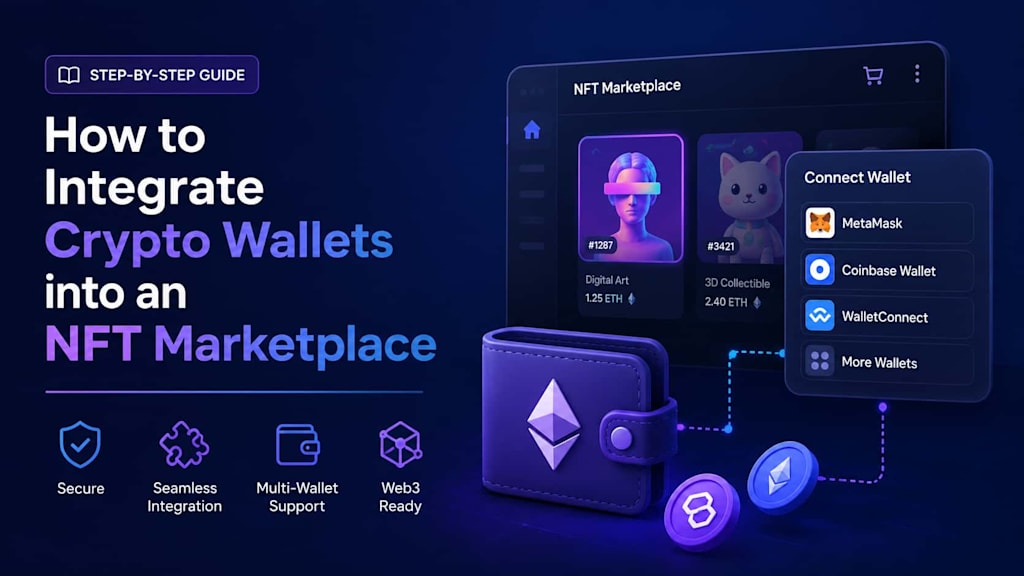
The digital world is rapidly evolving, and at the forefront of this transformation is the concept of non-fungible tokens (NFTs). These unique digital assets have created entirely new marketplaces, allowing artists, gamers, collectors, and investors to engage in ways previously impossible. A critical element of any NFT marketplace is the ability for users to connect their cryptocurrency wallets. Without this integration, users cannot buy, sell, mint, or manage NFTs, making wallet connectivity essential for a functional and successful platform.
This article explores the importance of wallet integration, the different types of wallets, best practices for connecting them to an NFT marketplace, and the future of wallet interactions in Web3.
The Role of Wallets in NFT Marketplaces
NFTs are fundamentally tied to blockchain technology, which ensures their uniqueness, ownership, and transferability. Unlike conventional e-commerce platforms, NFT marketplaces do not rely on user accounts in the traditional sense. Instead, a user’s wallet acts as their identity on the blockchain.
When a wallet is integrated into a marketplace, it serves several purposes:
- Authentication: Wallets allow users to prove ownership of digital assets without the need for usernames or passwords.
- Transaction Management: Every NFT sale, purchase, or transfer occurs through the wallet. It manages the cryptocurrency used for these transactions.
- Interaction with Smart Contracts: Smart contracts govern the logic behind NFT creation and trading. Wallets enable users to execute these contracts securely.
In essence, wallets bridge the gap between users and the blockchain, making them indispensable for marketplace operations.
Types of Crypto Wallets for NFT Marketplaces
Understanding the types of wallets available is crucial when designing wallet integration. There are four main categories:
- Hot Wallets: These wallets are internet-connected, making them convenient for frequent transactions. Examples include MetaMask, Trust Wallet, and Coinbase Wallet. Hot wallets are popular for NFT marketplaces because they provide immediate access to funds and NFT management.
- Cold Wallets: Offline wallets, such as hardware wallets like Ledger and Trezor, are extremely secure but less convenient for day-to-day NFT trading. Users typically employ them to store large collections or high-value assets safely.
- Custodial Wallets: In this model, the platform or a third-party service manages the user’s private keys. While custodial wallets simplify the onboarding process and can enhance user experience, they carry higher security risks since the platform becomes the custodian of funds.
- Non-Custodial Wallets: These wallets allow users to retain full control over their private keys. Non-custodial wallets are aligned with the decentralized ethos of Web3 and provide higher trust for users who prefer to manage their own assets.
For NFT marketplaces, non-custodial wallets are generally recommended because they offer security, decentralization, and align with the expectations of the crypto community.
Selecting the Right Blockchain and Wallet Protocols
Wallet integration cannot be separated from blockchain selection. The blockchain determines which wallet protocols are compatible and influences transaction speed, fees, and security. Popular choices for NFT marketplaces include:
- Ethereum: The pioneer of NFTs, Ethereum supports widely adopted standards like ERC-721 and ERC-1155. It is compatible with most wallets, making it a common choice for marketplaces. However, high gas fees have led developers to explore alternatives.
- Polygon (Matic): A Layer 2 solution for Ethereum, Polygon reduces transaction costs while remaining compatible with Ethereum wallets. It’s an attractive option for marketplaces seeking scalability.
- Solana: Known for high-speed, low-cost transactions, Solana uses wallets like Phantom and Solflare. Its ecosystem is growing rapidly, making it a viable choice for NFT projects.
- Binance Smart Chain (BSC): Offering lower fees and fast transactions, BSC is compatible with wallets such as MetaMask and Binance Chain Wallet. It is becoming increasingly popular for NFT marketplaces targeting a cost-sensitive audience.
A careful selection of blockchain and wallet protocols ensures smooth integration and improves user adoption by minimizing friction in transactions.
Steps for Successful Wallet Integration
While specific implementation methods vary, integrating a wallet generally involves several key steps:
User-Friendly Interface
The marketplace interface should make wallet connectivity intuitive. A clear “Connect Wallet” button, options for selecting different wallet providers, and indicators showing the connection status are essential for user experience. The integration should be seamless and accessible to users who may be new to blockchain technology.
Secure Authentication
Wallet-based authentication replaces traditional login methods, allowing users to verify ownership of a blockchain address. This method enhances security because users do not need passwords or email accounts, reducing the risk of account breaches. Authentication is achieved by signing messages through the wallet, proving ownership without exposing private keys.
Transaction Management
Wallet integration allows users to interact with smart contracts and perform transactions such as minting, buying, selling, and transferring NFTs. A marketplace must ensure that these transactions are executed efficiently and reliably. Providing clear feedback for pending, successful, or failed transactions helps users understand the status of their actions and reduces errors or confusion.
Multi-Chain Support
Supporting multiple blockchains can significantly expand a marketplace’s user base. However, this requires detecting the wallet’s connected network and guiding users to switch networks when necessary. It also involves ensuring compatibility with different token standards and contract addresses across chains.
Security Best Practices
Security is a top concern when integrating wallets into NFT marketplaces. The following practices are essential:
- Encourage Non-Custodial Wallets: Users should retain control of their private keys to reduce platform risk.
- Never Store Private Keys: Marketplaces should avoid storing private keys on servers.
- Secure Communication: All frontend and backend communications should be encrypted using HTTPS and other standard security protocols.
- Smart Contract Verification: Ensure all contracts interacting with wallets are audited and verified.
- Transaction Monitoring: Monitor for suspicious activity to prevent unauthorized transactions.
Security not only protects users’ assets but also builds trust in the marketplace.
Enhancing User Experience
Wallet integration is not solely a technical challenge—it’s a matter of usability. Marketplaces can improve the user experience by:
- Supporting a variety of wallet providers to meet user preferences.
- Streamlining the connection process to minimize steps.
- Providing clear instructions and onboarding for users unfamiliar with wallets.
- Reducing friction in transactions by suggesting optimal networks or Layer 2 solutions.
- Offering real-time notifications for transaction statuses, ensuring users are always informed.
A positive experience encourages users to return, increasing engagement and platform success.
Testing and Deployment
Testing is critical before launching wallet integration. Key steps include:
Using Blockchain Testnets: Testnet environments allow developers to simulate wallet interactions without risking real funds.
Testing Multiple Wallets: Verify compatibility with all supported wallet providers.
Simulating Transactions: Test minting, purchasing, selling, and transferring NFTs under various conditions to identify potential issues.
Thorough testing ensures the integration is reliable, secure, and user-friendly upon launch.
Emerging Trends in Wallet Integration
The future of wallet integration in NFT marketplaces is shaped by several trends:
- Mobile-First Wallets: As mobile adoption grows, wallets optimized for mobile devices will become increasingly important.
- Cross-Chain Wallets: Wallets capable of managing assets across multiple blockchains will simplify user interactions.
- Social Wallets: Integrating wallets with social logins could reduce friction for new users.
- Enhanced Security Features: Biometric authentication and advanced encryption may become standard, increasing user confidence in wallet security.
Keeping up with these trends allows marketplaces to stay competitive and provide cutting-edge user experiences.
Conclusion
Integrating crypto wallets into an NFT marketplace is a foundational step for any platform operating in the Web3 ecosystem. Wallets facilitate authentication, transaction management, and smart contract interaction, serving as the primary interface between users and blockchain networks.
By understanding wallet types, selecting compatible blockchains, focusing on secure and user-friendly integration, and keeping an eye on emerging trends, NFT marketplaces can create seamless, reliable, and future-proof experiences. A well-implemented wallet integration strategy not only empowers users but also builds trust, security, and long-term engagement—key elements for thriving in the dynamic world of NFTs
About the Creator
Damian Brown
IT consultant with 7+ years’ experience helping organizations optimize technology, implement scalable solutions, and drive digital transformation for measurable business results.
Enjoyed the story? Support the Creator.
Subscribe for free to receive all their stories in your feed.
Comments
There are no comments for this story
Be the first to respond and start the conversation.