
How to Handle Redundancy Appeals and Grievances Internally
Before They Reach an Employment Tribunal

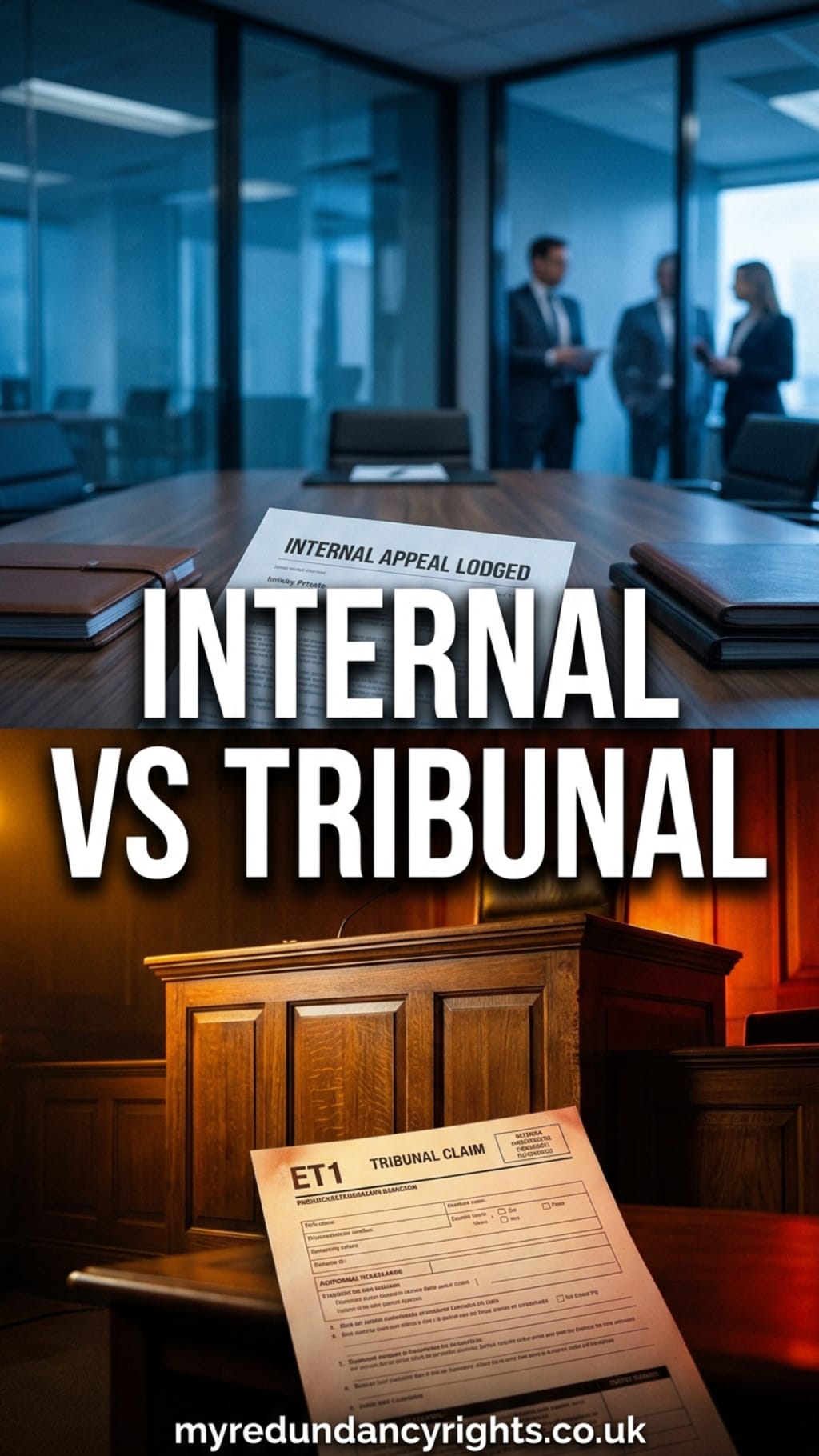
An employment tribunal claim costs UK businesses an average of £8,500 in legal fees alone — before any award is factored in. The majority of those claims were preventable. Not because the original redundancy was wrong, but because the internal appeal process that followed it was handled poorly, partially, or not at all.
This guide gives employers the step-by-step framework for conducting genuinely impartial appeal hearings that resolve disputes before lawyers get involved.
The Hidden Cost of Skipping Internal Resolution
Employment tribunal claims are at record levels. ACAS data consistently shows that the majority of claims settle before a full hearing — but only after both parties have incurred significant legal costs, management time, and reputational exposure. For small and medium-sized businesses, a contested tribunal process can run to tens of thousands of pounds when legal representation, management time, and any award are totalled.
The business case for getting the internal appeal right is not just ethical — it is financial. A well-run appeal hearing costs almost nothing. A poorly run one that ends at tribunal can cost everything.
Beyond the finances, how an employer handles a redundancy dispute sends a signal to every remaining employee. A transparent, fair process builds trust. A rushed or dismissive one destroys it.
Setting Up a Truly Impartial Appeal Process
The most common mistake employers make is appointing the same manager who made the original redundancy decision to hear the appeal. This invalidates the entire process. The appeal must be heard by someone with no prior involvement in the original decision — ideally a senior manager from a different department, or in smaller businesses, an external HR consultant.
Before the hearing takes place, establish clear procedural boundaries:
Notify the employee of the appeal hearing in writing, with at least five working days’ notice
Confirm who will hear the appeal and that they had no involvement in the original decision
Confirm the employee’s right to be accompanied by a trade union representative or workplace colleague
Provide copies of all documents that will be referred to at the hearing in advance
Confirm the scope of the appeal — what grounds are being considered and what outcomes are possible
The employee must feel they are being heard by someone who can genuinely change the outcome. If they don’t believe that from the outset, the hearing becomes a formality rather than a genuine review.
Mastering the Hearing and De-escalation Techniques
The appeal hearing is not an interrogation. Its purpose is to understand the employee’s specific grounds of appeal and to establish whether the original decision was procedurally fair and substantively correct.
Key principles for conducting the hearing effectively:
Active listening over defensive positioning. The appeal manager’s role is to gather evidence, not to defend the original decision. Open questions — “What specifically did you feel was unfair about the selection process?” — are more effective than closed ones that invite yes or no answers.
Separate emotion from procedure. Redundancy is personal. Employees in appeal hearings are frequently distressed. Acknowledge that distress without letting it override the procedural assessment. The question is not whether the employee is upset — it is whether the process was fair.
Document everything. Take detailed notes throughout. If a decision is later challenged at tribunal, these notes are your evidence that the hearing was conducted properly. Record the questions asked, the answers given, and the reasoning behind the outcome.
Adjourn before deciding. Never deliver the appeal outcome at the hearing itself. Adjourn, take time to consider the evidence, and confirm the outcome in writing within a reasonable timeframe — typically five to ten working days.
Exploring Alternatives to Full Escalation
Before confirming a redundancy outcome following an appeal, consider whether any of the following could resolve the dispute:
Redeployment — if a suitable alternative role exists or becomes available, offering it genuinely (not as a formality) can resolve an appeal without further process.
Revised selection scoring — if the employee’s appeal raises specific concerns about how selection criteria were scored, an independent re-score may reveal an error. If it does, acknowledge it. The cost of acknowledgement is far lower than the cost of defending an unfair dismissal claim.
Enhanced settlement terms — if the dispute is partly about the financial package, a modest increase to ex-gratia terms can close an appeal that might otherwise continue to tribunal.
Mediation — ACAS offers free early conciliation for all employment disputes before tribunal. Where an appeal cannot fully resolve matters, early conciliation is a structured, confidential route that resolves a significant proportion of claims without a full hearing.
Future-Proofing Your HR Practices After an Appeal
Every appeal is a data point. Document the lessons — what procedural gap created the grievance, whether selection criteria were applied consistently, whether the employee was given sufficient information at each stage.
Update your redundancy policy to reflect those lessons before the next redundancy exercise. Managers who conducted the original process should receive feedback on what the appeal revealed. The goal is a redundancy framework that generates fewer appeals, not just one that handles them better when they arise.
About the Creator
myredundancyrights
Free, plain-English UK employment law guidance — redundancy, unfair dismissal, gross misconduct, PIPs and more. Know your rights before it's too late.
Enjoyed the story? Support the Creator.
Subscribe for free to receive all their stories in your feed.
Comments
There are no comments for this story
Be the first to respond and start the conversation.