
How to Build Scalable Web Platforms Using ASP.NET
A Practical Guide for Building Web Platforms in 2026

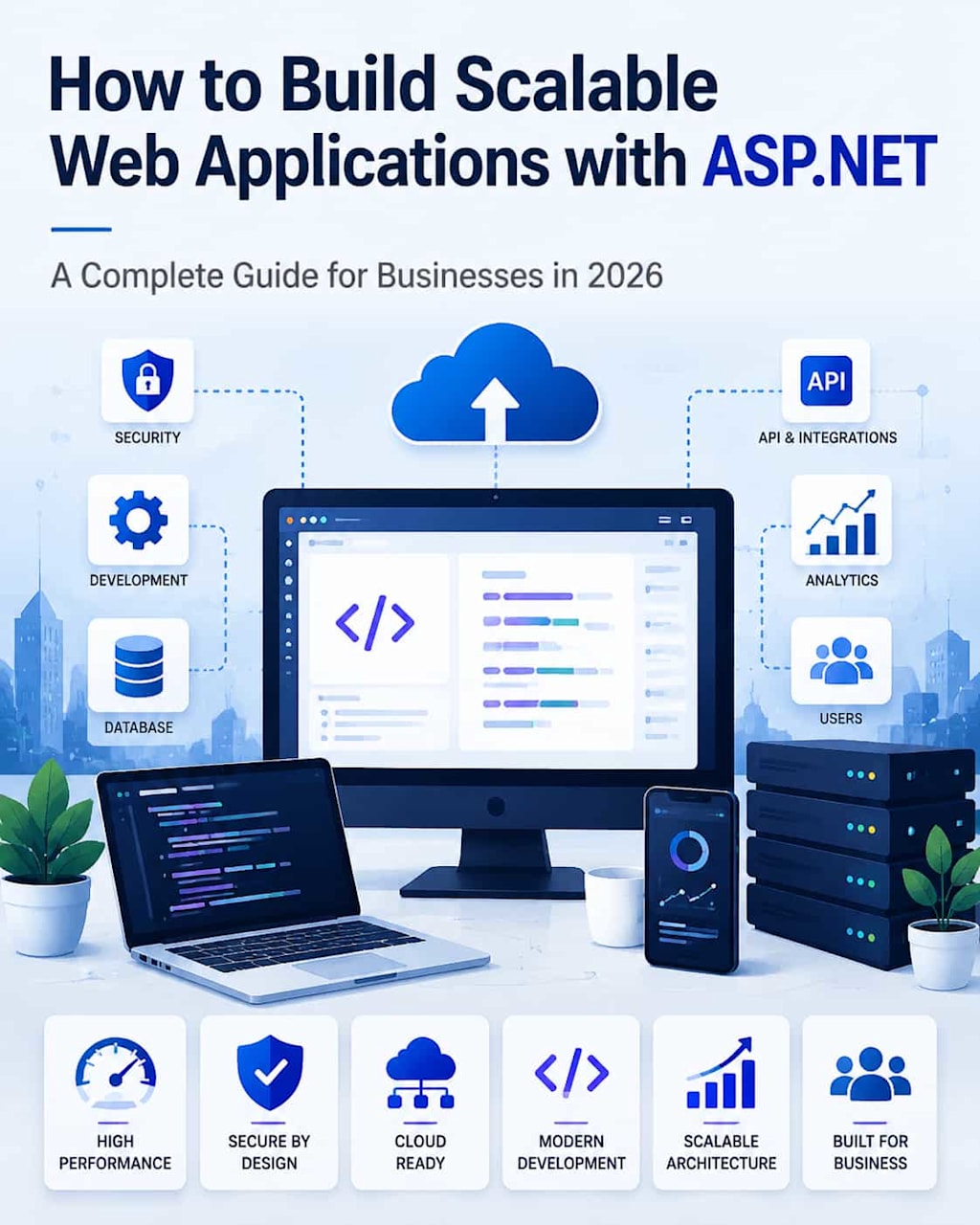
Building a modern web platform is rarely just about writing code. Organizations often initiate web projects to address specific business needs: automating internal operations, launching digital services, integrating disparate systems, or scaling applications for thousands of users. ASP.NET, a robust framework in the .NET ecosystem, is widely adopted for developing enterprise web applications, SaaS products, APIs, and internal portals due to its performance, security, and maintainability.
This article provides a practical guide on leveraging ASP.NET for scalable web development, including the types of projects it supports, best practices for architecture, and examples of real-world applications.
Why ASP.NET Is a Preferred Choice
- ASP.NET is chosen by organizations when projects demand reliability, scalability, and security. Its core advantages include:
- Enterprise Integration: ASP.NET seamlessly integrates with Microsoft technologies such as Azure, Active Directory, and SQL Server, simplifying authentication, data management, and cloud deployment.
- Scalability: Applications built with ASP.NET can support large volumes of concurrent users and complex business logic, making it suitable for high-traffic or data-intensive platforms.
- Security: The framework includes built-in features for authentication, authorization, and encryption, reducing exposure to common web vulnerabilities.
- Long-Term Support: Continuous development within the .NET ecosystem allows organizations to maintain and scale applications for years without rewriting the entire platform.
ASP.NET is frequently used to develop:
- SaaS platforms
- Enterprise dashboards and reporting tools
- Internal automation systems
- Large e-commerce platforms
- Financial and data-driven applications
These capabilities make it suitable for startups, medium-sized businesses, and large enterprises alike.
Types of ASP.NET Projects
ASP.NET supports a wide variety of project types depending on business goals and technical requirements.
Corporate Web Platforms
Corporate platforms often include content management, user portals, and integrations with internal systems.
Development timeline: Typically 2–4 months.
SaaS Platforms
SaaS applications require subscription management, analytics dashboards, API integrations, and scalable cloud infrastructure.
Development timeline: Typically 4–9 months.
Enterprise Systems
Enterprise systems often involve multiple integrations, large user bases, and complex workflows such as logistics management, insurance systems, or healthcare data portals.
Development timeline: Typically 12+ months.
Technical Considerations for ASP.NET Development
ASP.NET Core vs Traditional ASP.NET
ASP.NET Core is a cross-platform framework supporting Windows, Linux, and macOS environments, making it ideal for cloud-native applications and containerized deployments. Key differences compared to the older ASP.NET Framework include:
- Improved performance
- Lightweight and modular architecture
- Built-in dependency injection
- Easier cloud deployment
- Strong support for microservices
Many organizations now prefer ASP.NET Core for new SaaS and enterprise projects, while legacy ASP.NET applications may be modernized gradually.
Cloud Infrastructure and ASP.NET
Modern ASP.NET applications often run in cloud environments such as Microsoft Azure or AWS. Cloud deployment enables dynamic scaling, high availability, and reduced operational overhead. Common integrations include:
- Azure App Services
- Azure SQL Database
- Azure Active Directory
- Kubernetes for container orchestration
This setup allows organizations to maintain performance and reliability even under heavy usage.
Microservices Architecture in ASP.NET
Microservices architecture divides applications into small, independently deployable services. ASP.NET Core supports:
- REST APIs for service communication
- Containerization with Docker
- Kubernetes orchestration for deployment and scaling
- Distributed system patterns
This approach improves scalability and allows individual services to be updated without impacting the entire platform.
API Development with ASP.NET
APIs built with ASP.NET enable secure and efficient communication between web applications, mobile apps, and third-party services. ASP.NET Core provides:
- RESTful API development
- JSON serialization and deserialization
- Authentication and authorization
- OpenAPI and Swagger documentation
APIs are critical for SaaS platforms, enterprise integrations, and connected digital ecosystems.
Security Features in ASP.NET Applications
Security is a major consideration for enterprise web development. ASP.NET includes built-in features such as:
- Role-based authentication
- OAuth and OpenID Connect
- Encrypted data transmission
- Secure session management
These features are particularly important for industries handling sensitive data, including finance, healthcare, and logistics.
ASP.NET for SaaS Development
ASP.NET supports multi-tenant architectures and scalable APIs, making it well-suited for SaaS applications. The framework also enables real-time communication, background processing, and cloud deployment, which are essential for both MVP platforms and large-scale enterprise SaaS products.
Modernizing Legacy ASP.NET Applications
Many organizations operate legacy applications built on older versions of ASP.NET. Modernization projects often include:
- Migration to ASP.NET Core
- Cloud deployment
- UI modernization
- API development
- Performance and security improvements
Modernization ensures long-term maintainability while leveraging current cloud and DevOps practices.
DevOps and CI/CD Practices in ASP.NET Projects
Modern ASP.NET projects integrate DevOps and continuous integration/continuous deployment (CI/CD) pipelines to improve code quality and accelerate release cycles. Common practices include:
- Automated testing and code validation
- Containerization with Docker
- Kubernetes orchestration
- Continuous deployment through Azure DevOps or GitHub Actions
These workflows reduce operational risk and improve release predictability.
Example ASP.NET Development Companies
To provide context on real-world applications, here are examples of organizations that develop enterprise web applications and SaaS platforms using ASP.NET and the .NET ecosystem.
- Chudovo – Develops enterprise web applications, SaaS platforms, cloud solutions, and backend systems in Europe and North America.
- trinidat Software-Entwicklung GmbH – Builds custom web applications and enterprise platforms for digital transformation initiatives.
- Fuel Digital – Develops digital platforms and enterprise portals for product launches or modernization projects.
- Persistent Systems – Provides software engineering services for enterprise clients across multiple industries using ASP.NET and cloud technologies.
- Radisoft – Focuses on web platforms, internal management systems, and integration solutions.
- Byte-werk – Develops backend systems, business applications, and digital platforms.
- Marcole Software Consulting – Provides consulting and development services for enterprise software and system integration.
- Cimulus – Develops web platforms tailored to business workflows, including integration and long-term support.
- Tech & Thrive – Builds digital platforms and SaaS applications using ASP.NET frameworks and cloud infrastructure.
- Sweden Street – Develops secure enterprise applications and web services using Microsoft technologies.
These examples highlight how ASP.NET is applied in practice to meet a range of business needs across different sectors and regions.
Best Practices for Building Scalable ASP.NET Platforms
- Start with a Discovery Phase: Define business requirements, assess technical constraints, and plan architecture before starting development.
- Design for Scalability: Use microservices, containerization, and cloud infrastructure to handle growth efficiently.
- Prioritize Security: Implement robust authentication, authorization, and encryption measures.
- Integrate DevOps Workflows: Continuous integration, automated testing, and deployment pipelines help maintain high-quality code.
- Plan for Maintenance and Upgrades: Choose ASP.NET Core and cloud services to future-proof the application.
By following these practices, organizations can build web platforms that are not only performant and secure but also maintainable over the long term.
Conclusion
ASP.NET remains a reliable and versatile framework for building enterprise web applications, SaaS products, and internal business systems. Its strength lies not only in technology but in applying best practices: cloud integration, microservices architecture, API development, security, and DevOps workflows.
By understanding the technical considerations outlined in this guide and reviewing practical examples of ASP.NET applications, organizations can make informed decisions on how to structure projects, select architecture patterns, and leverage modern development practices. This approach ensures that web platforms meet current business needs while remaining scalable, secure, and maintainable for the future.
About the Creator
Chudovo
Chudovo is a custom software development company, focused on complex systems implementation.
Enjoyed the story? Support the Creator.
Subscribe for free to receive all their stories in your feed.
Comments
There are no comments for this story
Be the first to respond and start the conversation.