
How Social Media Hacks Human Psychology to Keep You Hooked
Uncover the deliberate psychological tactics—like dopamine loops, FOMO, and social validation—used by social media platforms to keep users endlessly scrolling.


You know the drill!
You open Instagram for a quick notification.
Just wanna check that one thing.
Next thing you know, an hour has vanished, and you've scrolled through hundreds of posts, watched countless Reels, and perhaps even felt a pang of envy.
Sound familiar?
That's not accidental.
Social media platforms are incredibly sophisticated, and they're expertly designed to tap into fundamental human psychological needs, keeping us scrolling, tapping, and sharing for as long as possible.
Manipulating The Brain's Reward System
Let's talk about what's really going on in our brains when we use social media.
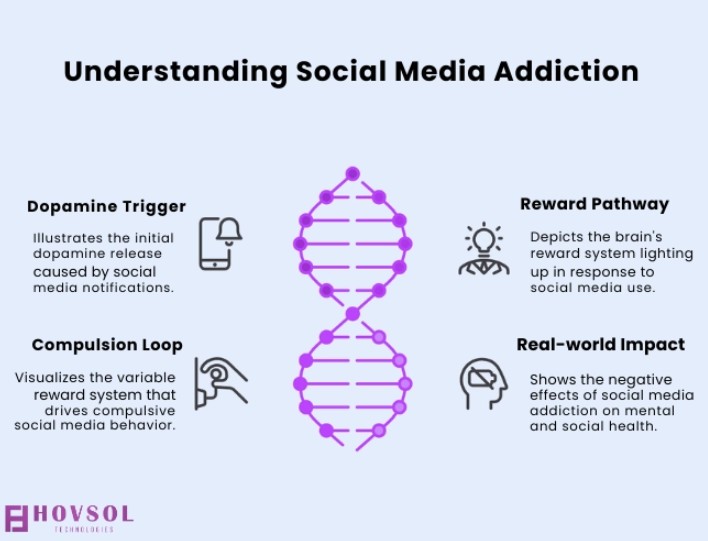
It all comes down to our brain's reward system, particularly the neurotransmitter dopamine. Often called the "feel-good chemical," dopamine floods our system in response to pleasurable stimuli.
Social platforms are engineered to hijack this system, creating a powerful feedback loop where a "like," a comment, a share, or a new notification triggers a dopamine rush, reinforcing our desire to seek out more of these digital rewards.
Have you ever wondered why it's so hard to put your phone down?
A big part of it is something called unpredictable, intermittent rewards.
Think of your phone like a slot machine.
If you knew you'd never win, you'd never play.
The variable and unpredictable nature of receiving that next "like" or engaging comment keeps us in a constant state of seeking, looking, and craving the next hit. This, combined with features like "endless scroll" and constantly refreshing feeds, creates an unrelenting "dopamine cycle" that makes disengagement incredibly difficult.
Frequent use can even alter our dopamine pathways, fostering a dependency "analogous to substance addiction". And guess what? AI-driven algorithms are the master puppeteers, continuously delivering personalized content to maximize our screen time and deepen the activation of these reward centers.
While those core psychological principles apply pretty broadly, each platform has its own unique "psychological DNA".
Facebook: Our Need for Belonging and Validation
Let's start with Facebook.
For many of us, especially Millennials, it's still about that fundamental human need for social connection and belonging.
It's like our "digital third place" where we try to stay in touch with our social circle. Features like "friending," commenting, and receiving "likes" provide immediate social feedback, triggering those positive feelings of being acknowledged.
This fulfills a deep-seated drive for social validation and acceptance, reinforcing our continued engagement through those dopamine-driven feedback loops.
While younger generations, like Gen Z, might have a lower emotional investment and use it more for utilitarian purposes or family, many Millennials still rely on it for maintaining connections and sharing life milestones.
Here's a surprising twist, though: research shows that high Facebook use actually correlates with both feelings of connection and feelings of disconnection, especially for those who passively consume content.
Instagram: Visual Aspiration and the Comparison Trap
Now, let's talk about Instagram.
This platform really capitalizes on our love for visual social rewards, tapping into our desire to share photos and videos and get feedback. We often curate our profiles as an idealized "highlight reel" of our lives, driven by a need for self-expression and public affirmation.
Each "like" notification triggers a small dopamine rush, creating an intentionally addictive feedback loop.
But here's where it gets tricky: Instagram is also a prime example of a platform where social comparison runs rampant. Constant exposure to carefully crafted, idealized visuals can spark envy, body image concerns, and feelings of inadequacy—a phenomenon known as "upward social comparison".
While features like Stories and those addictive Reels initially offered a more candid feel, even these can contribute to a "contrived authenticity" that makes comparison even more potent.
TikTok: The Algorithmic Addiction Engine

Okay, get ready to talk about TikTok, because this one is arguably the most psychologically potent platform out there!
Have you noticed how its "For You Page" (FYP) just gets you?
It's uncannily good at learning your interests, creating a never-ending stream of bite-sized videos (often just 21-34 seconds) that are pure "dopamine boosters".
This constant stream of novelty and surprise activates dopamine release, providing instant gratification and escape with "zero effort".
The slot-machine effect is super strong here: each swipe up is like pulling a lever, with the unpredictable reward of the next engaging video keeping us hooked.
This variable reward schedule strongly reinforces habit formation, leading many users, especially Gen Z, to lose track of time.
The fast-paced content has even been linked to shortened attention spans, memory problems, and decreased focus, leading to what some experts call "TikTok Brain".
And here's a surprising insight: Gen Z increasingly uses TikTok not just for entertainment, but also for news (63%) and product discovery (77%), actually expecting it to both entertain and inform.
The Psychological Toolkit: A Simple Breakdown
So, to sum it up, these social media platforms are absolute masters at playing on our psychology. They use a powerful toolkit to keep us engaged, and once you see it, you can't unsee it:
- Dopamine Loops: Every "like," comment, or new piece of content stimulates dopamine, creating a powerful craving for more.
- Variable Rewards: The unpredictable nature of these rewards, just like a slot machine, makes checking feeds intensely addictive and hard to stop.
- FOMO (Fear of Missing Out): That constant stream of others' lives, amplified by notifications, creates anxiety about being excluded, compelling us to stay glued to our screens.
- Social Validation: Our innate desire to be seen positively is fed by curated self-presentation and the immediate feedback of "likes" and comments, giving our self-esteem a boost (even if it's just temporary).
- Social Comparison: The curated "highlight reels" of others can lead to feelings of inadequacy and envy, prompting more engagement in a cycle of aspiration and sometimes self-doubt.
Why This Matters for Marketers:
For us, as digital marketers and content creators, truly understanding these psychological drivers is incredibly valuable.
It's not about trying to exploit anyone, but rather about leveraging genuine human needs for connection, inspiration, and entertainment in a responsible way.
So, what's the big takeaway for us?
The power social media has to captivate us is absolutely undeniable, and it's intricately woven into our psychology. By understanding how these platforms are designed to hook us, you can make more effective creators.
Want to dive deeper? Check out this even more detailed article: https://hovsoltechnologies.com/social-media-dopamine-addiction-science/
About the Creator
HOVSOL Technologies
HOVSOL Technology is a global IT solutions provider, specializing in delivering comprehensive web based services to businesses.
Enjoyed the story? Support the Creator.
Subscribe for free to receive all their stories in your feed.
Comments
There are no comments for this story
Be the first to respond and start the conversation.