
How many levels of development are available in BIM?
BIM Level of Development Specification

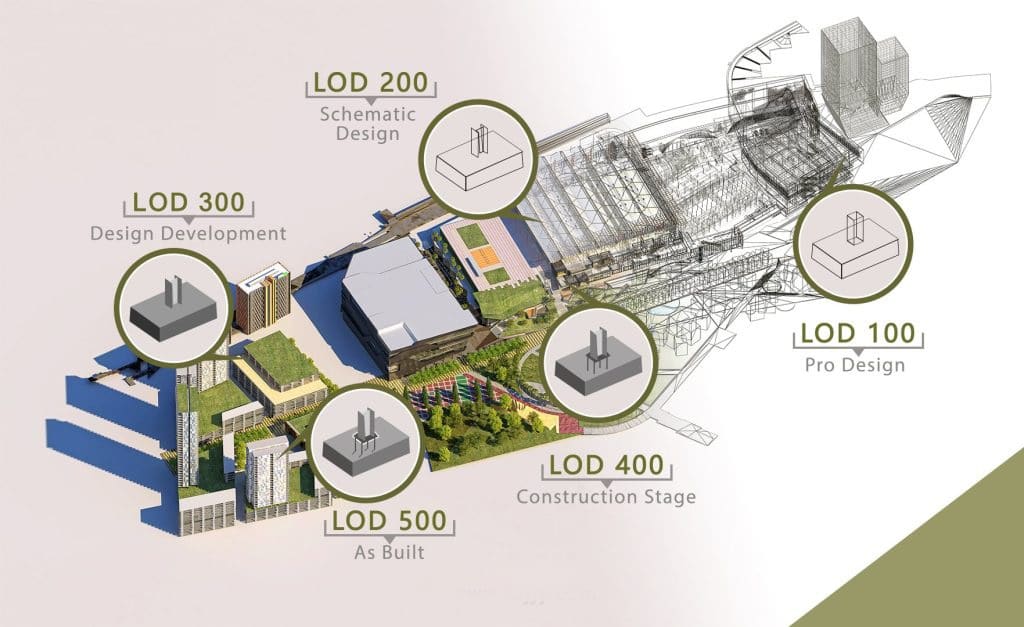
Purpose of LOD in BIM
Level of Development (LOD) is a set of specifications that defines the level of detail and accuracy of a Building Information Model (BIM). LOD is used to communicate the content and reliability of BIMs to stakeholders throughout the design and construction process.
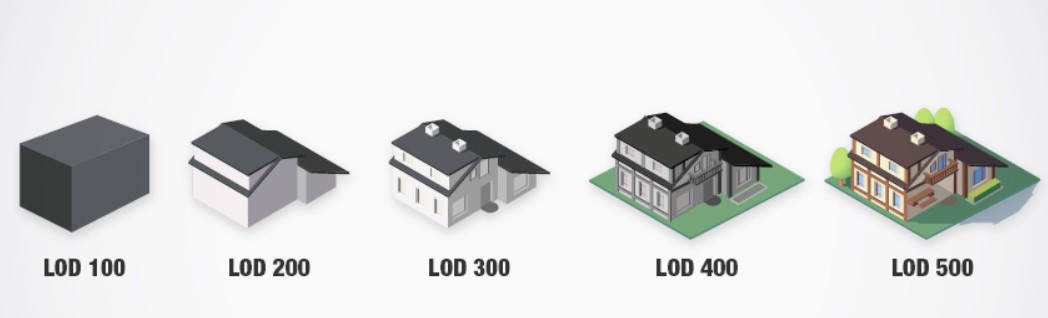
The LOD specification is divided into six levels, from 100 to 500. LOD 100 models are the least detailed and LOD 500 models are the most detailed. The specific requirements for each LOD level vary depending on the type of building system and the intended use of the BIM.
Using standards like ISO 19650 and referring to documents like the BIM forum for LOD requirements can help to standardize delivery expectations for projects. However, BIM specification documents should be tailored to the specific needs of each project and organization.
Importance of LOD in BIM Projects
The purpose of LOD is to ensure that all stakeholders have a clear understanding of the BIM and that the BIM can be used effectively for a variety of purposes, such as:
- Design: LOD models can be used to visualize the design, identify potential conflicts, and evaluate alternative solutions.
- Construction: LOD models can be used to develop construction schedules, estimate costs, and order materials.
- Operations and maintenance: LOD models can be used to create as-built drawings, track maintenance records, and plan renovations.
The importance of LOD in BIM projects cannot be overstated. LOD models can help to improve communication, coordination, and efficiency throughout the entire project lifecycle. By using LOD models, project teams can avoid costly mistakes and ensure that projects are completed on time and on budget.
Click here to learn more about how LOD and LOIN can help your next project.
Here are some of the benefits of using LOD in BIM projects:
- Improved communication and coordination: LOD models provide a common language for stakeholders to communicate about the project. This can help to avoid misunderstandings and conflicts.
- Increased efficiency: LOD models can be used to automate many tasks, such as generating construction schedules and estimating costs. This can save time and money.
- Reduced risk: LOD models can help to identify potential problems early in the project, which can help to reduce the risk of costly delays and rework.
Learn more about how LOD can benefit your next BIM project and start saving time and money today!
6 Levels of Development (LOD) available in BIM
These levels are used to define the level of detail and accuracy of a BIM model. The higher the LOD, the more detailed and accurate the model will be.
LOD 100: Conceptual Design
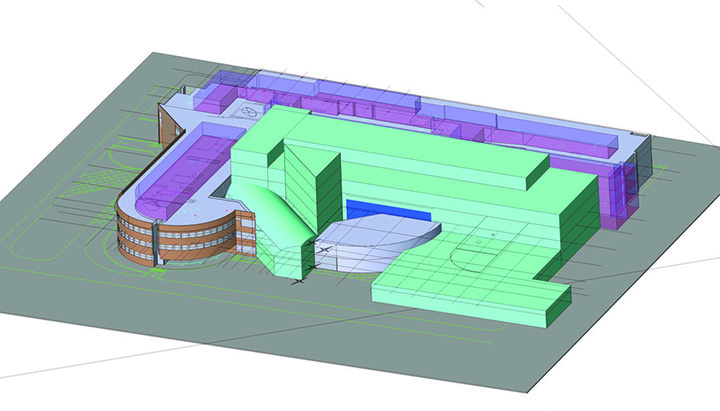
LOD 100 represents the initial stage of the BIM process, focusing on the conceptual design phase.
The model at this level provides basic massing and spatial representation, giving a rough idea of the project's shape and layout.
Geometric shapes are generalized, representing the overall form without specific detailing.
Information and detail are limited, providing a high-level overview of the project's concept.
LOD 200: Schematic Design
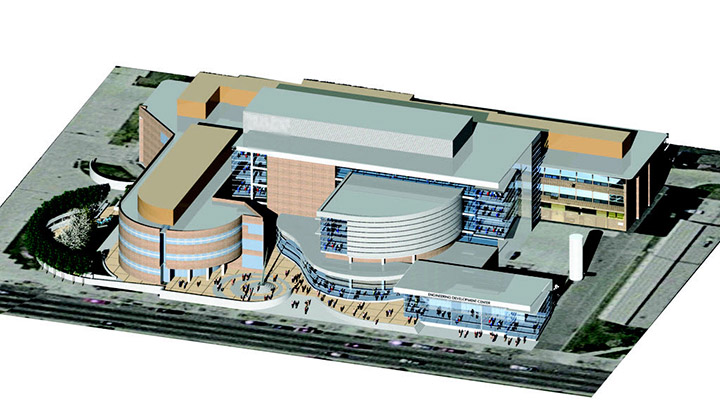
LOD 200 expands upon the initial conceptual design, incorporating more detail into the BIM model.
The spatial representation becomes more refined, offering a better understanding of the project's layout and organization.
Specific building components and assemblies are introduced, helping to define the major systems and elements of the design.
Generalized quantities and sizes are provided, giving a sense of scale and proportion.
LOD 300: Detailed Design
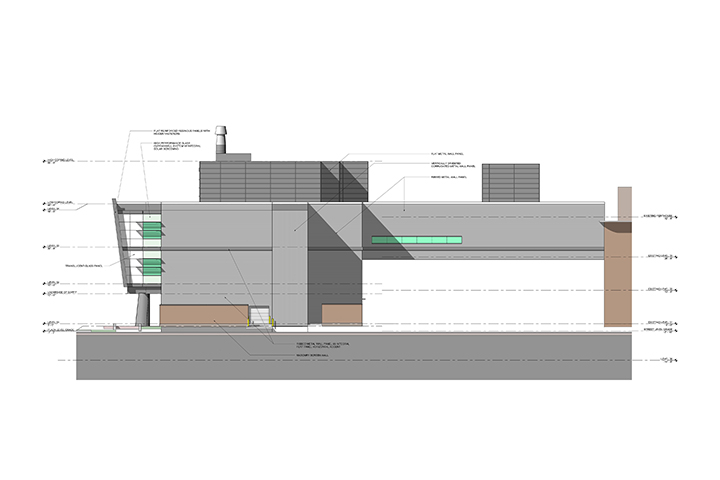
LOD 300 focuses on the detailed design phase, providing a higher level of accuracy and precision in the BIM model.
The model geometry becomes more accurate, capturing precise measurements and relationships between components.
Specific components with defined assemblies are included, allowing for a detailed analysis of their interconnections.
Detailed quantities and sizes are provided, enabling accurate material take-offs and cost estimates.
Preliminary construction and fabrication information may be added, aiding in the planning and coordination of construction activities.
LOD 350: Construction Documentation
LOD 350 is associated with the preparation of construction documentation, providing detailed information for construction purposes.
The model geometry is precise and specific to reflect the as-designed conditions.
Construction-level details and annotations are added to convey the necessary information for construction teams to execute the project.
Quantities and sizes are further refined to support accurate material procurement and construction sequencing.
Fabrication and assembly instructions may be included to guide the construction process.
LOD 400: Fabrication and Assembly
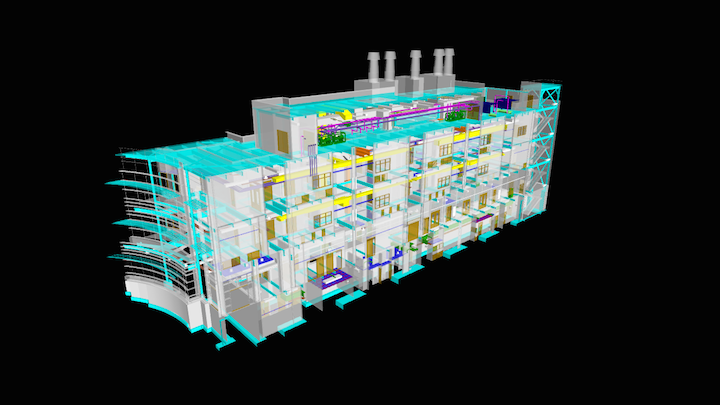
LOD 400 focuses on the fabrication and assembly stage, where the BIM model provides detailed information for fabrication and construction.
The model geometry is exact, representing the final product as it will be built.
Detailed fabrication and assembly information is included, guiding manufacturers and contractors in the production and assembly of components.
Shop drawings and fabrication details are generated from the model to provide comprehensive instructions to fabricators and installers.
LOD 500: As-Built and Facility Management
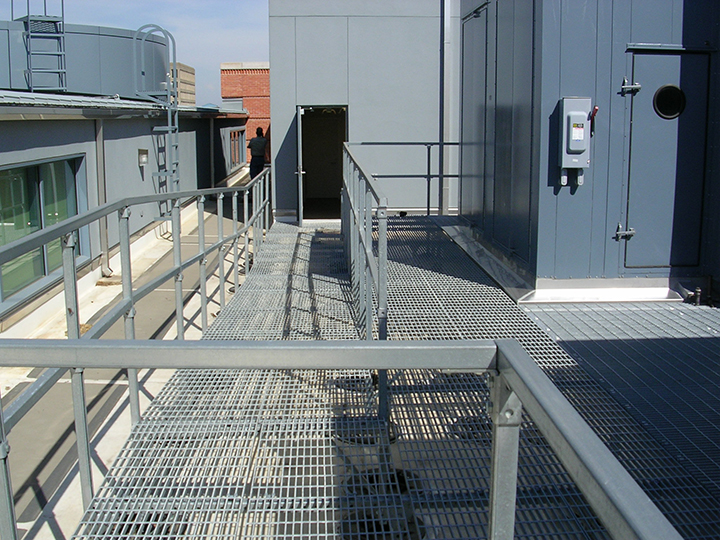
LOD 500 pertains to the final stage of the BIM process, capturing the as-built conditions and facilitating facility management.
The model reflects the actual construction, accurately representing the project as it has been built.
Detailed information for operation and maintenance is included, allowing facility managers to effectively manage the building throughout its lifecycle.
Integration with facility management systems enables the utilization of the BIM model for ongoing facility operations, maintenance, and renovations.
Refer to the GSA Standards for specifics on the implementation of the COBie format.
The specific requirements for each LOD vary depending on the type of project and the industry standards that are used. However, in general, the higher the LOD, the more information will be included in the model. This information can be used for a variety of purposes, such as:
- Visualization and communication
- Clash detection
- Quantity takeoff
- Cost estimation
- Schedule development
- Construction planning
- As-built documentation
Embrace Level of Detail and Development (LOD) in BIM modeling in your projects to enhance collaboration, streamline processes, and optimize construction efficiency. Take advantage of the benefits LOD offers for accurate representation and effective facility management.
Here are some of the challenges and considerations of LOD in BIM:
- Data accuracy and quality control: LOD requires accurate and high-quality data. This can be a challenge, especially for large and complex projects.
- Interoperability and exchange of LODs: LOD models need to be able to be exchanged between different software applications. This can be a challenge, especially if the applications are not compatible.
- Resource and time requirements: LOD models require more resources and time to create than traditional 2D drawings. This can be a challenge for projects with tight budgets or deadlines.
Despite the challenges, LOD is a valuable tool for improving collaboration and communication between stakeholders in the design and construction process. By clearly defining the level of detail and accuracy of a BIM model, LOD can help to ensure that everyone is working from the same information. This can lead to fewer errors, better decision-making, and a more efficient and cost-effective project delivery.
About the Creator
Damanpreet Karr
Hi there, I'm Damanpreet Karr, a content creator with 10 years of experience. I'm a passionate content writer and creator with a knack for crafting compelling stories that engage and inspire. Industries- Architectural & Education etc.
Enjoyed the story? Support the Creator.
Subscribe for free to receive all their stories in your feed.
Comments
There are no comments for this story
Be the first to respond and start the conversation.