
How ERP Systems Are Enabling Sustainable Real Estate and Net-Zero Construction
Driving greener buildings and smarter decisions with ERP-powered sustainability

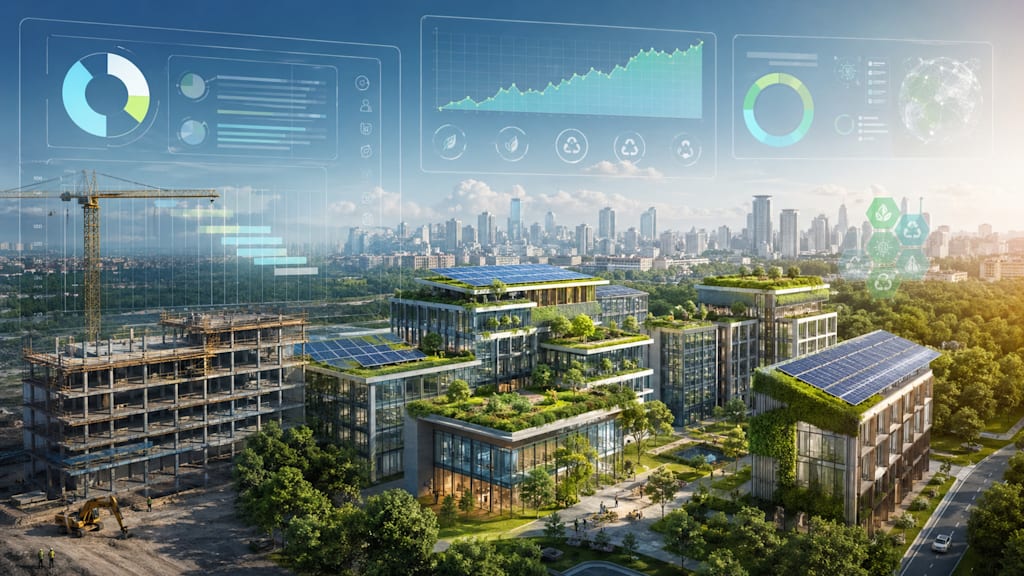
Sustainability in real estate is no longer handled as a parallel initiative. It is becoming embedded in how projects are planned, financed, executed, and managed. The shift is being driven by one key enabler - ERP systems for sustainable real estate.
By connecting procurement, operations, compliance, and financial data into a unified system, ERP platforms give decision-makers real-time visibility into carbon impact, energy use, and resource efficiency turning sustainability from a reporting task into a controllable process.
In this article, we explore how ERP systems are enabling sustainable real estate and accelerating net-zero construction.
Why is ERP Becoming Central to Sustainable Real Estate?
The biggest challenge in achieving net-zero construction is not a lack of intent—it’s a lack of connected data.
Traditionally, sustainability metrics existed in isolated spreadsheets or reporting tools. These reports were often disconnected from procurement decisions, construction planning, and operational workflows.
ERP systems solve this problem by acting as a central intelligence layer across the entire real estate lifecycle.
With the right ERP platform in place, organizations can:
- Track carbon emissions alongside project costs
- Align procurement with sustainability goals
- Monitor environmental performance across the entire asset lifecycle
- Automate ESG (Environmental, Social, and Governance) reporting
- Improve transparency for regulators, investors, and stakeholders
This is why ERP systems are increasingly viewed as core infrastructure for sustainable real estate development, rather than just back-office software.
How Do ERP Systems Support Net-Zero Construction?
Understanding how ERP systems support net-zero construction comes down to how effectively they connect environmental insights with everyday decisions.
1. Carbon Footprint Tracking
Modern ERP platforms integrate carbon accounting directly into workflows.
- Track emissions from material sourcing to project delivery
- Align reporting with global frameworks like the Greenhouse Gas Protocol and ISO (International Organization for Standardization) standards
- Identify high-impact areas early and take corrective action
This level of transparency makes sustainability measurable and manageable.
2. Waste & Resource Optimization
Construction waste remains a major inefficiency. ERP systems address this by tracking materials in real time.
- Prevent over-ordering through accurate demand planning
- Monitor usage vs. wastage at every stage
- Improve inventory efficiency across multiple sites
The result:- reduced material loss and tighter cost control.
3. Energy Efficiency Across Operations
ERP platforms allow teams to monitor energy consumption across projects and assets.
- Track equipment usage and idle time
- Identify energy-heavy operations
- Optimize machine scheduling and building performance
This directly supports the role of ERP in reducing carbon footprint in construction - especially in large-scale developments.
4. Green Procurement & Supply Chain Alignment
Sustainability is no longer limited to the construction site - it extends to the entire supply chain. ERP systems enable:
- Vendor selection based on sustainability criteria
- Tracking of supplier emissions and certifications
- Alignment of procurement decisions with ESG goals
This ensures that sustainability is embedded from sourcing to execution.
5. Compliance, ESG & Data Integration
Regulatory pressure is increasing and manual reporting is no longer viable. ERP acts as a centralized hub for:
- ESG metrics
- Automated compliance reporting
- Audit-ready documentation
This is one of the strongest benefits of ERP in sustainable real estate development - reducing compliance risk while improving transparency.
The Evolving Role of ERP in Sustainable Real Estate Development
Today’s systems go beyond tracking. They enable predictive and strategic decision-making:
AI-powered insights to forecast energy consumption and emissions
Lifecycle analysis to evaluate environmental impact from design to operations
Cloud scalability to manage sustainability across multiple projects and geographies
This shift is redefining ERP solutions for green building projects - from back-office tools to decision-making engines.
Impact on Net-Zero Goals
ERP platforms are directly influencing how organizations approach long-term sustainability targets.
Real-Time Monitoring
Immediate access to energy, emissions, and material data allows teams to make quick adjustments and avoid long-term inefficiencies.
Lifecycle-Level Insights
ERP platforms support full life cycle analysis. They help developers design, build, and operate assets with long-term sustainability in mind.
Data-Driven Decision Making
With all data in one place, leadership teams can align investments, procurement, and operations with low-carbon strategies.
What to Look for in the Right ERP Platform?
Choosing the best ERP software for real estate and construction companies is not about features alone - it’s about integration.
A strong system should:
- Connect financial, operational, and sustainability data
- Support carbon tracking and ESG reporting
- Enable real-time insights across projects
- Scale across multiple developments and portfolios
This is where working with a capable real estate software development company becomes critical. The right partner can design real estate software solutions that align technology with long-term sustainability goals.
A Smarter Path to Sustainable Growth
The real value of ERP lies in making sustainability actionable. Instead of treating it as a compliance exercise, ERP enables teams to:
- Make better procurement decisions
- Reduce waste before it happens
- Optimize energy use continuously
- Align every project with broader climate goals
For organizations investing in green IT solutions - ERP becomes the foundation that connects sustainability intent with execution.
Final Thought
In today’s real estate industry, the real differentiator is no longer who sets sustainability targets—it is who can consistently deliver on them across projects, portfolios, and timelines.
ERP systems for sustainable real estate provide the operational visibility needed to turn fragmented data into actionable intelligence. More importantly, they transform sustainability from a reactive reporting exercise into a proactive decision-making framework.
As the industry moves toward net-zero construction and greener building practices, ERP platforms will play an increasingly central role in shaping the future of sustainable real estate development.
About the Creator
Liza kosh
Liza Kosh is a senior content developer and blogger who loves to share her views on diverse topics. She is currently associated with Seasia Infotech, an enterprise software development company.
Enjoyed the story? Support the Creator.
Subscribe for free to receive all their stories in your feed.
Comments
There are no comments for this story
Be the first to respond and start the conversation.