
How AI is Transforming Agriculture
"Revolutionizing Farming Practices with Artificial Intelligence for a Sustainable Future"
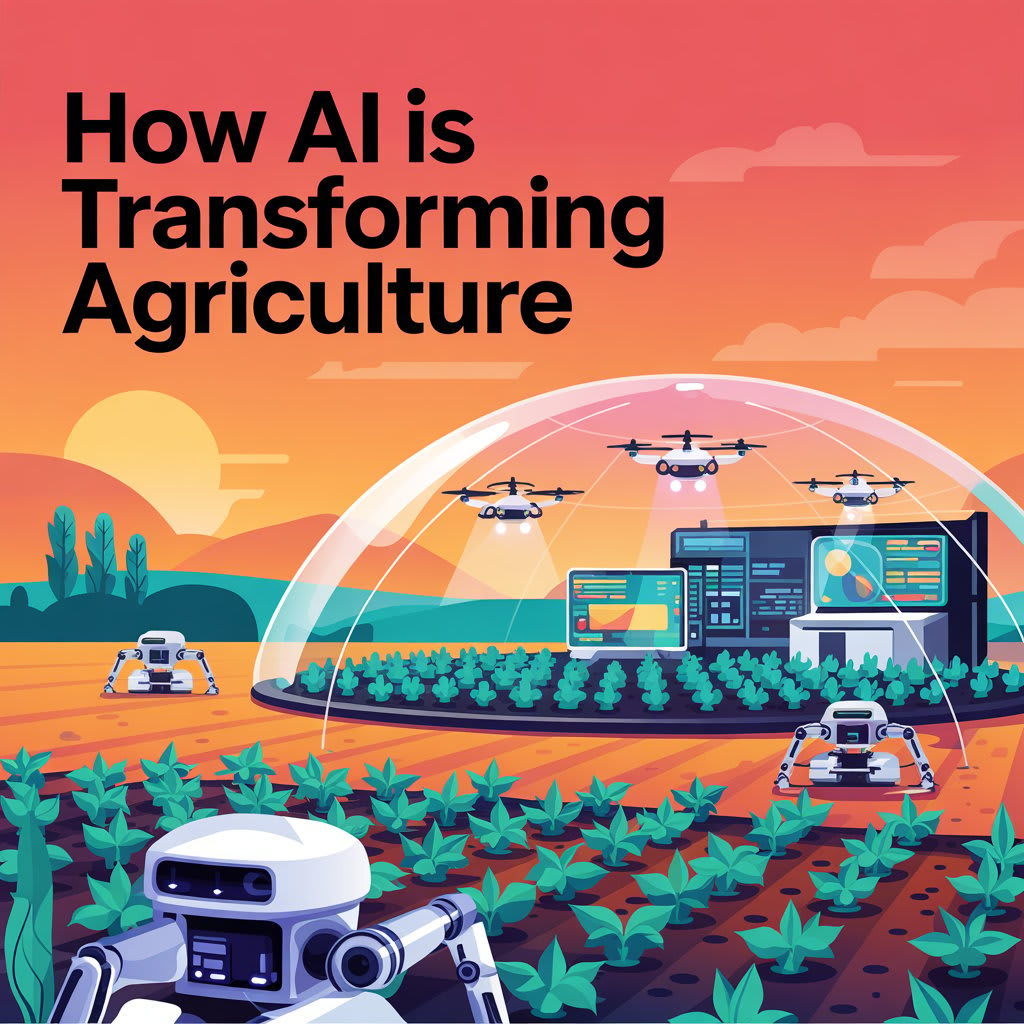
Agriculture, one of the oldest and most essential industries, is undergoing a massive transformation through the integration of Artificial Intelligence (AI). As the global population continues to grow, the demand for food increases, placing immense pressure on agricultural systems to produce more with fewer resources. AI offers powerful tools to optimize various aspects of farming—from crop management to supply chain logistics—making agriculture more efficient, sustainable, and productive.
Precision Farming and Smart Crop Management
One of the most impactful applications of AI in agriculture is precision farming. This approach uses AI algorithms to analyze data collected from various sources, including sensors, drones, and satellites, to make informed decisions about planting, irrigation, fertilization, and harvesting. For instance, AI-powered systems can determine the optimal time to sow seeds or apply fertilizers based on weather forecasts, soil conditions, and historical data. This targeted approach reduces waste, increases crop yields, and minimizes environmental impact.
Computer vision, a subset of AI, enables real-time monitoring of crops using drones and cameras. These systems can detect early signs of diseases, pests, or nutrient deficiencies that may not be visible to the naked eye. Early detection allows farmers to take corrective action promptly, preventing crop loss and reducing the need for chemical treatments.
Soil and Weather Analysis
AI also plays a crucial role in analyzing soil health and predicting weather patterns. By processing vast amounts of data from soil sensors and weather stations, AI models can provide insights into soil composition, moisture levels, and temperature variations. This information helps farmers choose the best crops for their land and make data-driven decisions to optimize yields.
Weather is a critical factor in agriculture, and unpredictable climate conditions can devastate crops. AI-powered forecasting tools provide more accurate and localized weather predictions, enabling farmers to plan their activities accordingly. These forecasts can alert farmers about upcoming storms, frost, or droughts, allowing them to take preventive measures and minimize damage.
Automated Machinery and Robotics
The development of AI-driven agricultural machinery is revolutionizing traditional farming practices. Autonomous tractors, harvesters, and robotic weeders are now capable of performing tasks with minimal human intervention. These machines use AI and GPS technologies to navigate fields, plant seeds, spray crops, and harvest produce with high precision.
For example, robotic weeders can differentiate between crops and weeds using computer vision and machine learning. They remove weeds without harming the crops, significantly reducing the need for herbicides and manual labor. Similarly, AI-powered harvesters can identify ripe fruits or vegetables and pick them gently to prevent bruising or damage.
Livestock Monitoring and Management
AI is also transforming livestock farming by improving animal health and productivity. Smart sensors and wearable devices monitor the behavior, activity levels, and vital signs of animals in real-time. AI algorithms analyze this data to detect early signs of illness, stress, or discomfort, allowing farmers to intervene promptly.
Automated feeding systems, powered by AI, can deliver the right amount of nutrients based on each animal's needs, improving growth rates and reducing feed waste. Moreover, AI-driven genetic analysis helps farmers breed healthier and more productive animals by identifying the best traits for reproduction.
Supply Chain Optimization
Beyond the farm, AI enhances the agricultural supply chain by improving logistics, storage, and distribution. Predictive analytics can forecast demand and supply trends, helping farmers and distributors plan accordingly. AI systems can also monitor storage conditions, such as temperature and humidity, to prevent spoilage and ensure food quality.
Blockchain technology combined with AI enables greater transparency and traceability in the food supply chain. Consumers can track the origin of their food, while producers can ensure compliance with safety standards and reduce the risk of fraud.
Challenges and Future Prospects
While AI offers numerous benefits, its adoption in agriculture faces challenges. High costs of advanced technologies, lack of digital literacy among farmers, and inadequate internet connectivity in rural areas are significant barriers. Moreover, ethical concerns around data privacy and the potential displacement of agricultural labor need to be addressed.
However, with continuous advancements and supportive policies, the future of AI in agriculture looks promising. Governments, tech companies, and research institutions are investing in AI-driven agricultural innovations to promote sustainable farming practices and food security.
Conclusion
AI is revolutionizing agriculture by making it smarter, more efficient, and more sustainable. From precision farming and automated machinery to livestock monitoring and supply chain optimization, AI is empowering farmers to make data-driven decisions that enhance productivity and reduce environmental impact. As the world continues to face food security challenges, AI will play a vital role in shaping the future of agriculture.
About the Creator
Enjoyed the story? Support the Creator.
Subscribe for free to receive all their stories in your feed.
Comments
There are no comments for this story
Be the first to respond and start the conversation.