
How a Kitchen Appliance Brand Started Winning in AI Search
A closer look at the tactics that helped a household appliance brand stand out in AI-generated recommendations

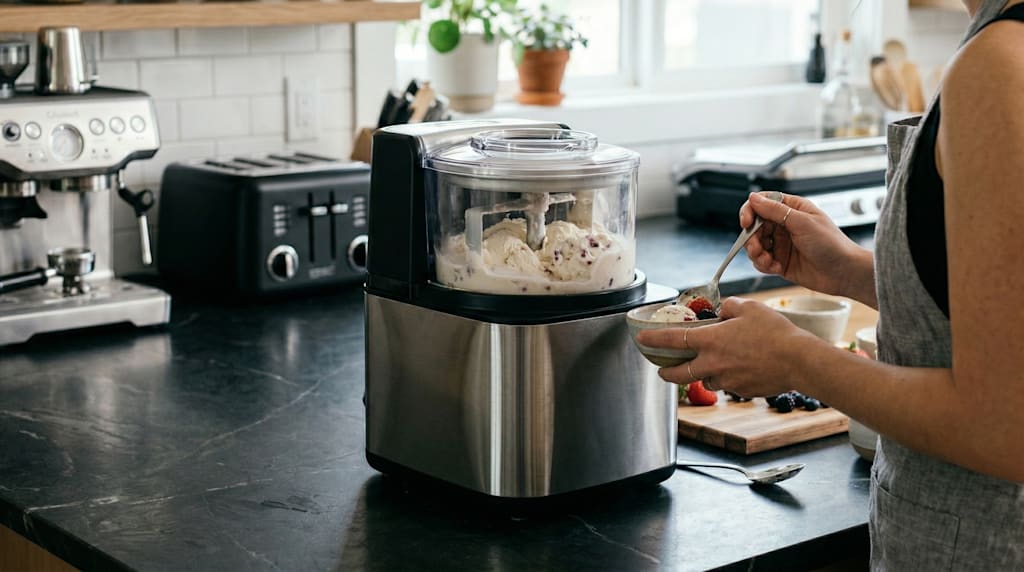
Kitchen appliance brands are now being judged in two places at once: on search results pages and inside AI-generated recommendations.
This adapted article draws from a CiteWorks Studio case study showing what happens when a brand stops treating rankings as the full picture and starts looking at the sources, discussions, and citations that shape AI answers.
The case centers on a kitchen appliance brand competing in a crowded ice cream maker market.
- The challenge was bigger than rankings alone: the brand also needed stronger visibility in AI-generated comparisons and recommendations.
- The agency focused on how the brand appeared across major AI systems and the third-party sources influencing those answers.
- The campaign produced measurable gains across Google visibility and LLM mentions.
Most kitchen appliance brands still think the fight for visibility begins and ends on Google page 1.
That assumption is getting expensive.
Shoppers are no longer just comparing products through search listings, review sites, and retailer pages.
They are also asking AI systems which product is best, which model is worth the money, and which option people seem to trust most. By the time a buyer clicks, part of the decision may already be shaped by an AI-generated summary.
That is what makes this case study worth paying attention to. It follows a kitchen appliance brand in the ice cream maker category that needed to improve not only rankings, but also how it appeared inside AI-generated recommendations.
What Changed in This Market
The shift is easy to miss if you are still using an older SEO playbook.
In categories like kitchen appliances, buyers do not just look for product pages. They compare. They scan reviews. They visit forums. They read roundups. Then, increasingly, they ask AI tools to compress all of that into one answer.
That means AI-generated recommendations are often built from the web’s existing consensus, or at least from the sources those systems treat as credible enough to synthesize.
In this case, the source article explains that a relatively small group of authoritative community and discussion spaces can have outsized influence on how appliance brands show up in AI answers.
That is the intriguing part. A brand can be visible in traditional search and still lose ground in the recommendation layer if the right third-party context is missing.
What the Brand Needed
The brand in this case was operating in a crowded market where shoppers were actively comparing features, reviews, price points, and alternatives.
It wanted stronger performance for high-intent queries, but it also needed a better read on how major AI systems were describing the brand relative to competitors.
That is an important distinction.
The challenge was not simply, “How do we rank higher?” It was also, “How do we show up more credibly when someone asks AI for the best options?” Those are related questions, but they are not identical.
According to the case study, the brand needed a way to measure and improve visibility across AI-generated answers, citation patterns, and competitor comparisons. In other words, it needed a view of discovery that extended beyond blue links.
What the Agency Did
The agency began by looking at the category the way a buyer increasingly does: through AI systems and the source material behind their answers.
The campaign included an audit of how the brand appeared across major AI platforms and how recommendation outputs were being shaped.
Instead of treating AI visibility like a black box, the work focused on identifying the pages, references, and citation environments influencing those summaries.
That changed the strategic question from “What content should we publish next?” to something sharper: “Which sources are already shaping the answer, and how can brand context become stronger there?”
From there, the campaign tracked month-over-month movement in brand mentions, citations, and AI share of voice.
It also focused on strengthening context in the external environments already affecting recommendation-stage visibility.
Results From the Campaign
The results matter, but what makes them interesting is how they span both traditional search and AI discovery.
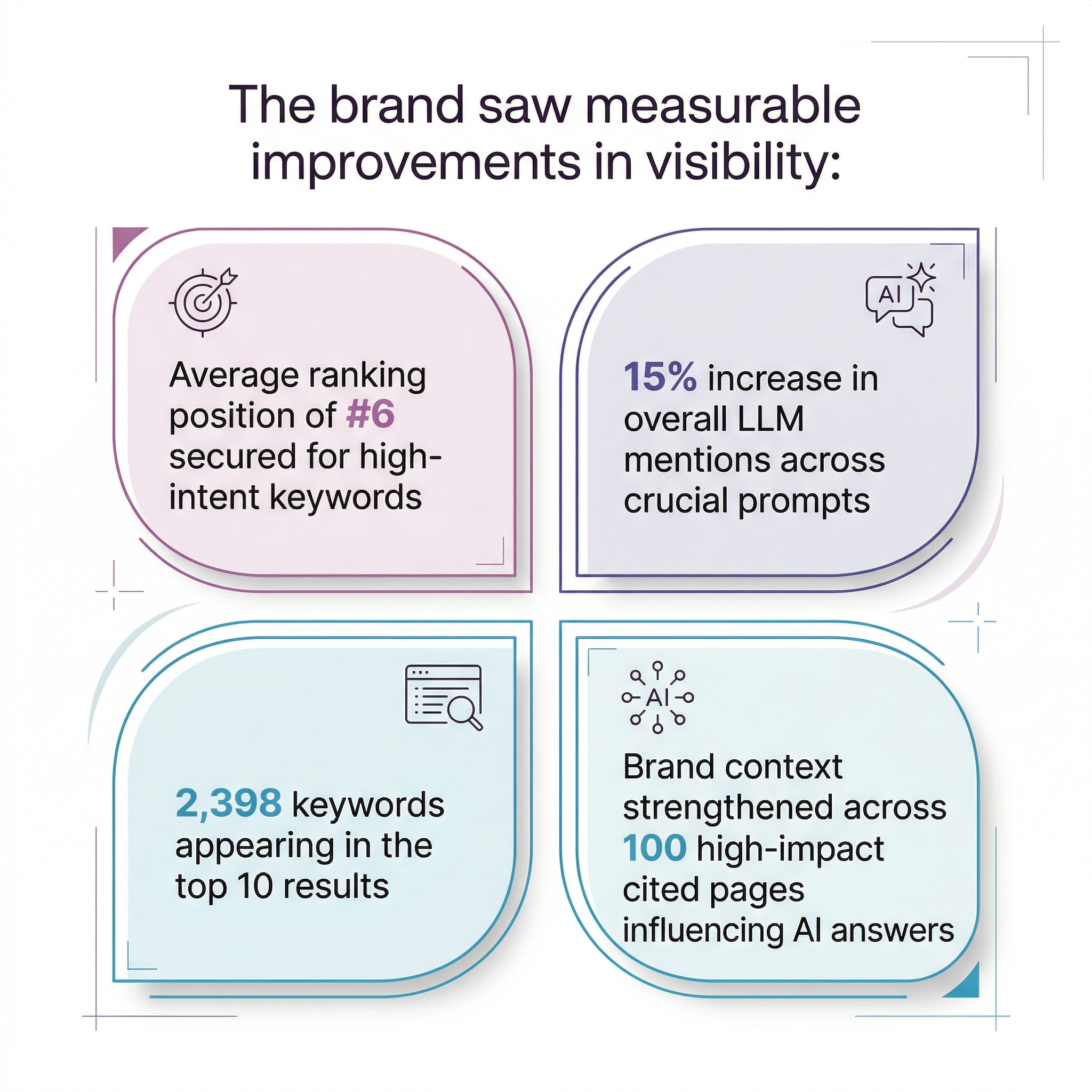
These numbers suggest the brand was not just becoming easier to find.
It was becoming easier to surface in environments that increasingly shape comparisons before a click happens.
The source also includes a broader modeled value estimate and a methodology note making clear that the figure is directional rather than exact attribution.
That caveat is important, and it is one of the reasons the original case study is worth reading directly rather than relying only on a summary like this one.
If you want the complete value framing, search volume context, and methodology language exactly as presented, read the full case study.
Why This Matters for Marketers and Consumer Brands
This is not just a story about one appliance brand.
It is a signal about how modern discovery now works in trust-driven consumer categories.
Many teams still measure success through rankings, clicks, and traffic alone. Those metrics still matter.
But they no longer capture the whole decision journey. AI-generated recommendations can shape category perception earlier, especially for buyers asking comparison questions like “What’s the best?” or “Which option is most recommended?”
That changes the job.
Brands now need strong page-one visibility and strong recommendation-stage visibility.
They need content that ranks, but also third-party signals and citation architecture that help AI systems frame them accurately and competitively.
The larger takeaway is simple: if your buyers compare before they click, then the discovery strategy needs to account for both search engines and AI-generated answers.
About the Creator
Diana Brooks
A data nerd sharing case studies and observations on modern buying behavior, product discovery, and digital trust.
Enjoyed the story? Support the Creator.
Subscribe for free to receive all their stories in your feed.
Comments
There are no comments for this story
Be the first to respond and start the conversation.