
Hope and Healing: Exploring Esophageal Cancer Treatment Options
Esophageal Cancer Treatment Option

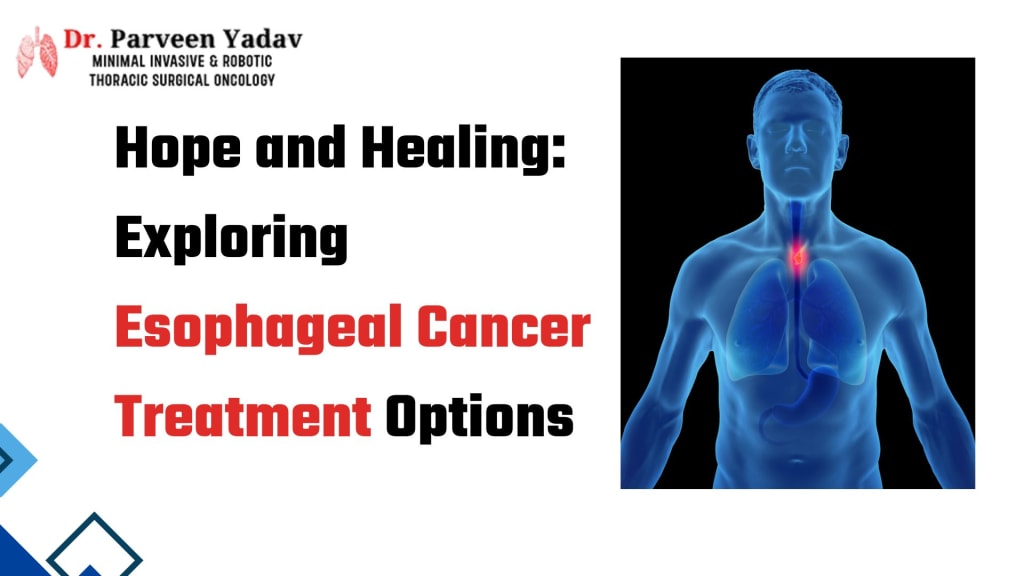
Esophageal cancer is a malignancy that impacts the esophagus, the tube linking the throat and stomach. It is a critical illness necessitating immediate medical attention and suitable treatment. In this article, we will examine different aspects given by Chest Surgery India, which is the best esophageal cancer treatment in Delhi. This includes procedures for diagnosis, treatment alternatives, and supportive care measures. By comprehending the accessible treatment methods, patients and their families can make well-informed choices and discover optimism in their battle against esophageal cancer.
Introduction
Esophageal cancer occurs when abnormal cells in the lining of the esophagus grow uncontrollably, forming a tumor. There are two main types of esophageal cancer: adenocarcinoma and squamous cell carcinoma. Adenocarcinoma is typically found in the lower part of the esophagus, while squamous cell carcinoma is commonly located in the upper and middle parts. Treatment options for esophageal cancer depend on various factors such as the stage of cancer, the patient's overall health, and individual preferences.
Diagnosing Esophageal Cancer
To determine the presence of esophageal cancer, several diagnostic procedures are used. These may include an upper endoscopy, where a flexible tube with a camera is inserted into the esophagus to examine the lining and collect tissue samples for biopsy. Other tests like imaging studies, such as CT scans and PET scans, may be performed to evaluate the extent of cancer and identify any spread to nearby lymph nodes or distant organs.
Staging and Classification
Staging is a crucial step in determining the appropriate treatment approach. It involves assessing the size and extent of the tumor, as well as its spread to nearby or distant areas. The most common staging system for esophageal cancer is the TNM system, which takes into account the tumor size, lymph node involvement, and metastasis. The stage of cancer helps in guiding treatment decisions and predicting the overall prognosis.
Surgical Treatment Options
Surgery plays a significant role in the treatment of esophageal cancer, especially for early-stage and localized tumors. Surgical options include:
Esophagectomy: This procedure involves removing a portion or the entire esophagus, along with nearby lymph nodes. The remaining healthy portion of the esophagus is then reconstructed.
Minimally Invasive Surgery: Techniques such as laparoscopic or robotic-assisted surgery may be used to minimize the invasiveness of the procedure and promote faster recovery.
Endoscopic Treatments: For early-stage esophageal cancer, endoscopic therapies like endoscopic mucosal resection (EMR) or endoscopic submucosal dissection (ESD) may be performed to remove the cancerous tissue.
Radiation Therapy
Radiation therapy uses high-energy beams to destroy cancer cells and shrink tumors. It can be employed as the primary treatment for localized esophageal cancer or in combination with surgery and chemotherapy. External beam radiation therapy and brachytherapy are two common approaches used in the treatment of esophageal cancer. The choice of radiation therapy depends on the stage and location of the tumor, as well as the patient's overall health.
Chemotherapy
Chemotherapy involves the use of drugs that target and kill cancer cells throughout the body. It can be administered before surgery (neoadjuvant chemotherapy) to shrink tumors and improve surgical outcomes, or after surgery (adjuvant chemotherapy) to kill any remaining cancer cells. In advanced or metastatic cases, chemotherapy may be used as the primary treatment to control cancer growth and alleviate symptoms.
Targeted Therapy
Targeted therapy focuses on specific molecular alterations within cancer cells that promote their growth. For esophageal cancer, targeted therapies like trastuzumab and ramucirumab have shown efficacy in certain cases. These drugs are often used in combination with chemotherapy to enhance treatment outcomes. Targeted therapy is personalized medicine that aims to improve the effectiveness of treatment while minimizing side effects.
Immunotherapy
Immunotherapy is a groundbreaking approach that harnesses the body's immune system to fight cancer cells. Checkpoint inhibitors, such as pembrolizumab and nivolumab, have shown promising results in advanced esophageal cancer. These drugs block proteins that inhibit the immune response, allowing the immune system to recognize and attack cancer cells. Immunotherapy is changing the landscape of cancer treatment and offering new hope to patients.
Palliative Care
Esophageal cancer treatment can be physically and emotionally demanding. Palliative care focuses on providing relief from symptoms and improving the quality of life for patients. It includes pain management, counseling services, nutritional support, and assistance with managing treatment side effects. Palliative care is an essential aspect of comprehensive cancer care, aimed at addressing the holistic needs of patients and their families.
Clinical Trials
Clinical trials are research studies that explore new treatment approaches and interventions for esophageal cancer. They provide an opportunity for patients to access innovative therapies that may not yet be widely available. Participation in clinical trials contributes to the advancement of medical knowledge and helps improve future treatment options for esophageal cancer patients.
Lifestyle and Diet Considerations
Maintaining a healthy lifestyle and following a balanced diet can complement esophageal cancer treatment and promote overall well-being. It is advisable to quit smoking, limit alcohol consumption, engage in regular physical activity, and consume a diet rich in fruits, vegetables, whole grains, and lean proteins. Working closely with healthcare professionals, including dietitians, can ensure optimal nutritional support during treatment and recovery.
Coping with Esophageal Cancer
Receiving a diagnosis of esophageal cancer can be emotionally challenging for patients and their loved ones. It is important to seek support from healthcare professionals, family, and friends during this time. Joining support groups and engaging in activities that provide emotional outlets, such as counseling or art therapy, can be beneficial. It is essential to communicate openly with the healthcare team and actively participate in decision-making regarding treatment options.
Future Directions and Advances
Medical research and advancements are constantly improving the understanding and treatment of esophageal cancer. Researchers are exploring novel therapies, targeted drugs, and immunotherapies to enhance treatment efficacy and improve patient outcomes. As scientific knowledge progresses, there is hope for more personalized and effective treatments in the future.
Conclusion
Esophageal cancer treatment requires a comprehensive and individualized approach. Various treatment modalities, including surgery, radiation therapy, chemotherapy, targeted therapy, immunotherapy, and palliative care, play significant roles in managing this condition. It is crucial for patients to work closely with their healthcare team to determine the most suitable treatment plan. By staying informed, seeking support, and maintaining a positive mindset, individuals can navigate the challenges of esophageal cancer and find hope in their journey toward recovery.
About the Creator
Dr. Parveen Yadav
Dr Parveen Yadav in Chest Surgery India is the best Surgical Oncologist for thoracic surgeries in Delhi NCR. Years of practice and experience have earned him the reputation of one of the most respected and trusted surgeons across India.
Enjoyed the story? Support the Creator.
Subscribe for free to receive all their stories in your feed.
Comments
There are no comments for this story
Be the first to respond and start the conversation.