
HEALTHY TEENAGE EATING HABITS
Nurturing Healthy Teenage Eating Habits: A Guide to Promote Wellness and Well-being

Introduction
Teenage years are a critical time for both physical and mental growth and development. To preserve optimum health and well-being during this era, developing appropriate eating habits is essential.
Proper nutrition gives the body the energy it needs to flourish, builds the foundation for lifelong health, and improves cognitive function.
In this post, we'll look at key advice and recommendations for encouraging teenagers to develop and stick with healthy eating practices.
1. Adopt a Balanced Diet.
The cornerstone of optimal nutrition is a balanced diet. Encourage teenagers to eat a range of foods from all food groups that are nutrient-rich.
Stress the significance of including:
a) Fruits and vegetables should make up a significant portion of every meal. They offer nutritional fiber and are abundant in important vitamins, minerals, and antioxidants.
b) Choose whole grains, such as brown rice, oats, and whole wheat bread. They contain more fiber and minerals than processed grains.
c) Lean proteins: Promote the use of lean protein sources, such as fish, tofu, beans, and skinless poultry. Proteins are necessary for bodily tissues to develop and mend.
d) Include sources of healthy fats like avocados, nuts, seeds, and olive oil in your diet. These supply the necessary fatty acids for good health and brain function.
2. Prevent Meal Skipping
Skipping meals might result in erratic eating habits, having unhealthy snacks, and eating poorly. Encourage your teen to eat consistently throughout the day, beginning with a healthy breakfast.
Regular eating promotes focus and concentration and helps maintain consistent energy levels. Offer quick and wholesome options for breakfast, such as fruits, yogurt, and cereals made with whole grains.
3. Restrict processed foods and sugary beverages.
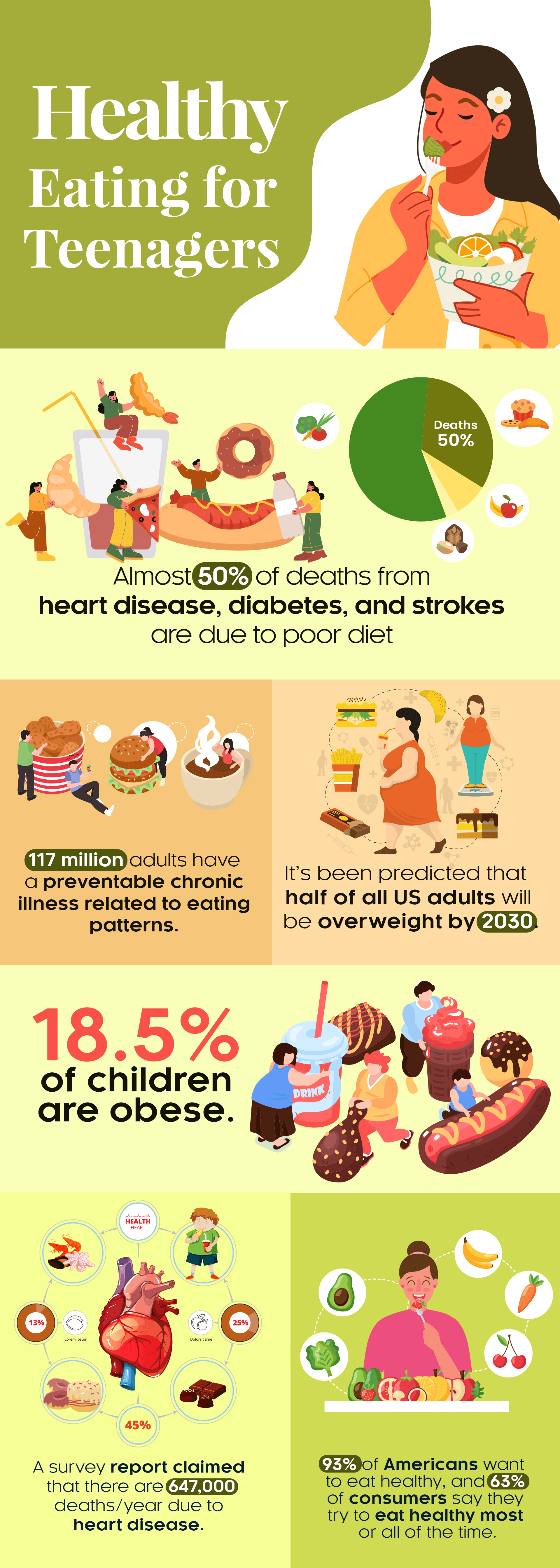
Prepared meals like fast food, sweet nibbles, added sugars, harmful fats, and sodium are frequently found in abundance in foods and sweetened beverages. These can result in weight gain, nutrient deficiency, and a higher chance of developing chronic illnesses.
Encourage teenagers to consume these meals in moderation and to choose freshly produced, homes cooked meals and snacks. Promote drinking water as your primary beverage option while reducing consumption of sugars sweetened beverages like soda and energy drinks.
4. Portion Control
Teaching teenagers about portion control is vital for keeping a healthy weight and preventing overeating. Encourage them to be cautious of serving sizes and listen to their body's hunger and fullness cues.
Help them grasp the difference between portion sizes and serving sizes, and provide practical instances of balanced portion sizes.
5. Engage in Family Meals
Encourage family meals as a time to connect, share experiences, and promote healthy eating practices. Eating together as a family enables teenagers to make healthier food choices. It also provides an opportunity to model healthy eating patterns and behaviors.
6. Promote Hydration
Adequate hydration is vital for general health and well-being. Encourage teenagers to drink plenty of water throughout the day. Explain the importance of being hydrated and the benefits it gives, such as controlling body warmth, helping digestion, and encouraging good skin.
7. Encourage Mindful Eating
Teach teenagers to practice mindful eating by paying attention to their food, eating carefully, and relishing each bite. This technique encourages a healthy connection with food, inhibits overeating, and fosters a greater appreciation for healthier meals.
Conclusion
Establishing healthy eating habits during adolescence lays the basis for a lifetime of well-being. By embracing a balanced diet, avoiding processed foods, practicing portion control, and building mindful eating habits, teens can nourish their body, support their growth and development, and lower the risk of chronic diseases.
By implementing these guidelines into their daily lives, youth may
build healthy relationships with food and make educated decisions that will lead to their general health and happiness.
Ready to empower teenagers with healthy eating habits? Check out this great offering for expert instruction and practical tips.
Click here to access it now and make a positive impact on the next generation's well-being!
About the Creator
Enjoyed the story? Support the Creator.
Subscribe for free to receive all their stories in your feed.
Comments
There are no comments for this story
Be the first to respond and start the conversation.