
From Chaos to Clarity: The AI Approach to Smarter Web Content
A new tool blends creativity with structure to help small businesses tell their story with confidence.

The End of Corporate Jargon: A New AI Tool Writes Your "About" Page Like a Human
Artificial intelligence has already transformed how people search, write, and interact online. But beyond chatbots and text generators, one of the biggest challenges for professionals and small businesses is making AI reliable for real-world use.
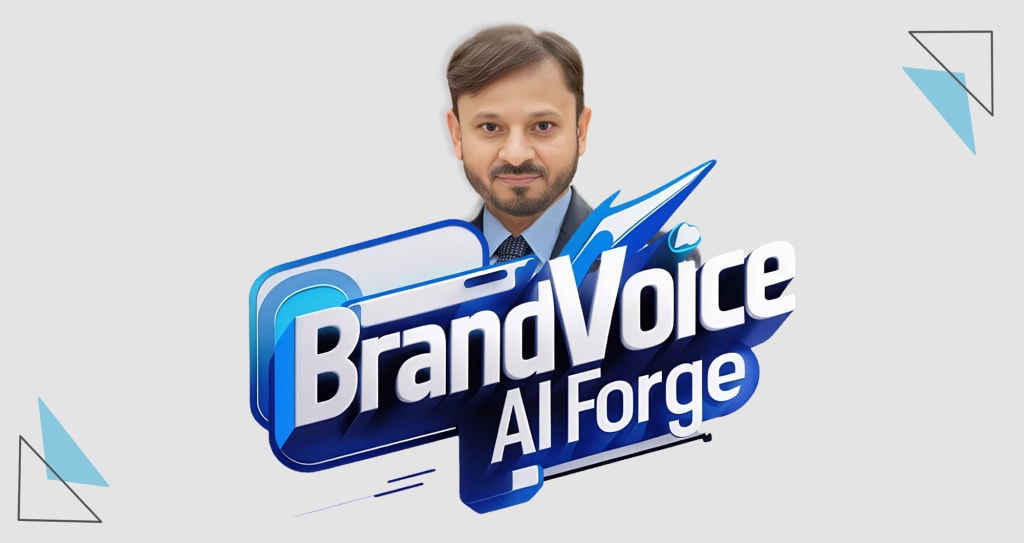
That’s the problem Lahore-based web developer Kashif Mukhtar set out to solve with his new project: BrandVoice AI Forge, an AI-powered content and design tool focused on creating professional “About Us” pages for websites.
The Problem With AI Content
If you’ve ever asked ChatGPT, Bard, or any other AI model to write something for you, you know the results can be hit or miss. Sometimes the output feels polished. Other times it’s inconsistent, repetitive, or just plain wrong.
This isn’t accidental, it’s a byproduct of how large language models (LLMs) are built. They’re designed to predict words, not necessarily to follow structure or formatting rules. That unpredictability, often called “hallucination” in AI research, is more than an inconvenience when you’re building professional websites. It can mean lost credibility, broken layouts, or content that doesn’t fit the brand voice.
Enter Structured Prompt Engineering
Instead of fighting the randomness of AI, Mukhtar’s tool uses a methodology called Structured Prompt Engineering (SPE).
In plain terms, SPE is about giving the AI not just instructions, but a framework like an architect giving builders a detailed blueprint rather than vague ideas.
Here’s how BrandVoice AI Forge applies it:
- Guided Input – Users fill in key details such as business name, values, and audience through a simple interface.
- System-Level Rules – The tool applies strict instructions to keep formatting and design consistent. These include:
- Standards for headings, paragraphs, and semantic tags
- Responsive design rules for mobile and desktop
- Clean HTML5/CSS output with predefined containers and sections
The result isn’t just text, but a structured, ready-to-use page that balances creativity with technical accuracy.
Reinventing the “About Us” Page
Most people underestimate the importance of the “About Us” page. But for small businesses, freelancers, and startups, it’s often the first thing potential clients read after landing on a site.
The problem? Many business owners struggle to tell their story in a professional, engaging way.
BrandVoice AI Forge tries to bridge that gap. Instead of dumping raw text, the tool walks users through three steps:
- Identity: Core details like name, role, and background.
- Story: Mission statement, values, and brand personality.
- Call-to-Action: Contact details or links.
Once the information is entered, the system generates a styled page draft that users can preview instantly. It’s not about replacing creativity — it’s about giving structure to people who might not have design or writing expertise.
Why It Matters
For many small businesses, hiring a copywriter or web designer isn’t always affordable. And while generic AI can churn out text quickly, it rarely delivers the polished, brand-consistent quality companies need.
That’s where structured tools like this one matter. They help level the playing field by offering affordable, repeatable, and professional-looking content.
Mukhtar sums it up simply: “Everyone deserves a professional online identity. Tools like this make that possible without requiring advanced skills.”
Beyond One Tool
What makes this project interesting isn’t just the tool itself, but the approach behind it. Structured Prompt Engineering shows a way forward for AI: not just being creative, but being reliable.
Across industries — from résumés to product descriptions — the same principles can help turn AI from a “rough draft generator” into a dependable collaborator.
The bigger picture? AI may not replace human judgment or storytelling, but it can codify best practices into scalable workflows. That’s the real shift: moving from “AI that guesses” to “AI that delivers.”
About the Creator
Kashif Mukhtar
Kashif Mukhtar is a digital marker, web developer, and researcher based in Lahore, Pakistan, with a focus on WordPress performance and technical SEO. Kashif has contributed to over 500 projects and has his research work cited on ORCID.
Enjoyed the story? Support the Creator.
Subscribe for free to receive all their stories in your feed.
Comments
There are no comments for this story
Be the first to respond and start the conversation.