
Everything thing you need to know about the 21st-Century Learning
The guide includes 21st-century learning highlights and reasons to adopt the learning methods. Read the complete blog here!
The debate around the comparison between Gen Z/Gen Alpha with their predecessors always stays in the heat around many matters, including the education system.
While Gen Z—born between 1995 to 2009—had access to the internet, smartphones, smartboards, etc., throughout their schooling, Generation Alpha—primarily born in 2010—had access to smartphones, iPad, 3D televisions, social media apps, and more while growing up! The techno-friendly curriculum and ambiance have allowed these generations to live surrounded by a considerable amount of information. With the internet and related technologies, it is just a matter of minutes for them to search for answers to queries.
In fact, the internet allows students to self-learn, even subjects outside of their curriculum. Not just the internet, these generations are tech-savvy and are comfortable using apps and code better than their predecessor. And the upcoming generation is expected to be pro-digital natives who will be more evolved than the present generation.
What are the main highlights of 21st-century education?
First, it is essential to mention that 21st-century education is about availing students with the skills to bring success in this new world while helping them adopt new skills to excel in their fields. With the available data and information, the goal is to sort the available resources into a helpful data stack to learn and reshare it to those with similar educational interests.
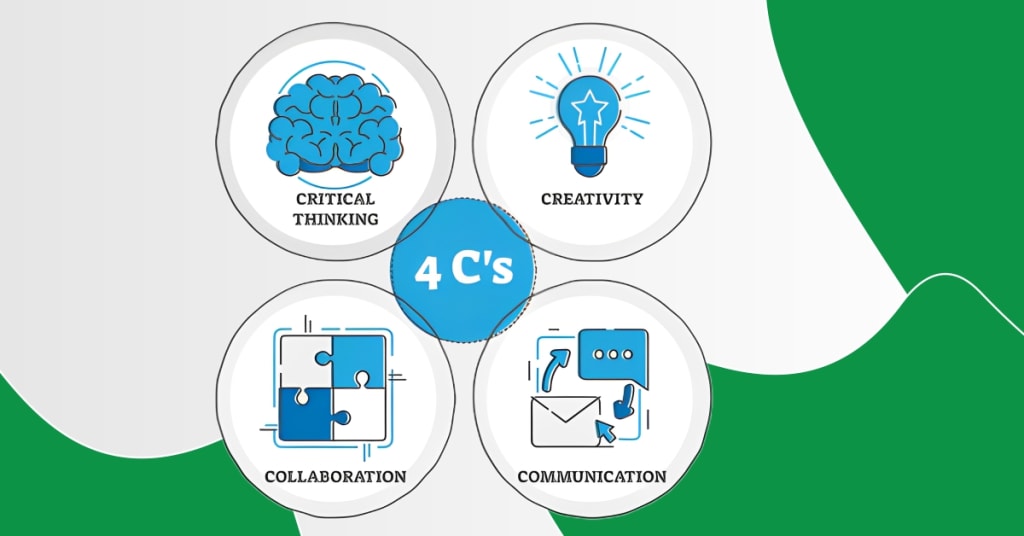
In 21st-century learning, four parameters are found to be the most important. These are:
- Creativity...
- Critical Thinking...
- Communication...
- Collaboration...
There is a dire need to incorporate these parameters in present-day curriculum mapping and strategy to use resources at their best and create a high-value education system. Let's briefly discuss the parameters below.
- Creativity is about processing information creatively, making new contacts, and bringing innovative solutions to the table. This allows students to implement and express what they have learned in a new and modern way.
- When we talk about critical thinking, it includes analyzing information and critiquing claims. Encourage students by adding activities and lessons that build their thinking strong and beyond traditional.
- Communication allows the learners to understand the concepts clearly and share them seamlessly with other learners.
- Collaboration is about teamwork and group intellectuality that leads to a better learning community. Take part in every opportunity which allows you to form pairs or create small groups. This teaches them to get effective results and goals together.
Outside these four, there are other areas in the education system that can build robust strategies for the betterment of students. For instance, entrepreneurship is a prerequisite that shapes the right aptitude for students who are inclined toward business or marketing. Likewise, EQ or Emotional Intelligence is crucial to be successful at work and in relationships.
Reasons to adopt the 21st-century education curriculum?
It is apparent that today's education system needs major reforms and has to be holistic. The students need to be adept at transferable skills that can accommodate an ever-evolving world and not stick to the traditional education that was relevant in the past. Here are the important reasons to adopt the 21st-century education model.
- To accommodate digital technology at its best.
- To make the world one big learning center.
- To better prepare, the students harness technology for the betterment of society.
- To make them an accurate balance between automation and human efforts.
- To help improve their technical skills in one field and use it in another.
Bottomline
Strategists, reformers, educators, policymakers, and educational institutions must understand the gap and consciously try to fill it. Even if it means tapping into new areas, it must be done. And while they are at it, they should strive to include technology and digital savviness in students to make them better professionals.
About the Creator
HEaL Conferences
We at HEaL Conference aim to bridge education with the healthcare domain to explore the pool of opportunities to improve lives and build a healthy community...... visit here : https://www.healconferences.com/blog/
Enjoyed the story? Support the Creator.
Subscribe for free to receive all their stories in your feed.
Comments
There are no comments for this story
Be the first to respond and start the conversation.