
Ensuring E-Safety: Navigating the Digital World Securely
Understanding E-Safety
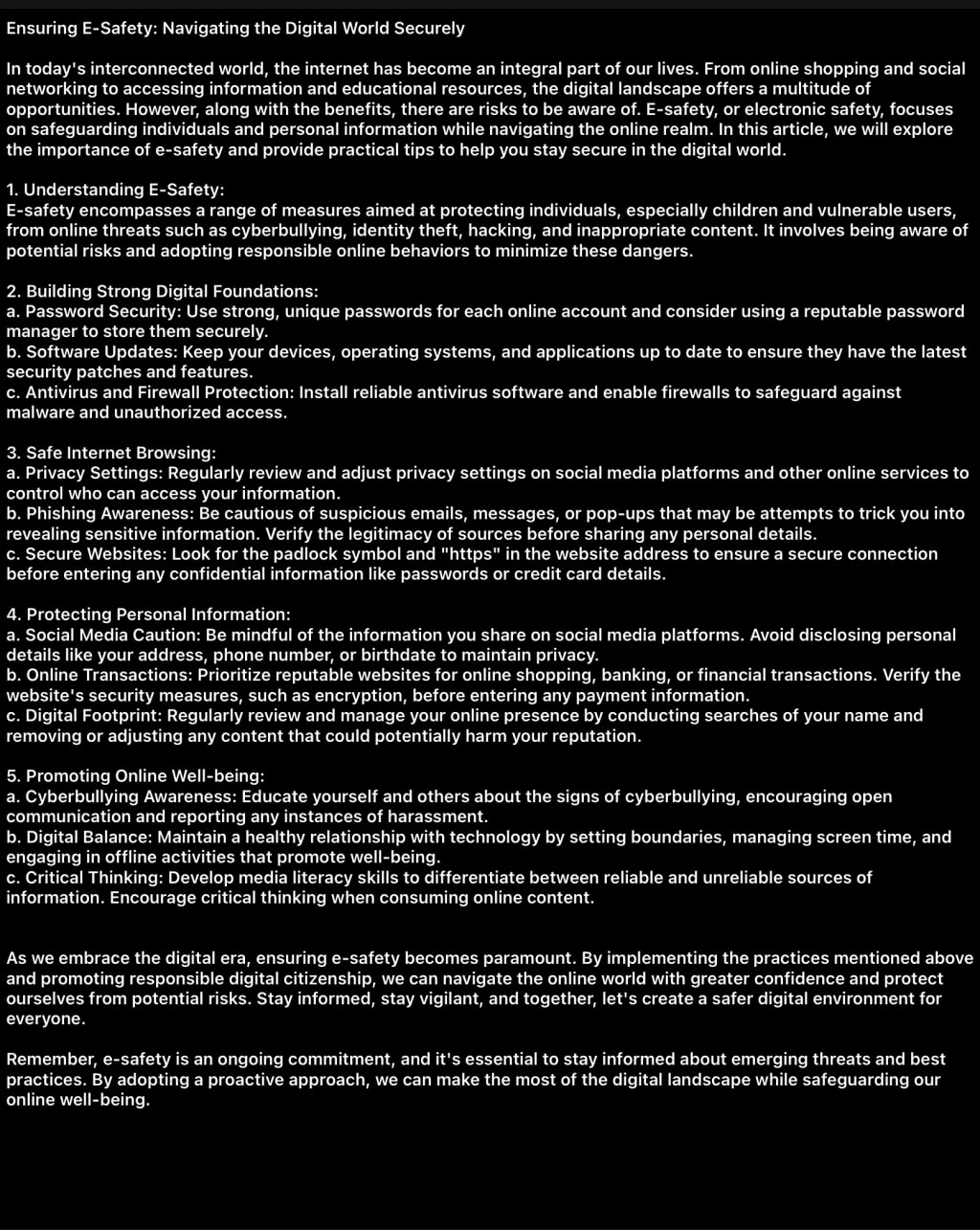
In today's interconnected world, the internet has become an integral part of our lives. From online shopping and social networking to accessing information and educational resources, the digital landscape offers a multitude of opportunities. However, along the with the benefits, there are risks to be aware of. E-safety, or electronic safety, focuses on safeguarding individuals and personal information while navigating the online realm. In this article, we will explore the importance of e-safety and provide practical tips to help you stay secure in the digital world.
1. Understanding E-Safety:
E-safety encompasses a range of measures aimed at protecting individuals, especially children and vulnerable users, from online threats such as cyberbullying, identity theft, hacking, and inappropriate content. It involves being aware of potential risks and adopting responsible online behaviors to minimize these dangers.
2. Building Strong Digital Foundations:
a. Password Security: Use strong, unique passwords for each online account and consider using a reputable password manager to store them securely.
b. Software Updates: Keep your devices, operating systems, and applications up to date to ensure they have the latest security patches and features.
c. Antivirus and Firewall Protection: Install reliable antivirus software and enable firewalls to safeguard against malware and unauthorized access.
3. Safe Internet Browsing:
a. Privacy Settings: Regularly review and adjust privacy settings on social media platforms and other online services to control who can access your information.
b. Phishing Awareness: Be cautious of suspicious emails, messages, or pop-ups that may be attempts to trick you into revealing sensitive information. Verify the legitimacy of sources before sharing any personal details.
c. Secure Websites: Look for the padlock symbol and "https" in the website address to ensure a secure connection before entering any confidential information like passwords or credit card details.
4. Protecting Personal Information:
a. Social Media Caution: Be mindful of the information you share on social media platforms. Avoid disclosing personal details like your address, phone number, or birthdate to maintain privacy.
b. Online Transactions: Prioritize reputable websites for online shopping, banking, or financial transactions. Verify the website's security measures, such as encryption, before entering any payment information.
c. Digital Footprint: Regularly review and manage your online presence by conducting searches of your name and removing or adjusting any content that could potentially harm your reputation.
5. Promoting Online Well-being:
a. Cyberbullying Awareness: Educate yourself and others about the signs of cyberbullying, encouraging open communication and reporting any instances of harassment.
b. Digital Balance: Maintain a healthy relationship with technology by setting boundaries, managing screen time, and engaging in offline activities that promote well-being.
c. Critical Thinking: Develop media literacy skills to differentiate between reliable and unreliable sources of information. Encourage critical thinking when consuming online content.
As we embrace the digital era, ensuring e-safety becomes paramount. By implementing the practices mentioned above and promoting responsible digital citizenship, we can navigate the online world with greater confidence and protect ourselves from potential risks. Stay informed, stay vigilant, and together, let's create a safer digital environment for everyone.
Remember, e-safety is an ongoing commitment, and it's essential to stay informed about emerging threats and best practices. By adopting a proactive approach, we can make the most of the digital landscape while safeguarding our online well-being.
About the Creator
Enjoyed the story? Support the Creator.
Subscribe for free to receive all their stories in your feed.
Comments
There are no comments for this story
Be the first to respond and start the conversation.