
Education should be free.
"Unlocking Minds, Empowering Futures: The Case for Free Education"
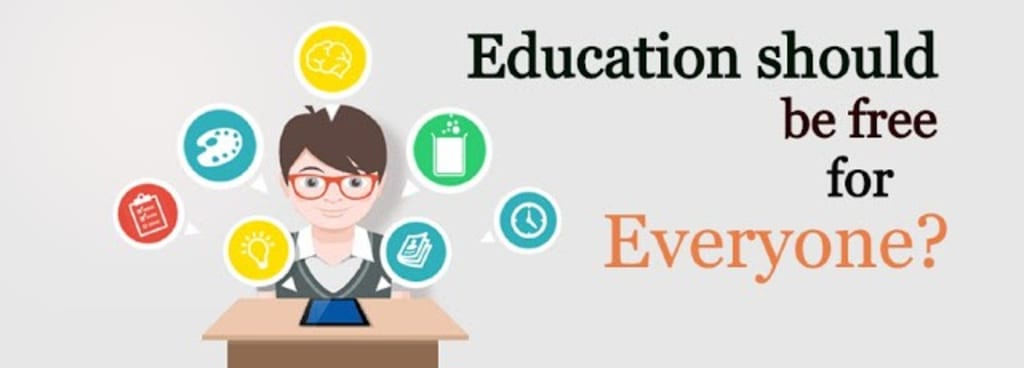
Title: Education Should Be Free: Unlocking Potential and Building a Brighter Future
Introduction (approx. 100 words):
Education is universally recognized as a transformative force that has the power to shape individuals, societies, and even nations. It is a fundamental human right that should be accessible to all, irrespective of their economic background. In today's interconnected and knowledge-driven world, the case for free education becomes even more compelling. By eliminating financial barriers, we can foster social equality, empower individuals, and pave the way for a more inclusive and prosperous future. This essay will delve into the reasons why education should be free and explore the potential benefits it can bring to individuals and society as a whole.
Body Paragraph 1 (approx. 150 words):
One of the most persuasive arguments for free education lies in its ability to promote social equality. Education has the remarkable capacity to break the cycle of intergenerational poverty and provide equal opportunities for all. By removing the burden of tuition fees, we remove a significant barrier that often prevents talented students from pursuing higher education. Free education ensures that deserving individuals, regardless of their socioeconomic status, can access and benefit from quality education. It levels the playing field and allows individuals from underprivileged backgrounds to acquire the knowledge, skills, and qualifications necessary for social mobility. This, in turn, reduces the disparities between the privileged and the marginalized, fostering a more equitable society.
Body Paragraph 2 (approx. 150 words):
In addition to promoting social equality, free education can have a profound impact on economic development. A well-educated population is an asset to any nation, as it possesses the skills, expertise, and innovative thinking required to drive economic growth. By investing in education and making it accessible to all, societies can cultivate a highly skilled workforce that fuels productivity, entrepreneurship, and technological advancement. Furthermore, when education is free, it encourages more students to pursue higher education, leading to a more educated society as a whole. This, in turn, results in a larger pool of qualified individuals available for various industries, boosting economic competitiveness and enabling nations to thrive in the global marketplace.
Body Paragraph 3 (approx. 150 words):
Free education also plays a vital role in nurturing active citizenship and fostering social cohesion. Accessible education allows individuals to develop critical thinking abilities, analytical skills, and a broadened worldview. It promotes empathy, understanding, and respect for diversity. When education is freely available, it encourages a diverse mix of students from different backgrounds to come together in classrooms, fostering a sense of community and breaking down barriers. Moreover, an educated populace is better equipped to engage in democratic processes, make informed decisions, and contribute to the betterment of society. Free education empowers individuals to actively participate in social, economic, and political discourse, promoting democratic values and strengthening social cohesion.
Body Paragraph 4 (approx. 200 words):
Critics argue that providing free education may pose a financial burden on governments and lead to quality compromises. However, with proper planning, sufficient investment, and efficient resource allocation, these concerns can be addressed. Governments can explore various funding models, such as reallocating resources from other sectors, implementing progressive taxation, seeking private partnerships, or even considering long-term economic benefits. Additionally, maintaining quality standards should remain a priority, and investments in educational infrastructure, teacher training, and curriculum development should be made to ensure high-quality education for all. Free education should not mean a compromise on quality, but rather an opportunity to invest in educational institutions and resources to enhance the learning experience and outcomes.
Conclusion (approx. 100 words):
In conclusion, free education is not only a matter of social justice but also a strategic investment in our collective future. By removing financial barriers, we can ensure that education is accessible to all individuals, regardless of their economic background. Free education promotes social equality
About the Creator
Enjoyed the story? Support the Creator.
Subscribe for free to receive all their stories in your feed.
Comments
There are no comments for this story
Be the first to respond and start the conversation.