

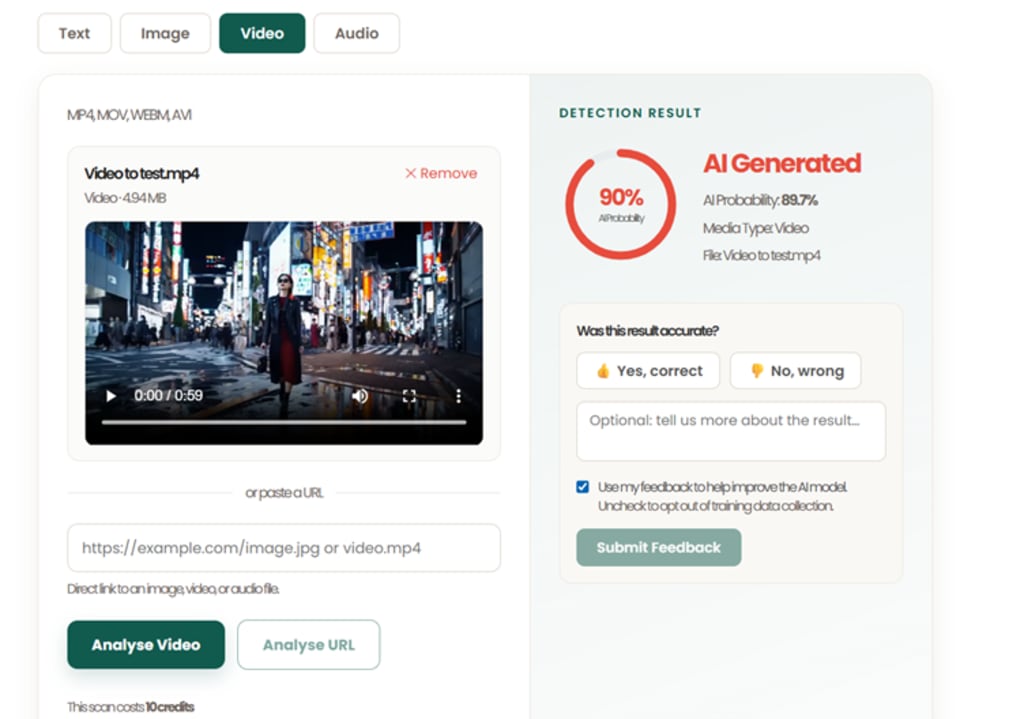
We are now at the stage with AI generated images, videos and text that it is hard to know what is real. A photograph might not be evidence, a voice calling us might not belong to the person we think it does. Articles you read could be written by a system that doesn't feel or really understand what it writes about.
With this, we are living through an era where there is a transformation in how reality gets represented. Most people have not caught up with what this means.
The question of whether a piece of content was made by a human or generated with AI machine is not merely a technical one. It touches something fundamental: how do we decide what's true, who do we trust, and what counts as authentic?. Getting this right: developing the tools, the methods, and the institutions to distinguish generated content from lived human creation is, perhaps, one of the more urgent challenges that we face.
The trust problem is deeper than fake news
When people talk about AI-generated misinformation, they tend to reach for certain examples such as deepfake videos of politicians or synthetic audio of celebrities. These are real and serious. But there are more corrosive effects.
Once audiences get that any image could be fabricated, that any audio clip could be synthetic, something changes in how people engage with all media. Doubt becomes a default. Legitimate footage from a genuine crisis gets dismissed. A real recording of wrongdoing gets waved away as "probably AI." This is the "liar's dividend": the benefit that bad actors gain as real evidence loses its weight.
Detection matters so as not just to catch the fakes, but also to restore credibility to the real.
There is also an economic dimension that sometimes gets overlooked in the broader conversation. Hundreds of thousands of people make their living through writing, visual arts, music production, and voice-over work. AI-generated content such as stock image libraries, content farms, voiceover platforms is displacing that labour - often plagiarising existing content without compensation, or even acknowledgement.
Reliable detection tools allow platforms to enforce policies around AI-generated submissions, let buyers make informed choices, and create the infrastructure for fairer compensation models.
Traditional propaganda was a relatively blunt tool. A government or a corporation could push a message, but they couldn't easily personalise it, refine it in real time, or generate it in a thousand variations tailored to each audience segment. AI-generated content has changed the arithmetic. What was previously resource constrained is now cheap. A campaign can generate thousands of individually calibrated persuasion attempts such as targeted emails or fake grassroots social media posts. The manipulation has got much more precise.
Detection systems that can identify AI-generated content and flag coordinated inauthentic behaviour are key pieces of defensive infrastructure. The alternative is a communications environment where the cost of deception is rapidly approaching zero.
AI-generated audio and video raise specific concerns that AI-generated text does not. A person's voice and likeness have traditionally been theirs - not to be reproduced without consent. This no longer holds. Voice cloning from audio is now accessible to anyone online. The implications range from the personal to the potential for industrial levels of business fraud Families have been defrauded by AI-generated calls mimicking kidnapped relatives. Revenge pornography using AI-fabricated video causes serious and lasting harm. Executives and public figures have had words attributed to them that they did not day.
Detection here isn't only about information quality. It is about personal and reputational autonomy. Without the ability to prove that a piece of audio or video is fabricated, victims have limited recourse and are open to the 'liars dividend' where genuine videos are called out as AI and AI-generated content affecting them is wrongly called out as genuine.
If you would like to know more about AI-content detection (or try out how it works), you can see examples at AI Aware
About the Creator
Stephen Harmston
Founder of AI Aware - a platform for detecting AI-generated text, images, video and audio.
Enjoyed the story? Support the Creator.
Subscribe for free to receive all their stories in your feed.
Comments