
Data Protection in HR Portal Development
HR Portal Development

Introduction
Ensuring data privacy cannot be an afterthought. Prioritising HR security measures from the outset is crucial. Privacy by Design involves integrating privacy into the development process right from the start. This includes collecting only necessary data, obtaining employee consent, and retaining only essential information for HR activities.
This article delves into the essential HR security measures that should be incorporated into HR portal development from the beginning. We will discuss strategies such as multi-factor authentication, data encryption, user training, and secure coding practices. These components form a comprehensive approach to protecting employee data and building trust within your organization. Prepare to enhance your HR portal's security, creating a safe environment where your most valuable asset—your employees—feel protected.
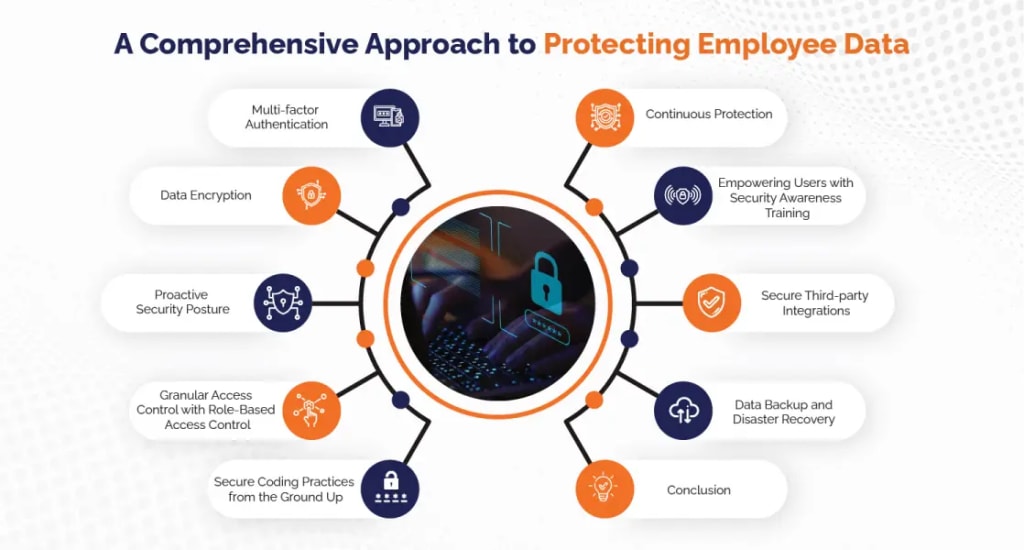
A Comprehensive Approach to Protecting Employee Data
Protecting employee data stored in HR portals requires a robust HR information security strategy. Here’s a detailed look at the key security measures to integrate during HR portal development, ensuring robust protection against potential threats:
Multi-Factor Authentication
Go beyond the traditional username and password setup. Multi-factor authentication (MFA) adds an extra layer of security, such as a time-based one-time password (OTP) or biometric features like fingerprints or facial recognition. This significantly reduces the risk of unauthorized access, even if login details are compromised.
Data Encryption
Think of data encryption as a digital safe. Encrypt employee data both at rest (on servers) and in transit (across networks). This turns the data into unreadable code that can only be decrypted with a specific key, ensuring its confidentiality even in the event of a breach.
Proactive Security Posture
Regular audits and penetration testing are essential. Instead of waiting for security issues to arise, adopt a proactive approach by conducting frequent security assessments. This includes simulated attacks to identify vulnerabilities and ethical hacking to test their severity. This comprehensive strategy helps address potential threats before they become serious problems.
Granular Access Control with Role-Based Access Control (RBAC)
Implement the principle of least privilege by assigning specific roles with defined permissions within the HR portal. RBAC ensures that only authorized personnel can access sensitive employee information relevant to their job functions. For example, a manager may have full access to staff details, while a new employee can only view their own information. This minimises the risk of accidental or malicious internal breaches.
Secure Coding Practices
Security should be integrated from the development stage. Developers must follow secure coding standards to minimise vulnerabilities in the HR portal’s code. This includes proper input validation to prevent malicious code injection and careful data handling to prevent leaks. Utilizing code analysis tools can help identify and address potential weaknesses early in the development process.
Continuous Protection
Regular software updates and patches are vital. Ensure a streamlined process for applying these updates to protect against new threats. Automate patch management to maintain consistency and effectiveness in securing the HR portal.
User Security Awareness Training
Even the best security measures can be undermined by human error. Regular training on cyber security practices is crucial. Educate employees about strong password creation, recognising phishing attempts, and reporting suspicious activities. By fostering a security-conscious culture, employees can become an active part of the security strategy.
Secure Third-Party Integrations
HR portals often integrate with external systems for payroll, benefits management, and time tracking. Ensure these third-party integrations are secure and comply with robust security standards before connecting them to your HR portal.
Data Backup and Disaster Recovery
Prepare for unforeseen events such as cyber attacks, natural disasters, or system failures. Implement a comprehensive data backup strategy, storing backups in secure, off-site locations. Develop a disaster recovery plan to restore operations quickly and minimize downtime. Regularly test this plan to ensure its effectiveness and accessibility.
Conclusion
Enhancing security during HR portal development is essential. By meticulously implementing these diverse security measures, you can create a secure environment for sensitive employee data, build organisational trust, and comply with data privacy regulations. A secure HR portal fosters employee confidence, enhances operational efficiency, and reduces the risk of data breaches.
Deeporion, a leading HR portal development company, can guide you through the complexities of security and create a tailored solution for your needs. Our team of security experts and skilled developers will work closely with you to incorporate advanced security features, ensuring your HR portal is both feature-rich and highly secure.
About the Creator
Deeporion Technology
Deeporion Technology is a dynamic web and software development company dedicated to providing innovative solutions tailored to meet the unique needs of businesses across various industries.
Enjoyed the story? Support the Creator.
Subscribe for free to receive all their stories in your feed.
Comments
There are no comments for this story
Be the first to respond and start the conversation.