
Content Syndication in B2B Marketing
Key strategies to master B2B Content Syndication
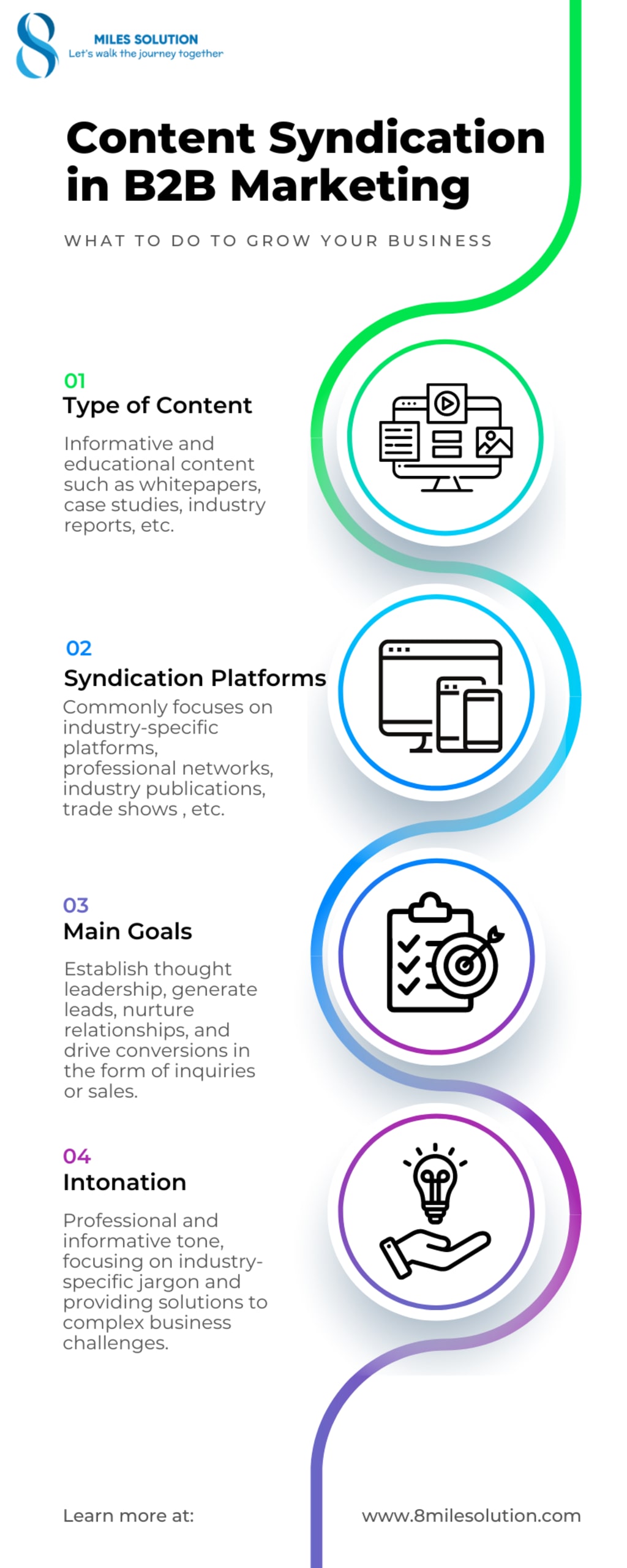
Content syndication is an invaluable tool for the B2B companies looking for sales acceleration. By strategically syndicating content on industry-specific websites, publications, forums, or social media platforms, businesses aim to reach a targeted audience of professionals who are actively seeking information, solutions, and insights related to their industry.
How the Content syndication varies in B2B and B2C marketing?
The strategies can differ between B2B (business-to-business) and B2C (business-to-consumer) markets due to variations in target audiences, content formats, distribution channels, and objectives.
B2B and B2C audiences have distinct characteristics and needs. B2B targets businesses, professionals, or decision-makers, while B2C focuses on individual consumers.
B2B syndication often includes informative and educational content such as whitepapers, case studies, industry reports, and webinars that cater to business professionals seeking in-depth insights and solutions. B2C syndication tends to involve more visually appealing and easily consumable content like blog posts, videos, infographics, social media posts, and interactive content to capture consumer attention and drive engagement.
B2B syndication commonly focuses on industry-specific platforms, professional networks, industry publications, and trade shows to reach decision-makers and professionals in their respective sectors. B2C syndication often leverages popular social media platforms, content aggregators, online publications, influencers, and entertainment websites that cater to a broader consumer audience.
B2B syndication often aims to establish thought leadership, generate leads, nurture relationships, and drive conversions in the form of inquiries or sales. Metrics may include lead quality, lead generation, conversion rates, and ROI. B2C syndication typically focuses on brand awareness, audience engagement, social sharing, website traffic, and consumer behaviors like clicks, views, likes, comments, and shares.
B2B content typically adopts a more professional and informative tone, focusing on industry-specific jargon and providing solutions to complex business challenges. B2C content often employs a more conversational, relatable, and emotional tone that connects with consumers on a personal level and highlights the benefits, features, and experiences associated with a product or service.
It's crucial to understand the unique characteristics of your target audience and tailor your strategy accordingly to achieve the desired outcomes.
Key Strategies for Effective B2B Content Syndication
1: Identifying Your Target Audience
Understanding the needs, pain points, and preferences of your ideal customers is crucial. Conduct thorough market research to define your target audience and tailor your content to resonate with their interests.
2: Crafting Compelling and Valuable Content
Deliver informative and actionable content that addresses your target audience's pain points and challenges. Create engaging blog posts, articles, whitepapers, and ebooks to showcase your expertise and provide valuable insights on specific topics. Utilize visually appealing infographics to summarize key industry statistics and trends.
3: Choosing the Right Channels for Syndication
Leverage industry-specific platforms that cater to your target market. Establish a presence on platforms such as LinkedIn, Twitter, Facebook, or Instagram, based on your audience's preferences. Email marketing remains highly effective for B2B content syndication. Build a subscriber base by offering valuable content downloads in exchange for email addresses.
4: Optimizing Content for Search Engines
Conduct comprehensive keyword research to identify terms and phrases relevant to your target audience. Naturally integrate these keywords throughout your content, including in headings, subheadings, and the body text. Craft compelling meta titles that accurately summarize the content and include target keywords. Enhance readability by using clear and concise sentences, subheadings, bullet points, and numbered lists.
5: Leveraging Analytics and Tracking Performance
Monitor click-through rates (CTR) and conversions to gain insights into your content's performance. Analyze metrics such as time spent on page, bounce rate, scroll depth, and social shares to assess user engagement levels. Longer average time spent on page and lower bounce rates indicate effective content. Utilize analytics data to refine and optimize your content syndication strategies.
About the Creator
Enjoyed the story? Support the Creator.
Subscribe for free to receive all their stories in your feed.
Comments
There are no comments for this story
Be the first to respond and start the conversation.