
Components & Working of An Absolute Encoder
Absolute Encoders Decoded
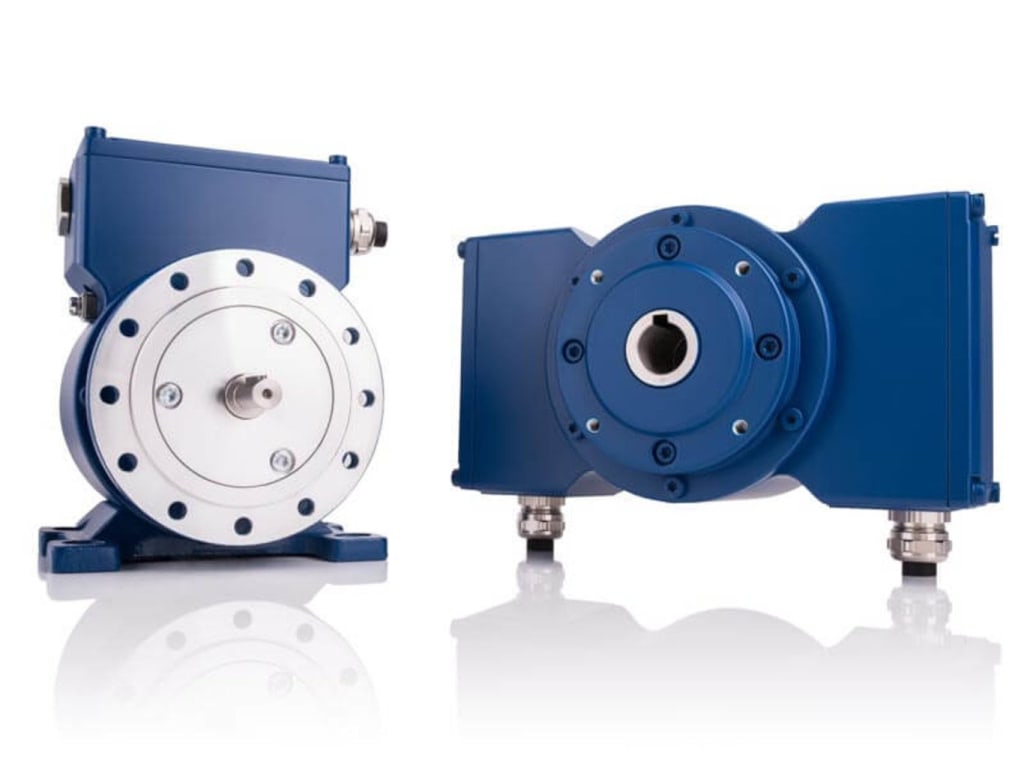
The automation industry utilizes multiple secondary tools to support their overall manufacturing process. Whether it be pyrometers, infrared cameras, or proximity sensors, each tool has its special attributes that play their part. Similarly, an absolute encoder entails various functions, streamlining the overall manufacturing process. In this article, we’ll learn the components and the basic working of an absolute encoder.
What is an Absolute Encoder?
Before we jump off into the overall functionality, let us first understand what an absolute encoder means. An absolute encoder is a type of encoder that signals a unique digital code for every shaft position. As a result, they ensure that the position information is never lost even in case of a power shut down. Additionally, they provide consistent and repeatable position reference, minimizing errors and eliminating the need for reference cycles.
Components of Absolute Encoders
Since now we’re aware of what an absolute encoder stands for, let us investigate the components that work together, making it a handy tool. Below are the listed components of this device:
Code Disk: A metallic or plastic disk consisting of markings to indicate different shaft positions, which determines the current state of the machine.
Light Detector/Source: A very specific component present in Optical Encoders, it’s a light source that passes through the encoder providing different readings.
Photodetectors: Detects the current position of the rotating disc and generates a unique signal corresponding to the current position.
Signal Processing Circuit: A device that interprets the signals from the photodetectors and gives the output in a digital format.
Housing: Acts as the body/frame entailing all the different components of the device.
Output Interfaces from an Absolute Encoder
- Synchronous Serial Interface(SSI)
- Profinet
- EtherCAT
- EtherNet/IP
- Profibus
- Parallel
- DeviceNet
- CANopen
- Canbus
- Analog Output(4-20 mA)
Working of An Absolute Encoder
Having understood the different components, you might have acquired an idea of how the overall process works. Before you miss out on something, let us look into the overall working of these encoders:
Position Coding: These encoders assign a specific binary/gray code to each shaft position, making it more accurate to identify the current shaft position.
Signal Transmission: The light source and detector send signals to the photodetectors which provides an on-time position of the shafts.
Memory: A unique feature of absolute encoders is that they are capable of storing memory even in case of a power shut down. The encoder itself stores the memory of its shaft position, making it easier for manufacturers in data driven decision making.
Applications of Absolute Encoders
Looking into its specifications, it's quite clear that an absolute encoder can be utilized in multiple industries. Hence, let us a discuss a few applications of this device across various sectors:
Steel Manufacturing: Heavy-duty industries like steel manufacturing and hot mill rolling require precision data while monitoring the harsh environment during the manufacturing process. This is where the hard build of metallic absolute encoders comes into play.
Industrial Robotics: Absolute Encoders assist in accurate movement monitoring of robotic joints. As a result, they provide precise data to understand error points and mitigate them accordingly.
Elevators: One of the major applications of these devices is seen in elevators and escalators. Their precise data helps with easy acceleration or deceleration during vertical movements.
Conclusion
Encoders are a great utility tool in various manufacturing/commercial sectors. Although there are multiple types of encoders, an absolute encoder stands out due to its precise monitoring technique. The different components work together by transmitting mechanical data to electronic ones. As a result, the absolute encoder can be utilized in various sectors, such as Robotics, Steel Manufacturing, and Hot Mill Rolling.
About the Creator
Enjoyed the story? Support the Creator.
Subscribe for free to receive all their stories in your feed.
Comments
There are no comments for this story
Be the first to respond and start the conversation.