
Can the Right Houseplant Actually Change How You Feel at Home?
The real research behind plants and how they affect your mood.
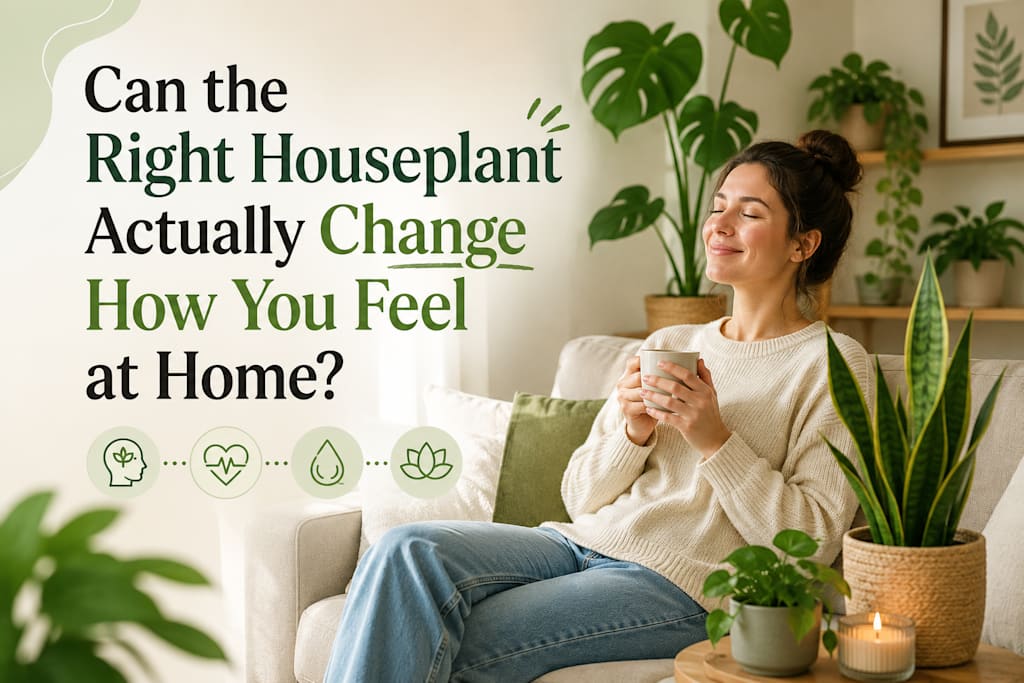
You know that feeling when you walk into someone's home and it just feels good? Calm. Lived in. Like the room is breathing.
Most people think it's the furniture or the lighting. It's usually the plants.
There's real science behind this. Not the "plants make you happy" kind of vague wellness talk, but actual studies measuring cortisol levels, heart rate, and productivity. And the results are clear enough that ignoring them feels like a mistake.
Here's what's actually happening when you live with plants, and which ones are worth your time.
Quick Answer: Yes, the right houseplant genuinely changes how you feel at home. Being near greenery lowers your cortisol levels, slows your heart rate, and improves focus. You don't need a lot of plants. You need the right one, in a spot you actually spend time in.
Why Your Brain Reacts to Plants
This isn't about aesthetics. Your brain is doing something specific when it sees greenery.
Humans spent hundreds of thousands of years outside. Green meant safety: food, water, shelter. So your nervous system is still wired to relax around it. Researchers call this biophilia. It's not a trend or a wellness buzzword. It's biology that hasn't caught up with the fact that most of us now live in apartments.
When you're indoors for months (and in Canada, that's most of the year) your nervous system quietly registers the absence of nature. You don't notice it consciously. You just feel flat, restless, or like something's off.
Studies show what happens when you bring plants back in:
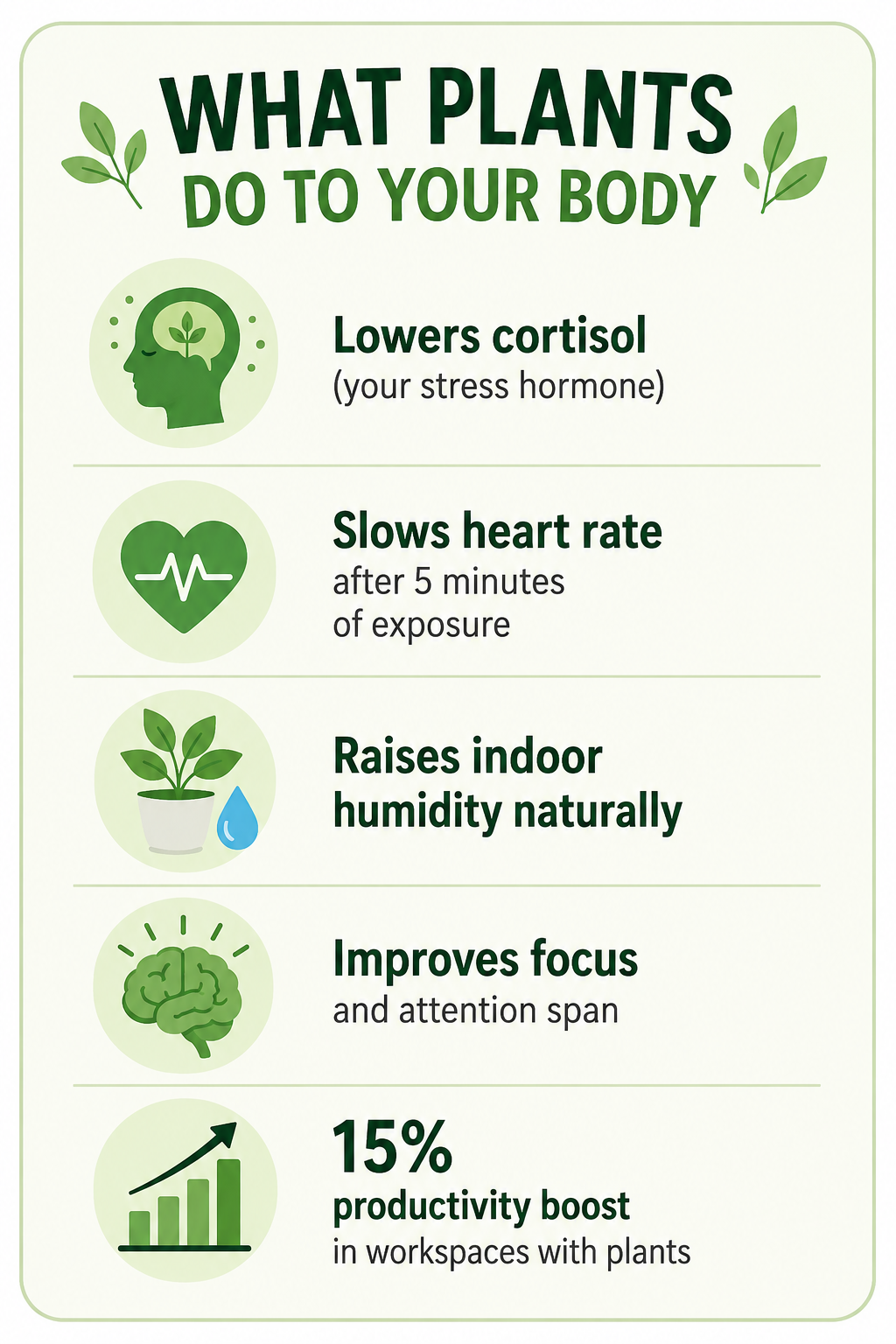
Cortisol drops. Cortisol is the hormone your body makes under stress. Just being near plants measurably reduces it.
Heart rate slows. In one study, people who spent a few minutes looking at plants had lower heart rates than those who looked at a screen for the same time.
Focus improves. A study on workers found that people with plants in their workspace were 15% more productive than those without.
Creativity goes up. Research from Japan found that people working near plants came up with more creative solutions to problems.
None of this requires turning your home into a greenhouse. A single plant in a room you spend real time in is enough to register.
5 Plants That Actually Change How a Room Feels
Not every plant does the same thing emotionally. Here's what each one actually brings to a space, and who it's right for.
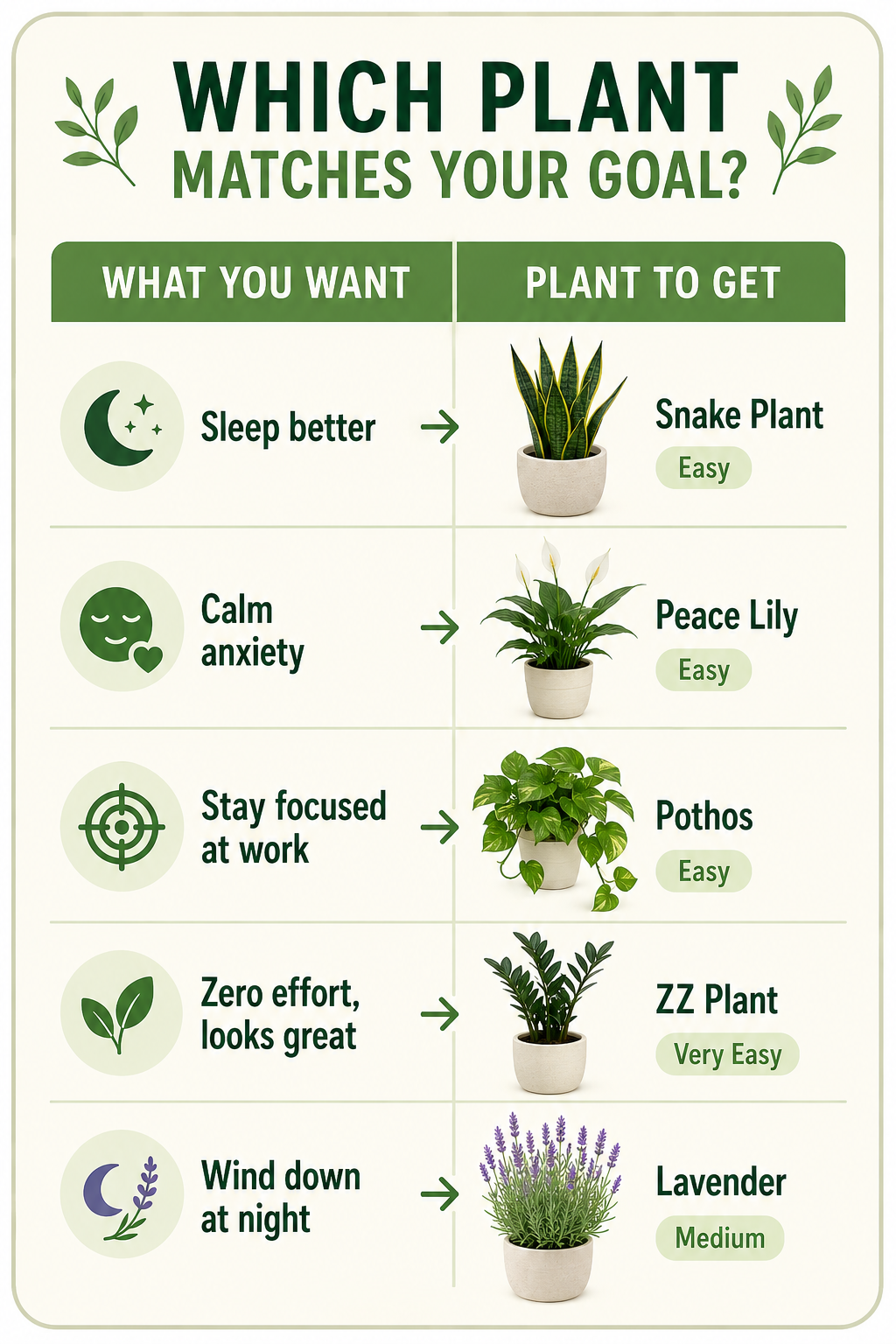
1. Snake Plant
Best for: Bedrooms, dark corners, people who travel or forget to water
The snake plant is the one I'd recommend to almost anyone starting out. It looks sharp: tall, architectural, modern. And it's almost impossible to kill. Low light, dry air, two weeks without water. It handles all of it without drama.
What makes it stand out for mood is where it works best: the bedroom. It's one of the few plants that releases oxygen at night instead of carbon dioxide. Better air quality while you sleep means better sleep, and better sleep changes everything about how you feel during the day.
If your home has poor light (a north-facing apartment, a basement suite, anywhere that feels dim) the snake plant is your answer.
2. Peace Lily
Best for: Living rooms, people dealing with anxiety, anyone who wants a calmer space
The peace lily does something subtle but real. White flowers, deep green leaves, soft shape. It changes the energy of a room in a way that's hard to put into words until you experience it. Rooms with peace lilies feel quieter. Less tense.
It also raises indoor humidity slightly, which matters more in Canadian homes than most people realise. Forced-air heating in winter drops indoor humidity to around 20–30%. The peace lily nudges that up, which helps with dry skin, irritated sinuses, and restless sleep.
One thing to know: it's toxic to cats and dogs if eaten. Keep it on a high shelf if you have pets.
3. Pothos
Best for: Home offices, shelves, people new to plants
Pothos is underrated because it looks so easy. And it is easy. But that's not why it's on this list.
What pothos does well is bring movement to a space. It trails. It grows fast. It hangs down from shelves in a way that makes a room feel alive rather than static. There's something genuinely calming about watching a plant grow, about noticing a new leaf every week. Pothos gives you that without making you work for it.
It forgives low light, missed watering, and dry air. If you work from home and spend hours at a desk, a pothos nearby is one of the simplest things you can do for your headspace.
4. ZZ Plant
Best for: Corners, minimalist spaces, people who have killed every plant they've tried
The ZZ plant looks like it costs a lot to maintain. It doesn't. Dark, glossy leaves, structured shape, thrives on neglect. Water it every two to three weeks. Give it low or indirect light. That's genuinely all it needs.
The reason it changes how a room feels is visual weight. A ZZ plant in a corner makes a room feel finished in a way an empty corner never does. It grounds the space without demanding attention.
If you've given up on plants before, start here. It's the one most likely to still be alive in a year.
5. Lavender
Best for: Bedrooms, bathrooms with good light, people who struggle to switch off at night
Lavender is the only plant on this list where the mood effect comes from scent rather than sight. The smell of lavender has been shown in research to directly reduce anxiety and slow the nervous system down. It's why you find it in spas, in pillow sprays, in everything marketed as calming.
The catch: lavender needs a bright south-facing window to survive indoors. In a dark Canadian apartment in January, it will struggle. But if you have the light, a small lavender plant on your windowsill (especially in a bedroom) is one of the most effective mood tools you can own.
Where You Put It Matters as Much as Which One You Pick
A plant in a room you never use does nothing.
The whole point is daily exposure. Your nervous system needs to actually see the green, consistently, for the effect to build. That means putting your plant somewhere you already spend time. Not tucked in a corner of the spare room because it looks nice there.
Desk. Bedside table. The shelf across from where you eat. The windowsill you look at while making coffee. These are the spots that work. Not the spots that make sense in a photo.
Pick one location first. Then pick the plant that fits that location. That order matters more than most people think.
FAQ
Do plants really lower stress or is that just something people say?
It's not just something people say. Studies measuring cortisol levels (your body's actual stress hormone) show a measurable drop when people spend time near plants. The effect isn't enormous, but it's consistent and it's real. Your nervous system responds to greenery the same way it responds to being outside. That response is biological, not imagined.
What is the best houseplant for anxiety specifically?
Peace lily and lavender are the strongest options. The peace lily works through visual calm: soft shape, white flowers, quiet presence. Lavender works through scent, which has a direct effect on the part of your brain that controls anxiety. If you can only pick one and your home has limited light, go with the peace lily. It handles shade far better than lavender does.
Do fake plants have the same effect?
No. Part of what makes real plants work is the act of caring for them: the small daily routine of checking soil, wiping a leaf, moving it toward light. That routine creates a connection that fake plants don't. Studies comparing real and artificial plants consistently show stronger mood and wellbeing benefits from the real ones. A fake plant looks like a plant. It doesn't function like one.
How many plants do I actually need to feel a difference?
One placed well beats five placed badly. Research suggests two to five medium plants per room is the sweet spot for measurable mood benefit, but starting with one in a spot you genuinely spend time in will already make a difference. Don't let the number pressure you into buying more than you're ready to care for.
I've killed every plant I've ever owned. Where do I start?
Snake plant or ZZ plant. Both are genuinely hard to kill. Low light, irregular watering, dry winter air neither plant cares. Start with one of these, learn what keeping a plant alive actually feels like, then add more when it stops feeling like a risk.
Can a houseplant actually help with sleep?
Yes, specifically the snake plant. It releases oxygen at night, which most plants don't do. Better oxygen levels in a bedroom improve sleep quality in a way that's subtle but real. You wake up feeling more rested without knowing why. The peace lily helps too, by adding a small amount of humidity to dry winter air, which makes breathing easier while you sleep.
Bottom Line
The idea that a plant can change how you feel at home sounds small. It isn't.
Your nervous system is wired to respond to greenery. Studies show it lowers stress, improves focus, and makes a room feel calmer and more alive. You don't need to go big. You need to go intentional: one plant, in a spot you'll actually see it, that fits the light you actually have.
That's the whole thing. If you're not sure where to start, MyGreenScape carries a wide range of indoor plants with guidance on which ones suit your space and lifestyle.
About the Creator
Enjoyed the story? Support the Creator.
Subscribe for free to receive all their stories in your feed.
Comments