
Can I Dye My Hair While Pregnant?
The honest guide to using henna while expecting — what's safe, what isn't, and why the product type makes all the difference.

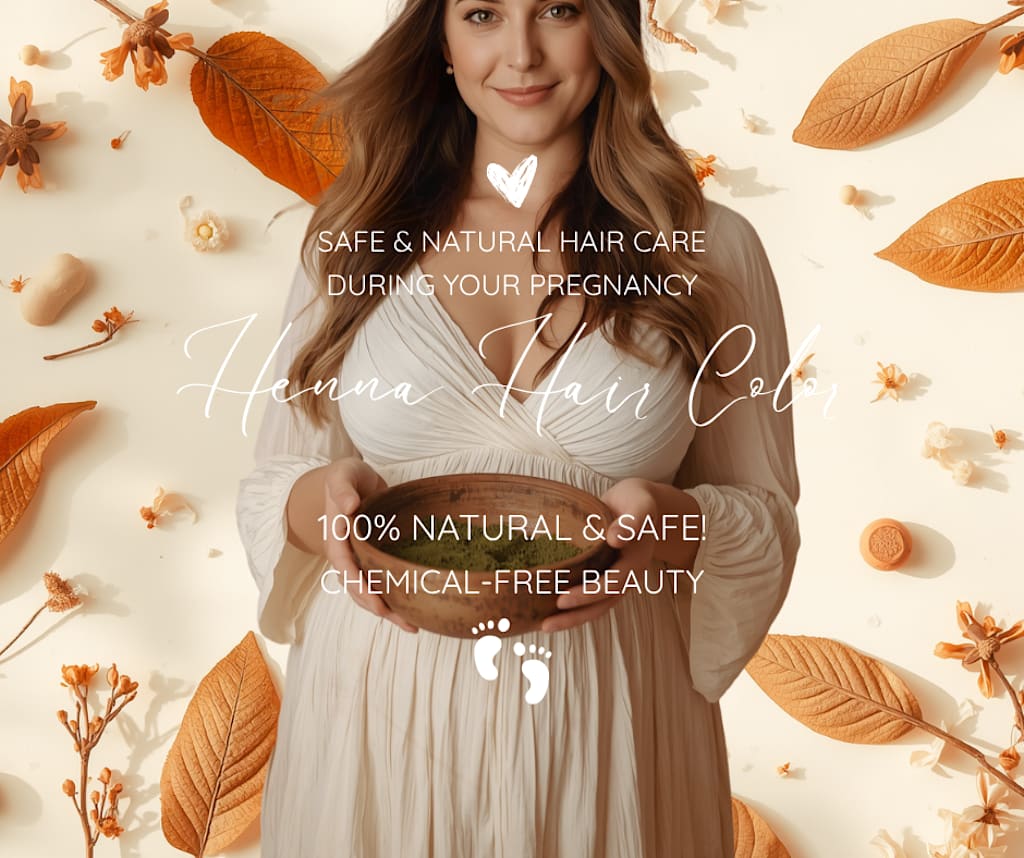
Yes — most research shows hair dye during pregnancy is generally safe because only very small amounts of chemicals absorb through a healthy scalp. The NHS, the American College of Obstetricians and Gynecologists, and most midwives all confirm this. The standard guidance is to wait until after the first twelve weeks as a precaution, and to choose products carefully. Natural options like pure henna reduce chemical exposure even further.
Why Hair Dye Is Considered Low Risk in Pregnancy
The main worry about dyeing hair while pregnant is whether the chemicals in the dye can cross the scalp, enter the bloodstream, and reach the baby. Research shows this absorption is minimal.
A widely cited Canadian study found that hair dyes are absorbed through the skin in only very small amounts — far too little to pose a likely risk to the developing fetus. The hair shaft itself is made of keratin, a dead protein. Most of the dye stays there. Only a tiny amount even contacts the scalp, and less still actually penetrates it.
This is why ACOG generally considers hair coloring safe during pregnancy when used as directed. The key phrase is "as directed" — not applied to broken skin, not left on past the maximum time, not used in a poorly ventilated room.
The First Trimester Question
The twelve-week guideline comes up constantly. Most healthcare professionals, including NHS midwives, recommend waiting until after the first trimester to color your hair. The reason is straightforward: this is the window when the baby's brain, spinal cord, heart, and major organ systems are forming.
The recommendation is precautionary, not based on proven harm. As board-certified OB-GYN Dr. Alison M. Key has noted, there are no major studies showing that dyeing hair in early pregnancy causes harm. The advice exists because researchers have not conducted controlled studies on hair dye use in the first trimester, and limiting unnecessary chemical exposure during organogenesis is simply sensible practice.
After week twelve, most providers are comfortable with occasional hair coloring using appropriate products.
What Ingredients to Avoid in Hair Dye During Pregnancy
Not all hair dyes carry equal risk. These are the specific ingredients that doctors and midwives flag most often:
PPD (para-phenylenediamine): Highly allergenic and can be absorbed through skin. Found in most permanent chemical dyes and in products sold as "black henna."
Ammonia: Opens the hair shaft and releases harsh fumes that can irritate airways and lungs. Worse in enclosed spaces.
Resorcinol: A hormone-disrupting compound found in many commercial permanent dyes.
Parabens: Methylparabens and propylparabens can interfere with hormone function.
Phthalates: Another group of hormone disruptors sometimes present in fragrance-containing hair dye formulas.
Products labeled ammonia-free, PPD-free, and paraben-free reduce your exposure to the most problematic ingredients. Pure natural henna — meaning 100% Lawsonia inermis leaf powder — contains none of these ingredients at all.
Safer Ways to Color Your Hair During Pregnancy
Semi-Permanent Color
Semi-permanent dyes use lower concentrations of chemical pigments and contain no ammonia. They deposit color on the surface of the hair shaft rather than penetrating it. They fade over several weeks, which means no harsh regrowth line. This makes them a preferred choice for many pregnant women who want a chemical option with lower exposure.
Highlighting Techniques
Foil highlights, balayage, and other techniques that keep color products away from the scalp are often recommended by both colorists and midwives. When the dye does not directly contact the scalp, absorption is reduced significantly. This is why highlights may feel like a safer option than root-to-tip color applications.
Natural Henna Hair Color
Pure natural henna hair color is the option most explicitly endorsed by the NHS for pregnant women. Made from dried Lawsonia inermis leaves, it coats the hair strand with a plant-based dye molecule called lawsone. No ammonia. No peroxide. No PPD. It produces red, auburn, copper, and brown tones, and can be blended with indigo powder for darker shades.
The critical point: confirm you are buying genuine natural henna, not a product adulterated with PPD marketed as "herbal black hair color." Check the ingredient list and verify certifications from the manufacturer.
Organic Hair Dye Products
A growing number of certified organic hair color products offer ammonia-free, PPD-free formulas with plant-derived pigments. Look for COSMOS or ECOCERT organic certification as a sign of formula integrity. These give you the color versatility of a chemical product with significantly reduced synthetic ingredient exposure.
Practical Safety Steps: How to Dye Hair Safely While Pregnant
Whether you are using a chemical dye, a semi-permanent formula, or natural henna, follow these steps:
Always do a patch test — 24 to 48 hours before full application. Pregnancy changes skin sensitivity and you may react to a product you have used safely for years.
Tell your hairdresser you are pregnant — even before they start. Salon professionals can adjust technique, ventilation, and product choice accordingly.
Work in a well-ventilated space — open windows, use a fan, and keep the room aired throughout.
Wear gloves — especially for at-home application.
Don't exceed the maximum application time — more contact time does not improve color and unnecessarily extends scalp exposure.
Rinse thoroughly — remove all product from scalp and hair with water before shampooing.
Avoid dyeing eyebrows or eyelashes — the skin around the eye area is thin, highly vascular, and absorbs substances more readily. This applies during pregnancy and outside it.
When to Ask Your Doctor or Midwife
Speak with your healthcare provider before dyeing your hair if:
You are in your first trimester
You have a scalp condition like eczema, psoriasis, or open sores
You have previously had an allergic reaction to any hair dye product
You have or suspect you have G6PD deficiency
You develop any unexpected reaction during or after use.
About the Creator
Kirpal Export Overseas
Kirpal Export Overseas is an international export Company and a trusted henna manufacturers in Rajasthan, offering natural henna hair color, organic henna powder, and herbal hair products sourced from Sojat, Rajasthan for global markets
Enjoyed the story? Support the Creator.
Subscribe for free to receive all their stories in your feed.
Comments
There are no comments for this story
Be the first to respond and start the conversation.