
Brown v. Board of Education: A Landmark Civil Rights Ruling
A Landmark Civil Rights Ruling
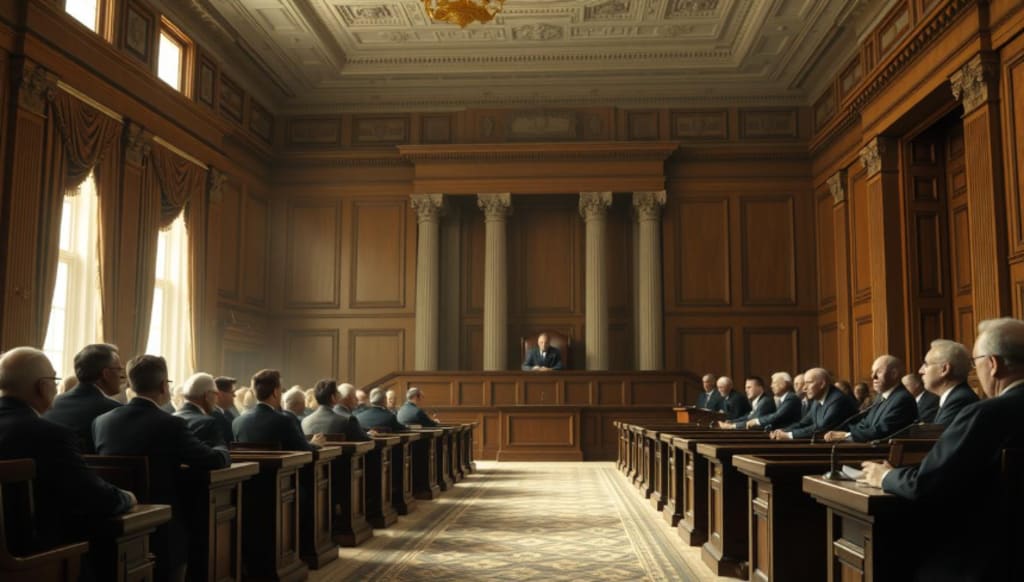
Brown v. Board of Education: A Landmark Civil Rights Ruling
The Brown v. Board of Education case was a turning point in American civil rights history. It was decided in 1954. This case challenged the racial segregation in public schools across the United States.
The Supreme Court ruling ended the "separate but equal" doctrine. This doctrine had justified racial discrimination in education for a long time. The case showed the deep injustices faced by African American students back then.
Lawyers from the NAACP, led by Thurgood Marshall, argued that segregated schools were unequal. They said these schools were also harmful to Black children's minds. Their efforts changed American education and civil rights forever.
Key Takeaways
Challenged systemic racial segregation in public schools
Unanimous Supreme Court decision in 1954
Overturned the "separate but equal" doctrine
Pivotal moment in the civil rights movement
Initiated fundamental changes in American educational policy
Understanding Brown v. Board of Education: Historical Context
In the mid-20th century, American education was divided by racial inequality. African American students faced big barriers to education. The system was unfair, leading to a major civil rights challenge in US history.
Jim Crow Laws and Educational Segregation
Jim Crow laws made schools separate by race. They followed the "separate but equal" rule, but it was far from equal. African American students got:
Inferior school facilities
Limited educational resources
Significantly lower funding for Black schools
Restricted access to quality education
The State of Public Education in the 1950s
In the 1950s, public schools showed deep racial gaps. Racial equality seemed far away. Southern states kept schools segregated, with Black schools in bad shape, using old books, and with little money.
"Separate educational facilities are inherently unequal." - Chief Justice Earl Warren
Social Climate Leading to the Case
The civil rights movement grew, pushing for change in schools. African American communities wanted justice, seeing education as key to better lives and jobs.
Groups, lawyers, and parents started fighting segregation. This led to the Brown v. Board of Education case, changing America.
The Plessy v. Ferguson Legacy and Separate but Equal Doctrine
https://youtube.com/watch?v=-1rLPDn9LxE
The separate but equal doctrine was a key legal idea that shaped race relations in the U.S. for many years. It was set by the Supreme Court in Plessy v. Ferguson in 1896. This idea allowed racial segregation in many parts of American life.
"Separate but equal" became the constitutional justification for maintaining racial divisions in public spaces, schools, and social institutions.
This Supreme Court ruling greatly influenced race relations. It created a legal system that looked fair but actually led to inequality. African Americans faced big challenges under this rule, which made legal discrimination okay.
Legalized racial separation in public spaces
Created institutional barriers for African Americans
Undermined constitutional promises of equality
The separate but equal doctrine had big effects:
Area of Impact Practical Consequences
Education Segregated and unequal schools
Public Transportation Restricted seating and services
Housing Restricted neighborhood access
This doctrine was not challenged until the Brown v. Board of Education case. This case finally ended this unfair legal rule. It helped start progress in civil rights.
Linda Brown's Story: The Face of Educational Reform
Linda Brown was a young African American girl who became a symbol of the civil rights movement. She challenged educational segregation in the United States. Her story showed the deep injustices faced by Black students in the 1950s.
Daily Challenges of African American Students
Linda Brown faced harsh realities of segregation every day. In Topeka, Kansas, she had to walk far to a Black-only school. A white school was closer to her home. Her journey highlighted the struggles of African American students.
Longer transportation distances
Inferior educational resources
Systemic discrimination
Psychological trauma of separation
The Brown Family's Legal Journey
Oliver and Leola Brown, Linda's parents, joined the NAACP to fight for change. Their brave move turned Linda's story into a major legal case. This case would change American education forever.
"Separate educational facilities are inherently unequal." - Chief Justice Earl Warren
Impact on the Brown Family
The legal battle put the Brown family at risk. They faced social exclusion and personal threats. Linda Brown's story became a beacon of hope for future generations of African American students.
Thurgood Marshall's Legal Strategy and NAACP Involvement
Thurgood Marshall was a key figure in the civil rights movement. He used his legal skills to challenge racial segregation in schools. As the lead lawyer for the NAACP Legal Defense and Educational Fund, he developed a new way to fight racism through lawsuits.
Marshall's strategy was to attack the roots of segregation. He knew arguing for equal facilities wasn't enough. He aimed to show that segregation itself was unfair and broke the 14th Amendment's equal protection clause.
"Separate educational facilities are inherently unequal." - Thurgood Marshall
Developed comprehensive legal arguments challenging segregation
Gathered psychological and sociological evidence of discrimination's impact
Strategically selected test cases to challenge integration barriers
The NAACP played a big role in Marshall's work. He prepared for Brown v. Board of Education by winning early cases. These victories weakened segregation's legal base.
Legal Strategy Component Key Approach
Constitutional Challenge 14th Amendment Equal Protection
Evidence Gathering Psychological and Social Impact Studies
Litigation Focus Systemic Racism in Educational Institutions
Marshall's sharp legal mind and dedication to integration changed America. His work paved the way for big changes in education and civil rights.
Key Arguments Presented Before the Supreme Court
The Brown v. Board of Education case was a key moment in the fight for racial equality. Lawyers worked hard to challenge the long-standing system of school segregation in the U.S.
Constitutional Challenges to Segregation
The NAACP legal team focused on key constitutional arguments against racial segregation. They targeted the 14th Amendment's Equal Protection Clause. They argued that separate schools were not equal.
Challenged the Plessy v. Ferguson "separate but equal" doctrine
Argued that segregation violated fundamental constitutional rights
Demonstrated systematic discrimination in public education
Psychological Impact Evidence
The Brown v. Board of Education case introduced social science research. This research showed the harm of racial segregation on African American children's minds and hearts.
"Segregation is a badge of inferiority which affects the hearts and minds of Negro children."
Research Focus Key Findings
Self-Perception Segregation negatively impacted children's self-esteem
Educational Opportunities Unequal resources limited academic potential
Psychological Development Systemic discrimination caused long-term emotional harm
State Defense Arguments
Southern states defended segregation, saying it was a long-standing tradition. They argued that sudden integration would cause trouble and conflict.
Claimed state-level rights to manage educational systems
Argued for gradual social change
Attempted to preserve existing racial hierarchies
Chief Justice Earl Warren's Unanimous Decision
The Brown v. Board of Education ruling was a key moment in American civil rights history. Chief Justice Earl Warren made a unanimous decision that changed the nation's schools. It challenged the deep racial segregation in education.
"Separate educational facilities are inherently unequal."
Warren's leadership was key in making this landmark case. He united all nine Supreme Court justices against racial discrimination in schools. This made a strong statement against racial bias in education.
Unanimous ruling across all nine justices
Direct challenge to Plessy v. Ferguson precedent
Psychological evidence of segregation's harmful effects
The desegregation ruling was a turning point. Warren's opinion stressed the need for equal education for all kids, no matter their race.
Decision Aspect Key Impact
Unanimous Vote Demonstrated unified judicial perspective
Constitutional Interpretation Reaffirmed 14th Amendment equal protection clause
Social Implications Challenged systemic racial inequality
Warren's strategic thinking made the ruling a clear moral and legal stand against racial segregation in schools.
Immediate Impact of the Ruling on American Education
The Brown v. Board of Education ruling started a tough journey of desegregation in the U.S. The Supreme Court's decision was a big step forward. But, it also showed deep racial tensions and resistance.
The civil rights movement faced big hurdles in changing schools. School districts had many challenges that tested the will of those pushing for integration.
Implementation Challenges
Slow legal processes delayed immediate school integration
Many districts created complex legal strategies to avoid desegregation
Financial constraints hindered comprehensive integration efforts
"With all deliberate speed" became a controversial phrase that allowed schools to drag their feet on integration.
Southern Resistance Movement
Southern states came up with smart ways to keep schools segregated. The Massive Resistance movement was a plan to stop integration through laws and social actions.
State Resistance Strategy Impact
Virginia Closing Public Schools Prevented Integration
Alabama Legislative Barriers Delayed School Enrollment
Mississippi Intimidation Tactics Discouraged African American Families
Despite strong resistance, steps towards equal education were slowly made. This was thanks to the ongoing efforts of civil rights activists and legal battles.
Long-term Effects on Civil Rights Movement
The Brown v. Board of Education ruling was a big push for change in the U.S. It led to a lot of progress in racial equality and social change. This change was seen in many areas of American society.
The Supreme Court's decision led to big changes in laws and society. Activists and lawyers used this ruling to fight against unfair treatment in many areas.
Inspired grassroots civil rights movements
Provided legal precedent for integration challenges
Empowered marginalized communities to seek justice
Challenged institutional racial barriers
After the ruling, legal strategies changed a lot. Lawyers started using similar arguments to fight for equality in public places, jobs, and voting rights.
"The road to racial equality is paved with courageous legal challenges and collective social action." - Thurgood Marshall
The ruling also had a big impact on people's minds. It showed a big change in how the country thought about race. It gave hope for a better future.
Civil Rights Milestone Year Significance
Montgomery Bus Boycott 1955 Direct result of growing civil rights momentum
Civil Rights Act 1964 Comprehensive legal framework for racial equality
Voting Rights Act 1965 Eliminated discriminatory voting practices
The Brown v. Board decision was a key part of the civil rights movement. It showed how important legal action is in fighting racism and seeking justice.
Modern Educational Integration and Ongoing Challenges
The dream of racial equality in schools is still a work in progress in America. It's been years since the Brown v. Board of Education ruling. Yet, desegregation efforts face many obstacles today.
Integrating schools is a long journey in America. School districts across the country struggle with segregation. This is due to where people live and economic differences.
Contemporary School Segregation Dynamics
Residential segregation continues to impact school boundaries
Economic segregation reinforces racial separation in schools
Urban and suburban districts show significant integration challenges
Achievement Gap Insights
Demographic Group High School Graduation Rate College Enrollment
White Students 87% 42%
African American Students 76% 36%
Hispanic Students 81% 39%
The data shows big gaps in education that need to be fixed. We need plans that tackle economic issues to truly integrate schools.
"True integration is not just about physical proximity, but about creating equitable learning environments for all students." - Education Equity Researcher
New ideas like magnet schools and community programs are helping. They aim to make education fair for everyone.
Legacy of Brown v. Board of Education in Current Policy
The Brown v. Board of Education case has greatly influenced education and civil rights in the U.S. for decades. It changed American education by ending racial segregation in schools. This was a major step forward.
Today, educators and policy makers look to Brown v. Board for guidance. The Supreme Court's decision set a strong standard for educational fairness. It goes beyond just ending racial segregation.
Federal initiatives continue to reference Brown v. Board of Education as a critical precedent
School districts nationwide work to create more inclusive learning environments
Legal interpretations of educational equity evolve from the case's foundational principles
Even today, we face challenges in achieving true educational equality. While we no longer have open segregation, systemic barriers still affect students. Differences in school resources and access show the lasting impact of segregation.
"Separate educational facilities are inherently unequal" - Chief Justice Earl Warren
Recent Supreme Court decisions have grappled with Brown's legacy. Issues like affirmative action, school zoning, and diversity show Brown's lasting impact. It's clear in our laws and education systems.
Ongoing research examines achievement gaps
Policy makers seek innovative integration strategies
Educational equity remains a critical national conversation
Conclusion
The Brown v. Board of Education case was a key moment in American civil rights history. It changed the way schools were run, ending racial segregation in education. The Supreme Court said schools for different races were unfair, starting a big change.
This case did more than just change schools. It made people talk about fairness, justice, and education for all. Schools started to mix, facing hard issues like racism and old unfair rules.
Even today, schools face issues like unfair grades and money problems. The Brown v. Board case reminds us that laws alone can't fix deep problems. It shows our ongoing effort to make schools fair for everyone.
This case still inspires us to fight for fairness. Linda Brown's bravery and Thurgood Marshall's smart work are symbols of hope. They remind us of our ongoing fight for racial equality.
FAQ
What was the Brown v. Board of Education case about?
The Brown v. Board of Education was a key 1954 Supreme Court case. It aimed to end racial segregation in public schools. The case showed that separate schools were not equal and were against the law, ending the "separate but equal" rule from 1896.
Who was Linda Brown?
Linda Brown was a young African American student from Topeka, Kansas. She had to travel far to go to a segregated school. This made her family fight against segregation in schools.
Who was the lead attorney in the case?
Thurgood Marshall, who later became the first African American Supreme Court Justice, led the NAACP Legal Defense and Educational Fund. He focused on proving segregation itself was wrong, not just the conditions in segregated schools.
What was the Supreme Court's decision?
On May 17, 1954, the Supreme Court made a unanimous decision. They said segregation in public schools was against the law. They said "separate educational facilities are inherently unequal" under the 14th Amendment.
How did the ruling impact American education?
The Brown v. Board of Education ruling was a big step in civil rights history. It made public schools desegregate. But, many Southern states fought against this, making the process slow and hard.
What were the key arguments against segregation?
The plaintiffs showed how segregation hurt African American children. They said it broke the 14th Amendment's Equal Protection Clause. They also said it made minority students feel less than others.
What was the "separate but equal" doctrine?
The "separate but equal" doctrine was set by Plessy v. Ferguson in 1896. It said separate facilities for races could be equal. But, the Brown v. Board of Education case proved this was not true and was against the law.
What long-term impact did the case have on civil rights?
The Brown v. Board of Education decision was a big push for the Civil Rights Movement. It led to more legal fights against segregation. It also gave power to civil rights activists and helped in the fight for racial equality in many areas of American life.
Are schools fully integrated today?
Schools are not fully integrated today. Legal segregation is gone, but de facto segregation remains. This is because of housing and school district lines. Today, we still see achievement gaps and debates on how to make schools truly equal.
Why is this case considered a landmark ruling?
The Brown v. Board of Education case is a landmark because it challenged and ended legal racial segregation. It was a key moment in American civil rights history. It showed the Supreme Court's power to fight racial inequalities and uphold equality.
About the Creator
Selim Miah
Freelance writer, artist and traveller
Enjoyed the story? Support the Creator.
Subscribe for free to receive all their stories in your feed.
Comments
There are no comments for this story
Be the first to respond and start the conversation.