
Breaking Barriers: The Unstoppable Rise of Women in Business
The story is changing — and it's changing fast.

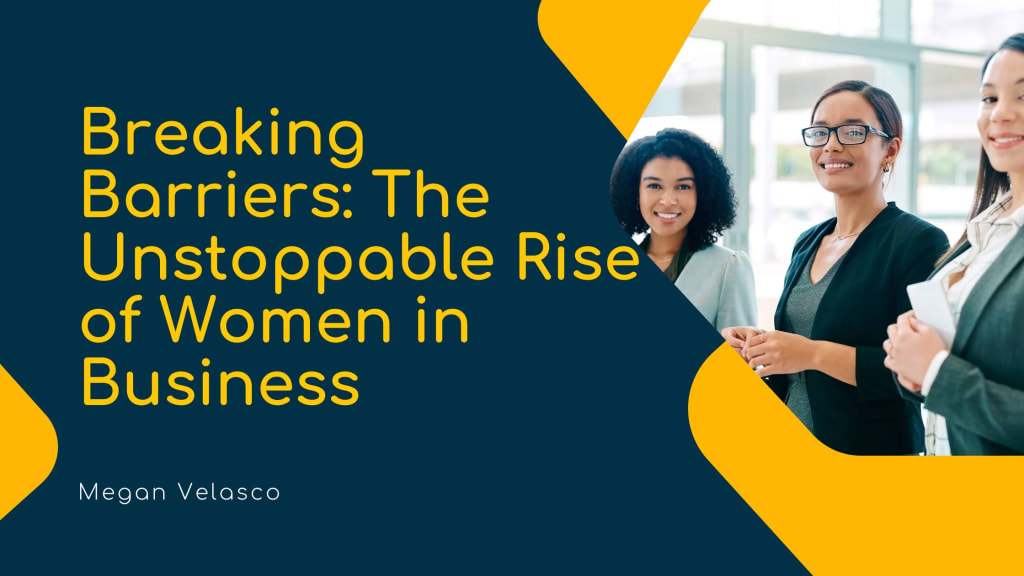
For decades, the business world was shaped largely by men. Boardrooms, startups, and corner offices were often seen as male domains, with women relegated to support roles or, worse, overlooked entirely. But the story is changing — and it's changing fast.
Today, women are not just participating in business; they’re transforming it. From tech startups to Fortune 500 companies, from local boutiques to global enterprises, women are building empires, breaking glass ceilings, and rewriting the rules of what leadership looks like.
But let’s be honest: the journey hasn’t been easy.
The uphill climb
Let’s start with the numbers. According to recent global data, women make up roughly 50% of the population but only 10% of Fortune 500 CEOs. Even among entrepreneurs, women receive just a small fraction of venture capital funding — in 2024, it was still hovering around 2%. These figures aren't just numbers; they’re reminders of the invisible (and sometimes very visible) barriers women still face.
Discrimination, societal expectations, unconscious bias, and the constant juggle between professional and personal life — these are real challenges. Many women in business will tell you stories of being underestimated, overlooked, or outright dismissed. Some have had to work twice as hard to be taken half as seriously.
Yet despite this, women continue to show up — and thrive.
The rise of the female entrepreneur
One of the most exciting trends in recent years is the explosion of women-led startups and small businesses. More and more women are taking the leap into entrepreneurship, driven not only by a desire for financial independence but also by a passion for impact.
Many of these businesses are mission-driven, addressing real-world problems and prioritizing community, sustainability, and inclusion. And they’re successful — a 2022 report found that startups founded or co-founded by women actually perform better over time, yielding higher returns on investment.
Why? Because diversity matters. Different perspectives lead to better decisions, more creative solutions, and stronger connections with customers.
Take, for example, Whitney Wolfe Herd, the founder of Bumble. She took her experience in tech — both good and bad — and created a dating app that put women in control. Or Jessica Alba, who launched The Honest Company to provide safe, eco-friendly baby products after struggling to find clean options for her own children. These women didn’t just build businesses; they built brands that stand for something.
Leadership looks different now
There’s also been a shift in how we define leadership.
For too long, leadership in business was modeled after a rigid, top-down, “command and control” style that often left little room for empathy, collaboration, or vulnerability. But women leaders are changing that.
Research consistently shows that women tend to lead with emotional intelligence, inclusive decision-making, and long-term vision — qualities that are increasingly vital in today’s fast-changing, unpredictable world. During the COVID-19 pandemic, countries led by women were often praised for their handling of the crisis, marked by transparency, swift action, and compassion.
In the workplace, women leaders are more likely to mentor others, champion diversity, and create cultures of psychological safety — where people feel seen, heard, and empowered to contribute. This kind of leadership isn’t just “nice to have”; it drives real business results.
The role of community and collaboration
Another thing that sets many women in business apart is the way they build community. Instead of competing in isolation, many women entrepreneurs and leaders are actively creating networks of support — from online communities and business incubators to mentorship circles and funding platforms specifically for women.
These networks are powerful. They offer not just resources and advice, but also encouragement, accountability, and the simple reminder that you’re not alone.
In a world where self-doubt can creep in quickly — especially for those who don’t see themselves represented at the top — that kind of support is invaluable.
Challenges still remain
Let’s not sugarcoat it: there’s still work to do.
Women continue to face systemic obstacles, especially women of color, LGBTQ+ women, and women with disabilities, who often encounter multiple layers of bias and exclusion. Equal pay is still not a reality. Access to funding, leadership opportunities, and decision-making roles continues to be lopsided
And then there’s the mental load — the invisible weight many women carry as they try to balance business, family, relationships, health, and societal expectations. Burnout is real, and for many women, it’s a silent epidemic.
We need more than just inspirational stories. We need policy changes, inclusive company cultures, and investment in diverse leadership pipelines. We need to normalize women in power — not as the exception, but the standard.
The future is (still) female
Despite the challenges, there’s reason for hope.
Young women entering the business world today have more role models than ever. They’re seeing women lead, innovate, and win — on their own terms. They’re starting businesses younger, pushing for equity louder, and rejecting outdated norms with confidence.
And this isn’t just good for women. It’s good for business. Studies show that companies with diverse leadership teams perform better, are more profitable, and are more innovative. When women rise, we all rise.
Final thoughts
Women in business aren’t just carving out a place for themselves — they’re reshaping the landscape altogether. They’re challenging outdated systems, building inclusive companies, and proving that success doesn’t have to come at the expense of authenticity, values, or well-being.
If you’re a woman thinking about starting a business, stepping into leadership, or taking the next big leap in your career, here’s the truth: you belong here. The world needs your ideas, your voice, and your vision.
And if you’re already on the journey? Keep going. You're not just building a business — you're paving the way for generations to come.
About the Creator
Megan Velasco
Megan Velasco is Santa Monica-based Pediatric OT & founder of Play. Grow. Thrive. Megan specializes in sensory integration & family-centered care.
Enjoyed the story? Support the Creator.
Subscribe for free to receive all their stories in your feed.
Comments
There are no comments for this story
Be the first to respond and start the conversation.