
Blockchain and Healthcare: Ensuring Data Security and Privacy in Medical Records
Blockchain in Health

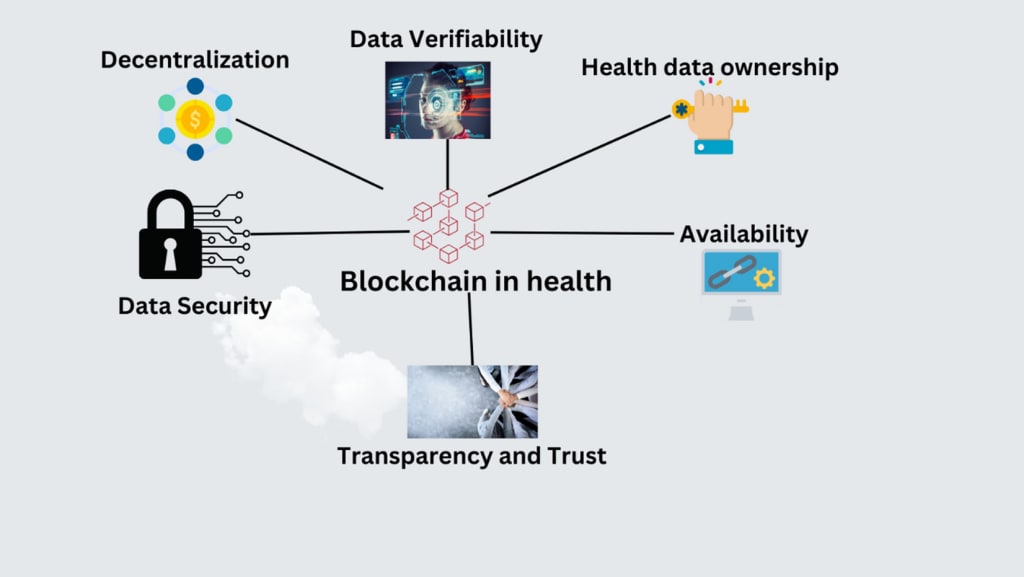
In the digital age, healthcare systems are increasingly reliant on electronic medical records (EMRs) and health data, providing better care, quicker diagnoses, and streamlined processes. However, this shift has also raised serious concerns about data security, privacy, and unauthorized access. Blockchain technology is emerging as a powerful solution to address these challenges, offering a decentralized, transparent, and tamper-proof way to manage medical data. By leveraging blockchain in healthcare, we can ensure the security and privacy of medical records while enhancing the overall quality of care.
Why Blockchain in Healthcare?
Healthcare data is one of the most sensitive types of information, and its security is paramount. Traditional methods of managing patient records often involve centralized systems, which are vulnerable to hacking, data breaches, and human error. Additionally, patients' medical data is often fragmented across multiple institutions, making it difficult to maintain a single, comprehensive record that can be accessed securely by authorized healthcare providers.
Blockchain technology, by design, provides an immutable, decentralized ledger where records are securely stored across a distributed network. Each entry in the blockchain is encrypted and time-stamped, making it nearly impossible to alter or tamper with the data. This feature of blockchain can significantly improve the management of medical records, providing an auditable trail of information that can be easily accessed by authorized parties, while protecting patient privacy.
How Blockchain Ensures Data Security
Decentralization and Immutability
Blockchain operates on a decentralized network of computers (or nodes), ensuring that there is no central point of failure. Unlike traditional centralized databases, where a single breach can compromise the entire system, blockchain distributes the data across multiple nodes. Each transaction or record added to the blockchain is encrypted and linked to the previous one, creating a chain of information that is virtually impossible to alter. This makes healthcare data significantly more secure against cyberattacks, data breaches, or fraudulent tampering.
Encryption and Data Integrity
Blockchain uses advanced encryption methods to secure data before it is stored on the blockchain. Each record is encrypted with a unique cryptographic key, and only authorized users with the correct private key can access or modify the information. This encryption ensures that medical records remain confidential, preventing unauthorized access or disclosure of sensitive health information. Additionally, the immutable nature of blockchain guarantees that once a record is written, it cannot be modified, ensuring the integrity of the data.
Audit Trail and Transparency
Every action on a blockchain is timestamped and logged, creating a transparent, auditable record of who accessed the data and what changes were made. This level of transparency ensures that healthcare providers can track and verify every interaction with a patient’s medical records, reducing the risk of fraud or malpractice. In the event of a dispute, the blockchain provides an unalterable history of all interactions, ensuring that medical professionals are held accountable for their actions.
Enhancing Patient Privacy with Blockchain
Patient privacy is a critical concern in healthcare, and blockchain’s approach to data management offers an innovative solution. With blockchain, patients can have control over who accesses their medical records, when, and for what purpose. Instead of relying on centralized institutions to grant access, patients can grant permission through smart contracts—a feature of blockchain that enables automatic, predefined actions when certain conditions are met.
For example, a patient could grant permission to a specific doctor or hospital to access their medical records for a certain period, after which access would be revoked. These permissions would be recorded and verified on the blockchain, ensuring full control over access to personal health information. This approach could also help streamline processes like second opinions or medical referrals, allowing secure data sharing between healthcare providers with patient consent.
Interoperability and Seamless Data Sharing
In traditional healthcare systems, patient data is often fragmented across different healthcare providers, making it difficult to access and share relevant medical information in a timely manner. Blockchain’s decentralized nature enables seamless interoperability between different healthcare institutions, allowing for secure and real-time data sharing across a wide range of providers, regardless of location.
By using blockchain, healthcare providers can access a unified, secure medical record without the need for complex and often error-prone data transfer processes. This streamlined access helps doctors and specialists make informed decisions more quickly, improving the speed and quality of care while avoiding unnecessary duplication of tests or procedures.
OpenLedger and Blockchain in Healthcare
Blockchain platforms like OpenLedger provide open-source, decentralized solutions that can be adapted to healthcare applications. By integrating blockchain into healthcare systems, organizations can create a secure, transparent, and tamper-proof infrastructure for managing medical records. Through smart contracts, patient consent can be automated, ensuring that medical data is only shared with authorized professionals, reducing administrative overhead and improving overall security.
OpenLedger’s decentralized infrastructure could facilitate the creation of blockchain-based healthcare solutions that not only enhance data security but also reduce fraud, improve operational efficiency, and ensure compliance with stringent privacy regulations like HIPAA (Health Insurance Portability and Accountability Act) in the U.S. By using blockchain to power these solutions, healthcare providers can ensure that patient records are securely managed, making healthcare delivery faster, more efficient, and more secure.
Blockchain’s Role in Reducing Fraud and Abuse
Fraud in healthcare is a significant issue, from fraudulent billing practices to identity theft. Blockchain’s immutable nature and transparent ledger make it an excellent tool for reducing fraud and ensuring accurate billing and medical records. Blockchain can be used to track the entire lifecycle of medical procedures, prescriptions, and billing, ensuring that each step is recorded and verified.
With blockchain, healthcare providers can ensure that patients are billed accurately for services rendered, reducing the risk of overcharging or duplicate billing. Additionally, blockchain’s traceability can help prevent identity theft by ensuring that only verified individuals can access or modify sensitive patient data.
The Future of Blockchain in Healthcare
The potential applications of blockchain in healthcare extend beyond medical records. Blockchain can improve drug traceability, secure clinical trials data, enhance supply chain management for pharmaceuticals, and even enable innovative healthcare payment models through cryptocurrencies or tokenized incentives. With healthcare systems under increasing pressure to reduce costs and improve efficiency, blockchain technology offers a promising way to address many of these challenges while safeguarding patient privacy and security.
In the coming years, we can expect more healthcare providers and institutions to adopt blockchain-based solutions, particularly as blockchain’s potential to improve security, reduce fraud, and streamline data management becomes increasingly clear.
Conclusion
Blockchain technology is set to revolutionize healthcare by providing a more secure, transparent, and patient-centric way to manage medical records. With its decentralized, immutable ledger and advanced encryption methods, blockchain ensures that healthcare data is protected from unauthorized access, fraud, and tampering. By enabling seamless data sharing between healthcare providers and empowering patients with greater control over their health information, blockchain has the potential to improve the quality of care, reduce administrative burdens, and enhance the overall efficiency of healthcare systems. As blockchain continues to evolve, it will undoubtedly play a central role in shaping the future of healthcare data management, ensuring privacy, security, and trust in medical records.
About the Creator
Margaret John
Passionate about AI and its real-world impact. Working on machine learning, NLP, and computer vision projects to solve complex problems and explore AI solutions.
Enjoyed the story? Support the Creator.
Subscribe for free to receive all their stories in your feed.
Comments
There are no comments for this story
Be the first to respond and start the conversation.