
AWS Cloud Migration Strategies
How to Transform Your Business

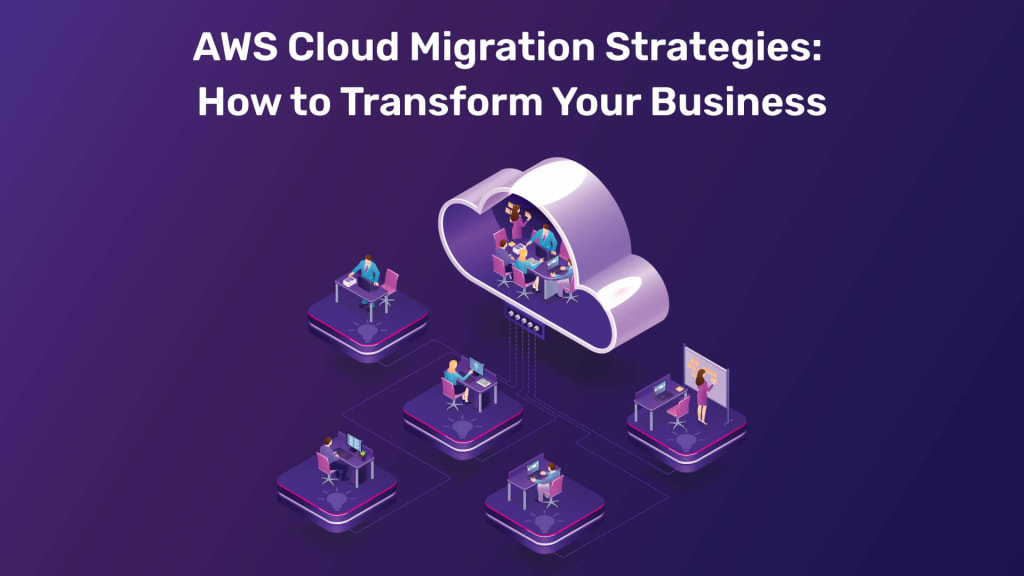
In today's swiftly evolving business landscape, many enterprises adopt AWS as their primary strategy to adapt and thrive. The reasons are reduced operational costs, easy access to advanced technologies, and a built-in pathway to innovation.
Now you’re thinking, “What’s the best AWS cloud migration strategy to transform your business?”
This blog will discuss cloud migration strategies and best practices for successful AWS migration.
Let’s first start with what AWS cloud migration is and why businesses are increasingly choosing it.
What is AWS Cloud Migration?
AWS cloud migration refers to moving an organization's IT infrastructure, applications, and data from on-premises servers or other cloud platforms to Amazon Web Services (AWS). It is a strategic decision that offers numerous benefits, including enhanced scalability, cost-efficiency, and access to a wide range of cloud managed infrastructure services.
AWS provides various tools and services to streamline migration, such as AWS Migration Hub and AWS Application Discovery Service. Successful migration can revolutionize businesses, enabling them to leverage the full potential of AWS's flexible and robust cloud infrastructure to drive innovation and growth.
Why Businesses Choosing Amazon Web Services Cloud Migration?
Here are several reasons why businesses are increasingly choosing Amazon Web Services (AWS) for cloud migration:
- Unmatched scalability and flexibility
- High availability and reliable performance
- Robust security features
- Cost-effectiveness
- Cloud-managed infrastructure services
- Global reach
AWS Cloud Migration Strategies for Your Business Transformation
Migrating to the cloud involves a systematic approach to ensure a seamless transition while minimizing disruptions to ongoing operations. AWS offers multiple migration strategies tailored to specific business needs and objectives. Let's explore some of the most common AWS cloud migration strategies:
Lift and Shift (Rehosting)
This strategy involves moving applications and data from on-premises infrastructure to the AWS cloud with minimal modifications. It is well-suited for organizations seeking a quick migration process and where immediate cost savings are a priority. AWS services like AWS Server Migration Service (SMS) and AWS Database Migration Service (DMS) facilitate smooth rehosting of virtual machines and databases, respectively.
Replatforming
Also known as lift, tinker, and shift, this approach involves slightly adjusting applications or databases during migration to fully take advantage of AWS-native services. It can lead to better performance, cost optimization, and improved resilience. For example, moving a database to Amazon RDS (Relational Database Service) or leveraging AWS Lambda for serverless computing can be part of the re-platforming strategy.
Refactoring (Re-architecting)
This migration strategy involves redesigning and rewriting applications to fully leverage the capabilities of cloud-native services. It often requires significant changes to application architecture and codebase but results in high performance, improved scalability, and cost efficiency. AWS offers a wide range of managed services like Amazon DynamoDB, AWS Lambda, and Amazon S3, which facilitate the implementation of cloud-native architectures.
Repurchasing (Replacing)
In some cases, replacing existing commercial off-the-shelf (COTS) applications with Software-as-a-Service (SaaS) solutions available on AWS may be more cost-effective. This strategy can streamline operations, improve functionality, and reduce maintenance efforts.
Retiring
As part of the migration process, businesses may identify redundant applications or services that are no longer required. AWS cloud migration allows organizations to clean up their architecture, eliminate unnecessary costs, and focus resources on critical aspects of their business.
Retaining
Not all applications and workloads are suitable for migration to the cloud immediately. The retaining strategy involves deferring migration for specific applications for various reasons, such as compliance concerns or technical constraints.
Best Practices for Successful AWS Cloud Migration
While AWS cloud migration strategies offer substantial benefits, successful migration requires careful planning and execution. Here are some best practices to ensure a smooth and successful AWS cloud migration:
Thorough Assessment and Planning
Conduct a comprehensive assessment of your existing infrastructure, applications, and data to determine the most suitable migration strategy. Create a detailed migration plan that outlines the timeline, resource allocation, and potential challenges.
Security and Compliance Considerations
Prioritize security throughout the migration process. Ensure that data encryption, access controls, and compliance requirements are met. AWS provides various security tools, such as AWS Identity and Access Management (IAM) and AWS Key Management Service (KMS), to enhance the security posture of your cloud environment.
Test and Optimize
Before performing the full-scale migration, conduct smaller-scale tests to identify and address any potential issues. Optimize your applications for AWS cloud architecture to maximize performance and cost-effectiveness.
Train Your Team
Provide adequate training and upskilling to your IT team to ensure they have the expertise to effectively manage the cloud environment. AWS offers a range of training and certification programs for this purpose.
Backup and Disaster Recovery
Implement robust backup and disaster recovery mechanisms to safeguard your data and applications against unexpected events.
Monitor and Optimize
Continuously monitor your AWS environment's performance and cost metrics. Use AWS's monitoring and management tools like AWS CloudWatch to proactively identify bottlenecks and optimize resource utilization.
Bottom Line!
AWS cloud migration strategies offer businesses unparalleled opportunities to enhance agility, reduce costs, and foster innovation. By carefully choosing the right migration approach and following best practices, organizations can unlock the full potential of the cloud and drive transformative change.
Embracing AWS cloud migration allows businesses to focus on their core competencies while leaving the complexities of infrastructure management to the cloud managed infrastructure service provider.
Businesses must adopt a well-thought-out migration plan and take advantage of the extensive support and resources provided by AWS to ensure a successful and seamless transition to the cloud.
In doing so, organizations can position themselves to thrive in the digital era and unlock new opportunities for growth and success.
About the Creator
VLink
VLink excels in IT Outsourcing, offering top-notch services in Cloud, Industry Automation, Digital Transformation, and Analytics across the US and APAC. With 18+ years of expertise...
Enjoyed the story? Support the Creator.
Subscribe for free to receive all their stories in your feed.
Comments
There are no comments for this story
Be the first to respond and start the conversation.