
Atomic Habits by James Clear
Everything you need to know about habits.

Atomic Habits by James Clear. Book Summary
Introduction:
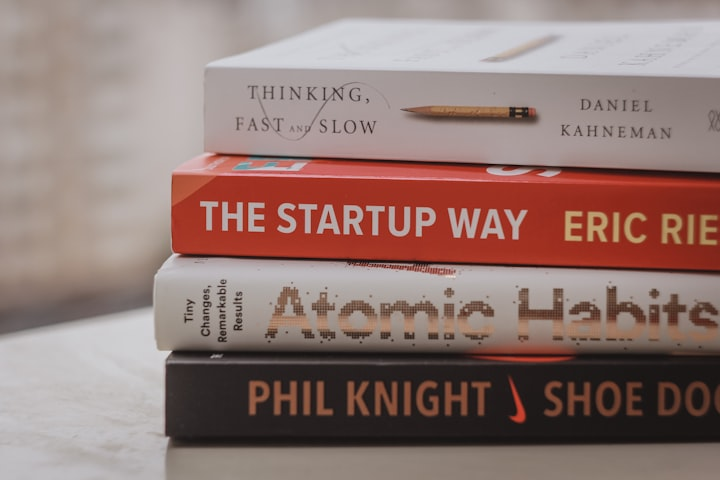
"Atomic Habits" by James Clear is a comprehensive guide to building good habits and breaking bad ones. Published in 2018, the book has quickly become a bestseller and a go-to resource for individuals seeking to make lasting changes in their lives. Clear's central thesis is that small, incremental changes - what he calls "atomic habits" - can lead to remarkable results over time.
The book is divided into six main sections, each exploring different aspects of habit formation and change. Clear draws on a combination of scientific research, personal anecdotes, and practical strategies to present a holistic approach to habit development. He emphasizes the importance of systems over goals, identity-based habits, and the compounding effect of small improvements.
Now, let's dive into a chapter-by-chapter summary:
Chapter 1: The Surprising Power of Atomic Habits
In this opening chapter, Clear introduces the concept of atomic habits - tiny changes that yield significant results over time. He argues that the impact of our habits is similar to the compounding effect in finance: small, seemingly insignificant actions, when consistently repeated, can lead to extraordinary outcomes.
Clear presents the idea of the "1% better every day" rule, demonstrating how small improvements can accumulate to massive changes over months and years. He contrasts this with the common misconception that massive success requires massive action, instead advocating for the power of patience and persistence.
The author also introduces the concept of "habit stacking," where new habits are built upon existing ones, making them easier to implement and maintain.
Chapter 2: How Your Habits Shape Your Identity (and Vice Versa)
This chapter explores the relationship between habits and identity. Clear argues that the most effective way to change your habits is to focus on who you wish to become rather than what you want to achieve.
He introduces three layers of behavior change:
1. Outcomes (what you get)
2. Processes (what you do)
3. Identity (what you believe)
Clear emphasizes that true behavior change starts with identity change. By focusing on building habits that align with the identity you want to cultivate, you're more likely to stick with them long-term.
Chapter 3: How to Build Better Habits in 4 Simple Steps
In this chapter, Clear introduces his four-step model of habits:
1. Cue
2. Craving
3. Response
4. Reward
He explains how every habit follows this pattern and how understanding this framework can help in forming new habits or breaking undesirable ones. Clear also introduces the concept of "habit loops" and how they can be used to your advantage in habit formation.
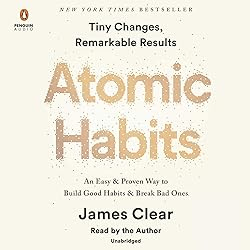
Sign up for a free trial with Audible to obtain this book for free.
Chapter 4: The Man Who Didn't Look Right
This chapter uses a story to illustrate how our environment shapes our behavior. Clear emphasizes the importance of designing your environment to make good habits easier and bad habits harder.
He introduces concepts like "choice architecture" and "defaults," explaining how these can be leveraged to support positive habit formation.
Chapter 5: The Best Way to Start a New Habit
Clear presents strategies for making habit formation easier, introducing the "2-Minute Rule." This rule suggests that new habits should be scaled down to something that takes two minutes or less to do, making them more approachable and easier to maintain.
He also discusses the importance of standardization in the early stages of habit formation and how to use implementation intentions to increase the likelihood of following through on new habits.
Chapter 6: Motivation is Overrated; Environment Often Matters More
This chapter delves deeper into the role of environment in habit formation. Clear argues that motivation is often overemphasized, while the design of our surroundings plays a crucial role in our behavior.
He provides practical tips for designing an environment conducive to good habits, such as making cues for desired habits more visible and creating separate spaces for work and relaxation.
Chapter 7: The Secret to Self-Control
Clear challenges the traditional notion of self-control, arguing that people with seemingly high self-control are often better at structuring their lives to avoid temptation. He introduces strategies for avoiding temptation and making good habits more accessible.
The author also discusses the concept of "decisive moments" - the choices that ultimately determine the path your day will take - and how to prepare for them.
Chapter 8: How to Make a Habit Irresistible
This chapter focuses on the second step of the habit loop: craving. Clear explains how to make habits more attractive by linking them with positive experiences or emotions.
He introduces the concept of "temptation bundling," where an action you want to do is paired with an action you need to do, making the necessary habit more appealing.
Chapter 9: The Role of Family and Friends in Shaping Your Habits
Clear explores the profound influence of social environment on our habits. He discusses how we tend to imitate the habits of three groups: the close (family and friends), the many (the tribe), and the powerful (those with status and prestige).
The chapter provides strategies for surrounding yourself with people who have the habits you want to develop and joining cultures where your desired behavior is the normal behavior.
Sign up for a free trial with Audible to obtain this book for free.
Chapter 10: How to Find and Fix the Causes of Your Bad Habits
This chapter addresses the challenge of breaking bad habits. Clear argues that all behavior serves a purpose and that we repeat bad habits because they serve some function in our lives.
He presents strategies for identifying the underlying causes of bad habits and finding more constructive ways to address those needs.
Chapter 11: Walk Slowly, but Never Backward
Clear emphasizes the importance of continuous, small improvements over time. He introduces the concept of the "Plateau of Latent Potential," explaining why progress often feels slow in the beginning and how to stay motivated during this phase.
The author also discusses the idea of habit tracking and how it can be used to maintain consistency and motivation.
Chapter 12: The Law of Least Effort
This chapter explores how we can use the natural human tendency to follow the path of least resistance to our advantage in habit formation. Clear provides strategies for reducing friction for good habits and increasing friction for bad ones.
He also introduces the concepts of "addition by subtraction" and "subtraction by addition" as ways to simplify the process of building good habits and breaking bad ones.
Chapter 13: How to Stop Procrastinating by Using the Two-Minute Rule
Clear expands on the Two-Minute Rule introduced earlier, explaining how it can be used to overcome procrastination and build momentum. He argues that the hardest part of any task is starting, and by making the beginning as easy as possible, we increase the likelihood of following through.
The chapter also discusses the importance of rituals and pre-game routines in preparing for important habits or tasks.
Chapter 14: How to Make Good Habits Inevitable and Bad Habits Impossible
This chapter focuses on using commitment devices and technology to automate good decisions and eliminate bad options. Clear provides examples of how to create "one-time actions that lock in good habits," making it easier to maintain positive behaviors over time.
He also discusses the concept of the "habit contract" as a way to add an immediate cost to bad habits and an immediate benefit to good ones.
Chapter 15: The Cardinal Rule of Behavior Change
Clear introduces the concept of immediate reward in habit formation. He argues that habits are easier to build when they offer an immediate reward, even if the ultimate benefit is delayed.
The chapter provides strategies for adding immediate pleasure to habits that might not have inherent short-term gratification.
Chapter 16: How to Stick with Good Habits Every Day
This chapter addresses the challenge of maintaining habits over the long term. Clear discusses the importance of never missing twice, emphasizing that the key to long-term success is getting back on track quickly when you slip up.
He also introduces the idea of the "Goldilocks Rule" - the importance of working on tasks of "just manageable difficulty" to maintain motivation and progress.
Sign up for a free trial with Audible to obtain this book for free.
Chapter 17: How an Accountability Partner Can Change Everything
Clear explores the power of social accountability in habit formation. He discusses various ways to create accountability, from public commitments to accountability partners and habit contracts.
The chapter emphasizes how external expectations can drive behavior change and provide the extra push needed to stick with difficult habits.
Chapter 18: The Truth About Talent (When Genes Matter and When They Don't)
In this final chapter, Clear addresses the role of genetics in habit formation and skill development. He argues that while genes may determine our areas of opportunity, our habits determine our level of success within those areas.
The author encourages readers to focus on playing the hand they've been dealt to the best of their ability, emphasizing the importance of finding the right field of competition for your natural abilities and tendencies.
Conclusion:
"Atomic Habits" provides a comprehensive framework for understanding and implementing lasting behavior change. James Clear's approach emphasizes the power of small, consistent actions and the importance of aligning habits with identity.
Throughout the book, Clear offers practical strategies for making good habits easier to adopt and bad habits harder to maintain. He stresses the significance of environmental design, social influence, and immediate rewards in shaping our behavior.
By focusing on the process of continuous improvement rather than specific goals, Clear argues that we can achieve remarkable results over time. The book's message is ultimately one of empowerment: by understanding the mechanics of habit formation, we can take control of our behaviors and, by extension, our lives.
"Atomic Habits" serves as both a theoretical foundation for understanding behavior change and a practical guide for implementing it. Its insights and strategies can be applied to various areas of life, from personal development to professional growth, making it a valuable resource for anyone looking to make lasting positive changes in their life.
Sign up for a free trial with Audible to obtain this book for free.
**Affiliate Disclosure** This article contains affiliate links, meaning that we receive a small commission at no cost to you as part of our partnership with Audible when you sign up for a free trial to obtain this book for free.
About the Creator
Enjoyed the story? Support the Creator.
Subscribe for free to receive all their stories in your feed.
Comments
There are no comments for this story
Be the first to respond and start the conversation.