
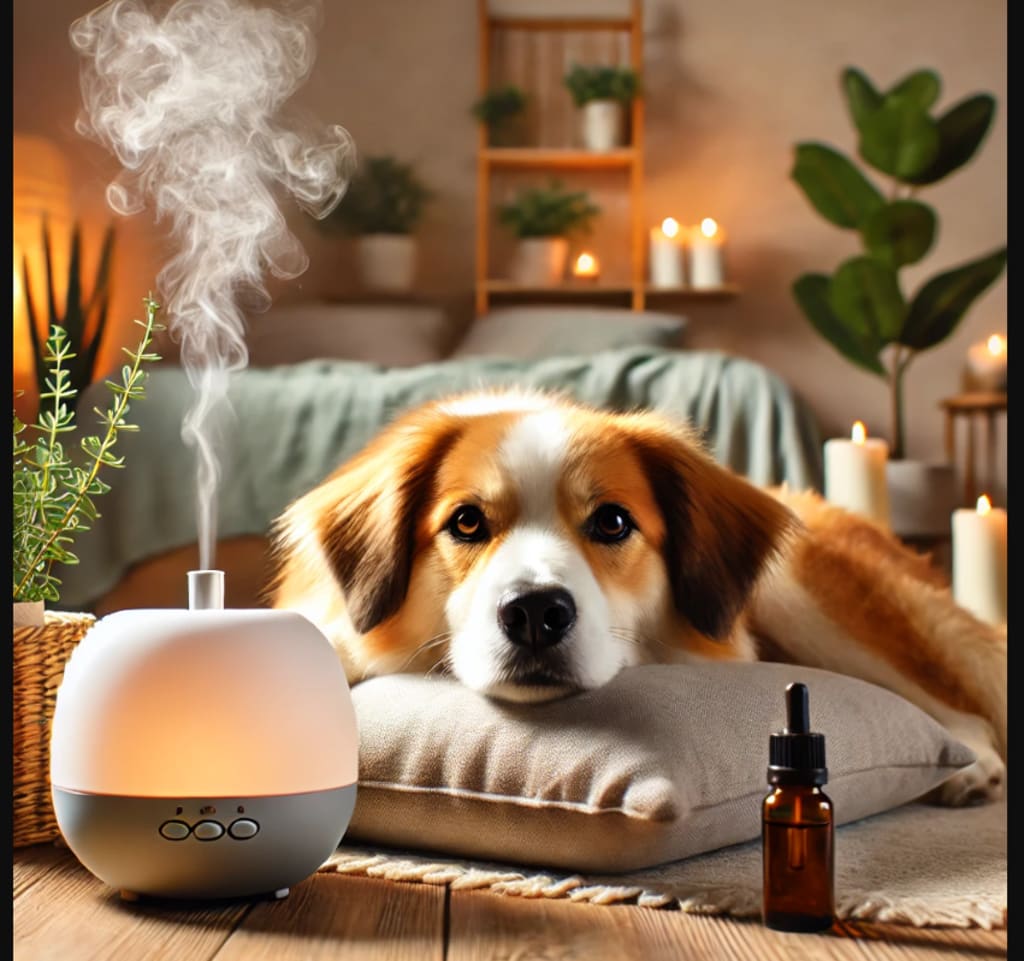
Aromatherapy for dogs is the use of natural essential oils to improve the well-being of your canine friend.
Essential oils are plant extracts that have various effects on the body, mind, and spirit. Some of the benefits of aromatherapy for dogs are:
• Reducing anxiety and stress, especially during travel, fireworks, or separation.
• Treating skin conditions, such as itching, inflammation, or infection.
• Enhancing immunity and preventing diseases, such as colds, flu, or parasites.
• Improving mood and happiness, by stimulating the release of endorphins and serotonin.
However, not all essential oils are safe for dogs. Some of them can be toxic, irritating, or allergic to your dog. You should always consult a veterinarian or a certified aromatherapist before using any essential oil on your dog. You should also dilute the essential oil with a carrier oil, such as coconut oil or olive oil, and apply it on a small area of your dog's skin to test for any adverse reaction. You should never use essential oils near your dog's eyes, nose, mouth, or genitals.
Some of the essential oils that are safe for dogs are:
Lavender: This oil has a calming and soothing effect on dogs. It can help with anxiety, stress, insomnia, and car sickness.
• Chamomile: This oil has anti-inflammatory and anti-spasmodic properties. It can help with digestive problems, such as colic, gas, or diarrhea. It can also relieve pain and itching from skin conditions.
• Myrrh: This oil has antiseptic and anti-fungal properties. It can help with infections, wounds, and gum diseases. It can also support the immune system and balance the hormones.
• Frankincense: This oil has sedative and anti-anxiety properties. It can help with nervousness, fear, and aggression. It can also boost the immune system and fight cancer.
• Ginger: This oil has warming and stimulating properties. It can help with nausea, motion sickness, and arthritis. It can also improve blood circulation and digestion.
• Rosemary: This oil has energizing and uplifting properties. It can help with fatigue, depression, and memory loss.
• Bergamot: This oil has refreshing and balancing properties. It can help with mood swings, irritability, and depression. It can also disinfect wounds and repel insects.
If you share your life with an occasionally stressed out dog, chances are, you could benefit from another calming tool for your arsenal. Whether your dog is triggered by travelling, fireworks, or separation anxiety the therapeutic use of essential plant oils could be a game changer for you both.
In the practice of aromatherapy, droplets of essential oils are added to a neutral base for use. Massage oil, body lotion, mister solution. Essential oils can also be heated in a diffuser, added to a bath, or stored in a portable inhaler.
If you’re ready to get started without doing all the science yourself, pre-mixed aromatherapy products are a great way to get started. The essential oils are pre-mixed with a neutral carrier to a safe level of concentration for immediate use for your dog.
Rescue Remedy is one of the most well-known holistic treatments for tense people and pets, Rescue Remedy is a homeopathic(extremely diluted) use of essential oils and is intended to be ingested not smelled. Sprinkle four drops onto a cookie, meal, or add in the water bowl.
Contains homeopathic amounts of:
Rock Rose – terror and panic
Impatiens – irritation and impatience
Clematis – inattentiveness and lack of interest
Star of Bethlehem – shock or trauma
Cherry Plum – lack of self control
Grow your own aromatherapy garden for your dog
Does your dog have a favorite chill-out spot in your yard? Why not plant some aromatherapeutic plants near their favorite area? You might already have some aromatherapy power plants growing in your yard, in fact. Hardy plants like rosemary, lavender, and peppermint will spice up your space without breaking the bank or requiring a lot of attention.
Essential oils that are safe for dogs
Here is a great list of essential oils that are safe for dogs (and people of course). You can look up the beneficial qualities of plants
Essential oils to avoid for dogs
These essential oils are not suitable for use on pets. They are either irritating or toxic if ingested. Remember, anything that touches your dog gets eaten by your dog when they groom themselves.
• Anise
• Birch
• Camphor
• Cassia
• Clove
• Horseradish
• Hyssop
• Juniper wood
• Mustard
• Oregano
• Pennyroyal
• Rue
• Tansy
• White Thyme
• Wintergreen
• Wormwood
• Yarrow
How Does Pet Aromatherapy Work?
Pet aromatherapy usually works by absorption via inhalation or skin contact, and sometimes by ingestion. Messages sent through the nervous system to the limbic system—the part of the brain that controls emotions, rapidly enter your pet’s body and the bloodstream, and get distributed to various tissues.
Some chemicals have an affinity for specific biological tissues, and vets—or pet owners who are knowledgeable about essential oil use—use this property to target particular areas of the body with the appropriate oils.
A vital component of integrative medical care, essential oils hold an array of active and biologically potent compounds. However, essential oils can cause unwanted side effects, so veterinary professionals should seek specialized training and understand how to select reliable brands. For consumers, education about aromatherapy and how to buy appropriate essential oil brands is critical.
Pet Aromatherapy Delivery Techniques
There are three pet aromatherapy application methods: diffusion, spray, and topical application.
• Topical Application: Apply essential oils by petting and massage your pet. Animals are sensitive to essential oils, so diluting them with base oil is your first step. Using an eyedropper, create a ratio of one drop of essential oil to 1.5 tablespoons (approximately 45 drops) of base oil for a dog. This ratio equates to a dilution of about 0.25 percent. For cats, use one-part essential oil to 50 parts base oil. Put an ample amount on the palms of your hands, rub them together, and then massage the desired area of your dog or cat with a circular motion.
• Base or Carrier Oil: Carrier oils are non-irritating viscous substances used to dilute essential oils for topical application. Essential oils contain compounds that don’t mix with water, and if applied undiluted, they can cause irritation, sensitization, redness or burning, or other reactions to your pet’s skin. Base oils also have some medicinal properties.
• Diffusion: Add one to two drops of essential oil into a water-based vaporizer. Diffuse intermittently:10 minutes on, then 30 minutes off. Be sure to keep the diffuser out of your pet’s reach. Diffuse away from your pet’s usual resting spot or in another room to ensure that the pet receives a minimally concentrated dose of aromatherapy.
• Spray: Using a spray bottle or mister, spray diluted essential oil into the air. You can also spray or hold a cotton ball saturated with the mixture in front of an air condition or fan.
• Ingestion: Brandt says it’s possible to feed essential oils to pets but to do so with caution. “Is the essential oil labeled as safe for ingestion? Has there been an investigation?” asks Dr. Brandt. “What’s your technique? For example, if you add the oil atop something really watery, it may remain on the surface and hurt their lips. A good technique is to mix the oil thoroughly into a fatty type of food, or add coconut oil to better distributed the essential oil throughout the food.”
Is Pet Aromatherapy Safe for Dogs and Cats?
A great scent is nice, but efficacy is what pet aromatherapy is all about. Research studies have proven essential oils to calm, reduce pain, and improve specific disorders in dogs and cats.
Once you get the go-ahead, there are other pet aromatherapy considerations:
• Never Use Essential Oils on Dog or Cat Paws: “There are four reasons that you should never apply essential oil on paws,” Dr. Brandt points out. “First, paws aren’t like our feet. Crevices allow oils to collect, which may make them more concentrated. Second, it’s the only area on pets’ bodies that have sweat glands. More moisture added to essential oils can lead to rashes if the oil collects and stays on the paw. Third, if the animal ingests the oil, it could be an issue, depending on the type of oil. And fourth, animals walk around naked and have chemical exposure that’s unknown to you. Essential oils and one or many chemicals mixed together may pose a danger to your pet.”
• Challenges in Your Home: Aromatherapy may not be beneficial for small pet birds, reptiles, fish, or small rodent pets such as gerbils or rabbits. Adverse reactions may be immediate or occur over time. If you’re using essential oil therapy for your cat or dog, move other smaller pets to a separate space.
• Storage: Since people and pets often have varying sensitivities, it’s always best to store essential oils in a sealed container away from direct heat and light. Keep aromatherapy products and essential oils out of reach of kids and pets.
• Human Trends: Hydrosols, also known as flower waters, is the less-saturated water that remains after distilling herbs or flowers in water. This current trend in aromatherapy is popular for people who may call for caution when it comes to pets. Often touted as a more natural, safer alternative to essential oils, hydrosols may be dangerous for smaller pets because the water can retain residual plant parts that can be toxic if ingested or inhaled.
• Aromatherapy Myths: Recently, the internet has been abuzz with stories that all aromatherapy diffusion makes dogs and cats ill. Using cheap oil or the wrong oil that’s known to be toxic can be harmful, but not all diffused essential oils are dangerous to pets. The other prevalent myth is that aromatherapy has no effect, good or bad. However, research shows that essential oils can be extremely beneficial for a variety of medical conditions in dogs and cats.
• Treating Pregnant or Sick Animals: Unless your vet directs treatment, don’t use essential oils on sick or pregnant pets. Some oils such as basil, cinnamon, fennel, and thyme may cause a miscarriage.
• Location, Location, Location: Don’t use essential oils near your pet’s delicate eye, nose, anal, and genital areas unless specifically directed by your vet.
A Brief History of Pet Aromatherapy
Since ancient times, essential oils and aromatherapy have served medical purposes for humans and animals. For example, Egyptian texts, the Bible, and Koran reference essential oils and unguents.
Ancient Greek, Roman, Chinese, Indian, and many Middle Eastern civilizations distilled botanicals to extract essential oils for ceremonial, cosmetic and healing purposes, and the technique was perfected by the Persian physician Avicenna around 1,000 BCE. In the 1400s, the physician Paracelsus treated leprosy with plant extracts. Throughout the 1700 and 1800s, pharmacists, doctors, and other healers prescribed essential oils and aromatherapy for their patients and their pets.
In the early 20th century, Rene Maurice Gattefossé, a French chemist and perfumer, built on existing knowledge of lavender oil’s curative properties. He healed the burns that wounded him in a lab explosion and went on to originate the term aromatherapy. Based on Gattefossé’s work, during World War II, French surgeon Jean Valnet used essential oils to heal soldiers’ wounds and subsequently wrote L’Aromatherapie, published in the 1950s.
About the Creator
Enjoyed the story? Support the Creator.
Subscribe for free to receive all their stories in your feed.
Comments
There are no comments for this story
Be the first to respond and start the conversation.