
Allah Is Only One and the Creator of All Things
In a world of complexity, diversity and constant change, there is more unique truth than anything else. Allah is one, and he is the creator of all. This belief is not a theological concept of Islam, but the basis of a worldview that shapes as much as Muslims understand their existence, purpose and destiny.

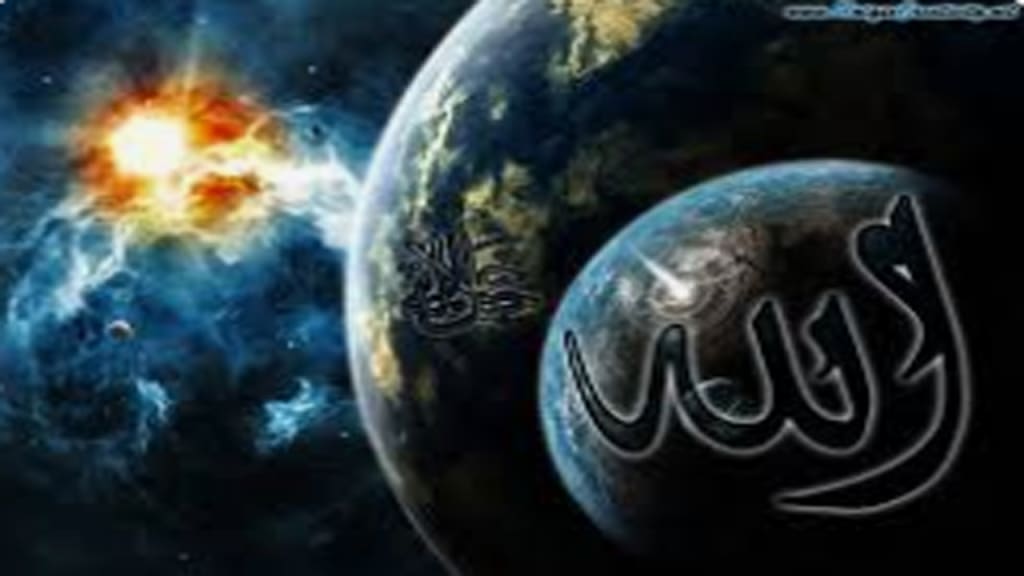
In a world of complexity, diversity and constant change, there is more unique truth than anything else. Allah is one, and he is the creator of all. This belief is not a theological concept of Islam, but the basis of a worldview that shapes as much as Muslims understand their existence, purpose and destiny.
The Essence of Tawheed (Oneness of Allah)
The most central and most important concept in Islam is the Tawheed. This means the absolute unity of Allah. It is at the heart of Islamic faith, and the first part of Shahada (declaration of belief):
“La ilaha illallah” - There is no God deserves worship except Allah.
This concept is not generally merely monotheism. It's deeper than believing in "God." Tawheed means confirming that Allah is the only true God, the only creator, and the only creator worthy of worship, love, fear and obedience.
Allah is not like his creation. It does not resemble a person, animal, or other being. It is eternal, omniscient, omnipotent, and completely independent. He will not escape his knowledge. Nothing will ever happen without his will.
The Qur'an repeatedly emphasizes this concept:
“Say, He is Allah, [who is] One. Allah, the Eternal Refuge. He neither begets nor is born. Nor is there to Him any equivalent.” (Surah Al-Ikhlas 112:1-4)
This powerful chapter refutes all ideas of the polytheism, human gods, or partners related to God.
The Creator of All Things
The second key part of our discussion is the belief that Allah is the Creator of everything. From the galaxies in the sky to the cells in our bodies, from the winds that blow to the emotions we feel-all were created by Him.
“Allah is the Creator of all things, and He is, over all things, Disposer of affairs.” (Surah Az-Zumar 39:62)
“It is Allah who created the heavens and the earth and whatever is between them in six days; then He established Himself above the Throne. You have not besides Him any protector or any intercessor. So will you not be reminded?” (Surah As-Sajdah 32:4)
Allah created the universe with precision and purpose. Everything is in balance-the rotation of the Earth, the cycle of the seasons, the structure of the atom, the instincts of animals. There is no randomness or chaos in His creation.
Look at the sky - how it holds itself without pillars. Look at your own body-how your heart beats, how your lungs breathe, how your brain processes thought. All of this is by the design and will of Allah.
Signs in the Creation
Throughout the Qur'an, Allah encourages us to reflect on the signs around us as evidence of His existence and greatness.
“Indeed, in the creation of the heavens and the earth and the alternation of the night and the day are signs for those of understanding.” (Surah Aal Imran 3:190)
Every sunrise is a sign. Every drop of rain, every blade of grass, every newborn child-all point back to the Creator. Science may explain how things work, but only Allah explains why they exist in the first place.
The Qur'an also draws our attention to the inner world - our thoughts, emotions, and souls.
“And in yourselves-do you not see?” (Surah Adh-Dhariyat 51:21)
Truly, both the universe and the human being are like open books, and every page leads to the conclusion: there is only One Creator - Allah.
No Partners, No Equals
One of the most emphasized teachings in the Qur'an is that Allah has no partners, no sons, no daughters, and no equals.
“They have certainly disbelieved who say, ‘Allah is the third of three.’ And there is no god except one God.” (Surah Al-Ma’idah 5:73)
“Do not make [as equal] with Allah another deity and [thus] become censured and forsaken.” (Surah Al-Isra 17:22)
Islam rejects all forms of polytheism, idol worship, or the association of other beings with Allah. The message is clear: the Creator is One, and all others are His creation.
Why This Belief Matters
The belief in Allah's unit and that it is the creator of everything has a profound effect:
1. Purpose and Meaning:
If Allah created us, we are not coincidental. Our lives have a purpose. We are here to worship him, to know him, and to live by his lead. "And I did not create Jinn and mankind except to worship me." (Surah Adh-Dhariyat 51:56)
2. Accountability:
Allah is the creator, so he is also a judge. This life is a test, and we return to him and judge how we have lived.
"The return to Allah is your return, and it is more capable than everything." (Surah Hud 11:)
3. Trust and Peace:
Allah knows that he has created and controlled everything that brings comfort. When life is difficult, we know that he has a plan. When we get lost, we know he's nearby. He is not only an al-Halik (creator), but also an ar-rahman (the most merciful).
"And who relies on Allah - that is enough for him." (Surah at Thalak 65:3)
Conclusion: Return to the One
When people are searching for truth through fame, fortune, science, and philosophy, return at once brings us back to all sources:
Allah is one. He is the creator. That alone deserves our worship and dedication.
This truth is simple yet profound. There is a sense of life, calming the mind and illuminating the path in front of you.
So pause. Reflect. Look at the sky above, the earth below, and your own soul. And let your heart whisper the eternal truth: La ilaha illallah -There is no god but Allah.
About the Creator
Muhammad Ruhul Amin
Welcome to my strange little corner of the internet. Leave your shoes at the door. We’re walking on clouds in here.
Enjoyed the story? Support the Creator.
Subscribe for free to receive all their stories in your feed.
Comments
There are no comments for this story
Be the first to respond and start the conversation.