
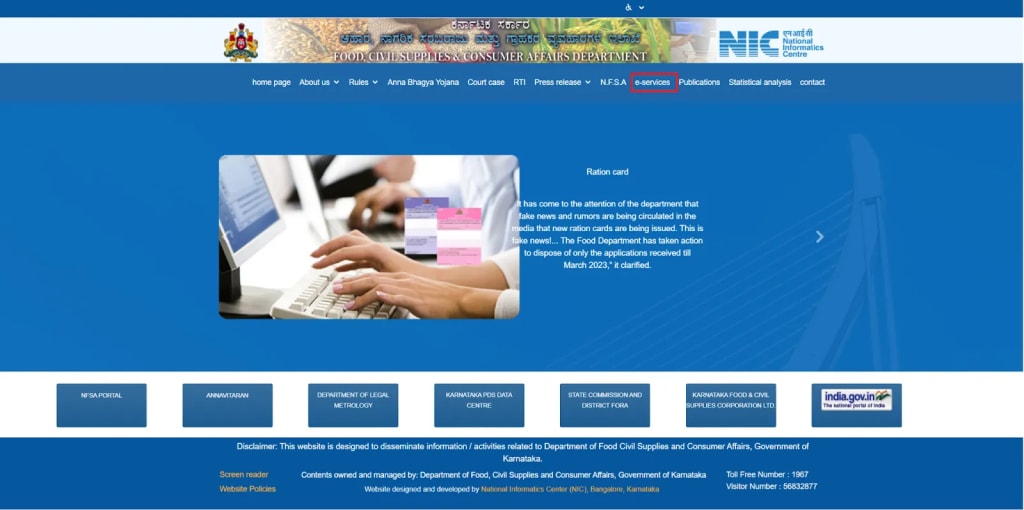
In India, the Public Distribution System (PDS) plays a crucial role in ensuring food security for the underprivileged by providing essential commodities like rice, wheat, sugar, and kerosene at subsidized prices. The state of Karnataka, a progressive hub in South India, has taken a significant leap towards improving the efficiency and transparency of its PDS by launching the Ahara Kar Portal. This online platform has emerged as a key tool in addressing various challenges faced by beneficiaries in accessing government-provided foodgrains and other subsidized commodities.
The Need for a Digital Transformation in PDS
The PDS has historically faced numerous issues such as inefficiency, corruption, and lack of transparency. Beneficiaries often faced delays in receiving their entitled ration, discrepancies in the distribution of foodgrains, and difficulties in accessing vital information. To mitigate these issues, the government of Karnataka launched the Ahara Kar Portal, an online initiative designed to bring transparency, accountability, and efficiency to the state’s food distribution system.
Key Features of the Ahara Kar Portal
The Ahara Kar Portal is an innovative digital platform that is part of Karnataka’s broader effort to streamline public service delivery systems. The portal is designed to cater to the needs of the beneficiaries of the PDS, enabling them to access a range of services related to the distribution of food grains and other essential commodities. Some of the key features of the portal include:
1. Ration Card Management: The Ahara Kar Portal allows beneficiaries to manage their ration cards efficiently. Users can update their personal details, add family members, and apply for new ration cards through the platform. It simplifies the process of applying for and renewing ration cards.
2. Beneficiary Tracking: The portal provides a tracking system that enables beneficiaries to check the status of their ration cards, view entitlement details, and find out when their allotted food grains will be available at the Fair Price Shops (FPS).
3. Grievance Redressal: A built-in grievance redressal system is available, allowing beneficiaries to report any issues or complaints related to the distribution of food items. Whether it’s a delay in delivery or discrepancies in the quantities distributed, the system ensures that grievances are addressed promptly.
4. Subsidy Details: The platform provides details on the subsidies provided for different essential items under the PDS. It helps beneficiaries to understand the quantity of food grains they are entitled to receive at subsidized prices and ensures that no one is deprived of their due share.
5. Transparency in Distribution: One of the most significant benefits of the Ahara Kar Portal is its emphasis on transparency. The portal provides real-time updates on the stock and supply of food grains, ensuring that beneficiaries are not misled or deprived of their entitlements. This transparency helps to reduce corruption at various levels of distribution.
6. Mobile App Integration: To enhance accessibility, the Karnataka government has also developed a mobile app version of the portal. This app makes it easier for people, particularly those in remote areas, to access the services without needing to visit a government office. Through the app, beneficiaries can quickly check their status, track their ration card, and file complaints if necessary.
7. Integration with Aadhar: The Ahara Kar Portal is integrated with the Aadhaar system, which helps in authenticating the identity of beneficiaries. This reduces the chances of fake or duplicate ration cards and ensures that the benefits reach the rightful individuals.
Benefits for the People of Karnataka
The launch of the Ahara Kar Portal has brought several advantages to the people of Karnataka:
1. Improved Access: By digitizing the entire system, beneficiaries can access information and services related to the PDS without the need to physically visit government offices. This is particularly beneficial for people living in rural and remote areas.
2. Efficiency in Service Delivery: The portal has streamlined the processes related to ration card issuance and renewal. It has reduced waiting times, ensured timely distribution of essential commodities, and made the entire process more transparent.
3. Prevention of Corruption: One of the most significant impacts of the portal is its ability to curb corruption. Since all transactions and data are available online, it is easier to track and monitor any irregularities. This has led to better compliance with the PDS guidelines and a reduction in malpractices.
4. Empowerment of Beneficiaries: With the Ahara Kar Portal, beneficiaries have more control over their ration cards and entitlements. They can easily update their information, apply for new cards, and ensure that they receive their fair share of food grains without delays.
5. Grievance Redressal: The grievance redressal mechanism on the portal ensures that people’s complaints are heard and acted upon swiftly. This has significantly improved the overall satisfaction of beneficiaries, as their concerns are addressed in a timely manner.
Challenges and Areas of Improvement
While the Ahara Kar Portal has significantly improved the PDS system, there are still challenges to address. These include:
1. Internet Access: Not all rural areas in Karnataka have reliable internet access, which could hinder the use of the portal. The government needs to work on improving internet connectivity to ensure that all beneficiaries can benefit from the digital platform.
2. Digital Literacy: A lack of digital literacy among some beneficiaries could pose a challenge in using the portal effectively. To address this, the government needs to conduct awareness programs to train people on how to use the portal.
3. System Upgrades: As the number of users grows, the portal will need continuous updates and maintenance to handle the increasing demand and avoid system crashes.
Conclusion
The Ahara Kar Portal is a significant step forward in the modernization of Karnataka's Public Distribution System. By leveraging technology, the government has not only made food distribution more efficient but also empowered citizens with better access and transparency. As the portal evolves, it has the potential to transform how PDS services are delivered in the state, ensuring that food security reaches the most vulnerable sections of society in an equitable and timely manner.
About the Creator
Enjoyed the story? Support the Creator.
Subscribe for free to receive all their stories in your feed.
Comments