
Active Under Contract: What It Means for Buyers and Sellers in Today's Real Estate Market
Active Under Contract: What It Means for Buyers & Sellers


Have you ever browsed through property listings and noticed the term Active Under Contract and wondered what it means? If you’re searching for homes for sale in Norfolk, VA, or anywhere else, you’ve likely come across this phrase. It’s a status that can feel confusing, especially if you’ve spotted your dream home but aren’t sure if it’s still available. In today’s competitive real estate market, understanding this status is essential for both buyers and sellers to make informed, confident decisions.
What is Active Under Contract?
“Active Under Contract” means that a seller has accepted a buyer’s offer, but the deal isn’t finalized yet because certain contingencies still need to be met. The property remains on the market, and in some cases, backup offers are welcomed.
Key points include:
- Seller has accepted an offer.
- Buyer must satisfy contingencies (financing, inspections, appraisal, etc.).
- Property is not yet considered sold.
- Home is still active in MLS (Multiple Listing Service).
- Backup offers may be considered in case the primary deal falls through.
How is Active Under Contract Different from Pending Sale?
While “Active Under Contract” and “Pending Sale” may sound alike, they carry different implications. With Active Under Contract, the home is still technically available, and backup offers may be accepted. Contingencies are the main reason it hasn’t progressed to “pending.”
By contrast, a “Pending Sale” typically indicates that all contingencies have been met, and the deal is simply waiting to close. At this stage, most sellers stop marketing the property and no longer accept offers. In short, “active” still leaves room for negotiation, while “pending” suggests the deal is nearly finalized.
Is Active Under Contract the Same as Under Contract?
The terms can be confusing, but they’re not identical. Under Contract is a general phrase meaning a seller has accepted an offer. However, “Active Under Contract” specifies that the property is still being marketed because contingencies remain unresolved.
Unlike “Under Contract,” which can be vague, “Active Under Contract” offers more clarity for buyers, signaling that the property isn’t entirely off the table. This distinction allows interested parties to gauge their chances of submitting a backup offer.
Why Do Homes Stay Active After Going Under Contract?
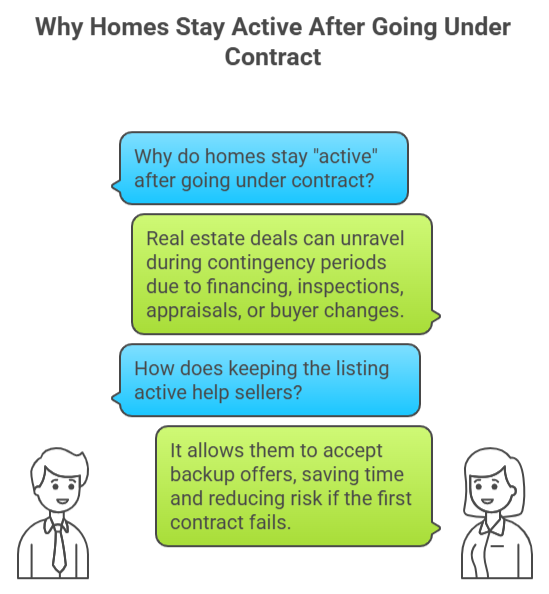
Homes often remain “active” after going under contract because real estate deals can unravel during contingency periods. Financing issues, inspection findings, appraisal discrepancies, or even changes in a buyer’s circumstances may derail the process.
By keeping the listing active, sellers protect themselves by leaving the door open to backup offers. This ensures that if the first contract falls through, they won’t have to start from scratch. It’s a strategy designed to save time, reduce risk, and keep negotiations flowing in a dynamic housing market.
How Active Under Contract is Different From 'Clear to Close'?
“Clear to Close” is a much later stage compared to Active Under Contract. When a home is “Active Under Contract,” contingencies are still in play, meaning the deal isn’t secure. “Clear to Close,” however, signals that all conditions—such as financing approval, inspections, and appraisals—have been satisfied.
At this point, closing documents are prepared, and the buyer is ready to finalize the purchase. In short, “Active Under Contract” is early in the process, while “Clear to Close” is the green light signaling the home is essentially ready to be sold.
What is Included in Active Under Contract?
When a home is labeled “Active Under Contract,” several elements are usually involved:
- Accepted Offer: Buyer and seller have agreed on terms.
- Contingencies: Financing approval, appraisal, and inspection must be satisfied.
- Home Still Marketed: Sellers may continue showings or accept backup offers.
- Risk Factor: The Contract could fall apart if conditions aren’t met.
- MLS Visibility: Listing remains active in databases to alert other buyers.
This stage reflects both progress and uncertainty—progress because an offer is in place, and uncertainty because nothing is guaranteed until contingencies are cleared.
What Does Active Under Contract Mean for Buyers?
For buyers, this status signals both opportunity and caution:
- The home isn’t off the market: There’s still a chance to submit a backup offer.
- Competitive advantage possible: If the first deal fails, your offer might rise to the top.
- Due diligence required: Always review property details and potential risks before committing.
- Emotional readiness: Understand that the first buyer still has priority, and patience is key.
- Work with an agent: A trusted real estate agent can guide you on whether submitting a backup offer is worthwhile.
- Avoid overcommitting: Don’t pin all hopes on a property that might not become available.
What Does Active Under Contract Mean for Sellers?
For sellers, the status offers security while keeping options open:
- Protection from failed deals: The home stays visible in case the first contract collapses.
- Flexibility: Sellers can consider stronger backup offers without violating agreements.
- Buyer accountability: Contingencies ensure the buyer follows through on inspections and financing.
- Reduced downtime: If the primary deal fails, sellers can quickly pivot to another buyer.
- Increased leverage: Multiple interested buyers may create favorable negotiation dynamics.
- Peace of mind: Sellers know they won’t need to restart the entire selling process.
How Long Do Homes Stay Active Under Contract?
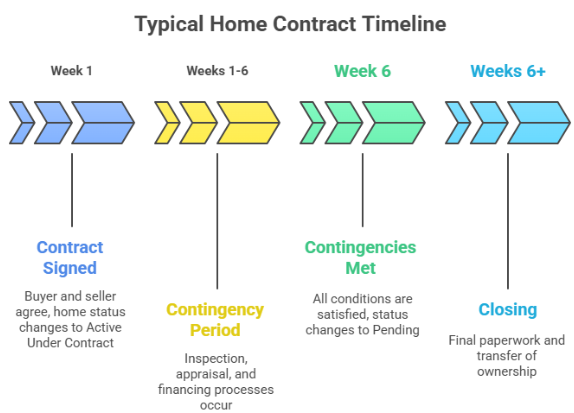
The length of time varies depending on contingencies. Most homes remain Active Under Contract for one to six weeks. Inspection, appraisal, and financing processes can influence the timeline. Delays may occur if buyers request repairs or additional negotiation is needed.
If all contingencies are quickly met, the status changes to “Pending.” If complications arise, it may remain active longer or even return to the open market.
Can You Make an Offer on an Active Under Contract Home?
Yes, buyers can still make offers on homes listed as Active Under Contract. These are typically considered backup offers, which sellers may accept to safeguard against failed deals.
While not guaranteed, submitting a backup offer ensures you’ll be next in line if the initial contract falls apart. It’s an opportunity worth considering if you’re serious about a property, especially in competitive markets where multiple buyers are vying for limited inventory.
FAQ for Buyers and Sellers
Does Active Under Contract Mean Sold?
No, it means an offer is accepted, but contingencies remain. The deal isn’t final until all conditions are satisfied.
Can Offers Be Made on Active-Under-Contract Listings?
Yes, buyers can submit backup offers, which sellers may accept in case the primary deal falls through.
Should Buyers Add More Contingencies to Protect Their Interests?
Yes, contingencies safeguard buyers, allowing them to exit without penalty if issues arise during inspections, financing, or appraisal.
How Often Do Real Estate Deals Fall Apart Once a Contract Is Signed?
Approximately 5–10% of deals collapse due to financing issues, inspection problems, or appraisal gaps.
Why do sellers accept backup offers?
Backup offers provide a safety net, ensuring sellers won’t lose valuable time if the primary deal fails.
What is a bump clause in real estate?
A bump clause allows sellers to accept a better offer if the first buyer can’t meet certain conditions within a set timeframe.
What happens if a buyer walks away from a contract?
If contingencies aren’t met, the buyer can walk away without penalty. Otherwise, earnest money may be forfeited.
Why should buyers and sellers understand these terms?
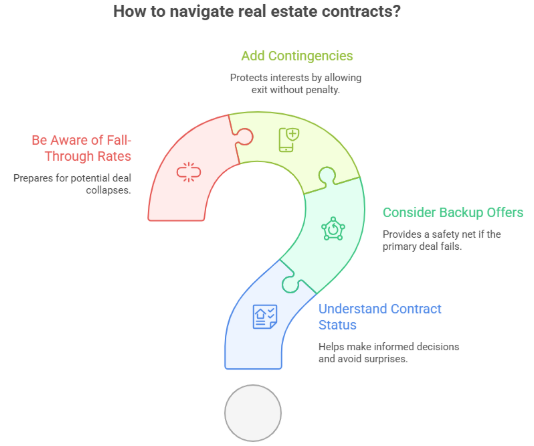
Understanding contract statuses helps both parties make smarter, informed decisions and avoid surprises in the real estate process.
Key Takeaway
“Active Under Contract” is a pivotal stage in real estate transactions, balancing opportunity and risk for both buyers and sellers. It signifies progress but leaves room for uncertainty until contingencies are cleared.
Whether you’re exploring buying options or preparing to sell, understanding these terms can help you navigate the process with confidence. If you’re interested in homes for sale in Norfolk, VA, reach out to a trusted local real estate agent to guide you through every step with expert advice.
About the Creator
Daniel Rodriguez
Daniel, a seasoned real estate expert with over a decade of experience, specializes in residential and commercial properties. Known for his market insights, negotiation skills, and client dedication, he ensures smooth transactions.
Enjoyed the story? Support the Creator.
Subscribe for free to receive all their stories in your feed.
Comments
There are no comments for this story
Be the first to respond and start the conversation.