
A German Textbook Tells Kids Chinese People Bow. It Also Prints Fake Chinese Characters.
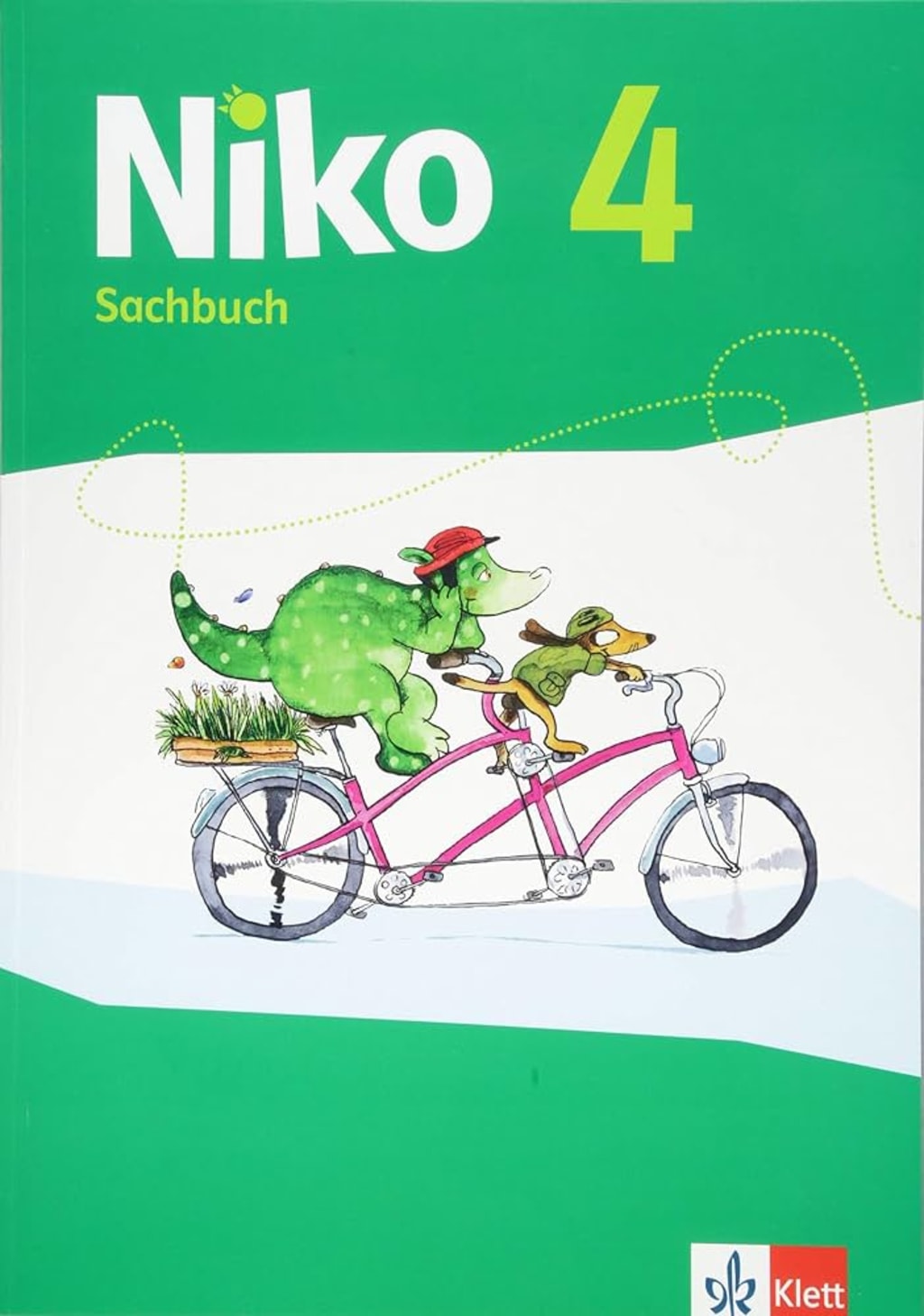
The Niko Sprachbuch is a 2015 primary school book. Its China chapter mixes bicycles, bows, and a poster full of nonsense.
A page from a German primary school German textbook has been circulating again. It comes from Klett’s Niko Sprachbuch series. The heading is “Unterwegs in China,” or “Getting Around in China.” Exercise 5 asks pupils to look at pictures, read the text, and discuss what is different in China compared with Germany.
The text says:
Many Chinese people do not have a car.
Meiying’s father also rides a bike or walks.
Every day many bicycles are on the road.
That is dangerous.
Chinese people do not shake hands when greeting.
They bow politely.
The last two lines are the problem. Bowing is common in Japanese daily etiquette. In China, people bow for apologies, thanks, curtain calls, mourning, traditional ceremonies, and performances. Daily greetings are mainly handshakes, nods, smiles, and waves. The textbook’s fictional Chinese girl is named Meiying, and her family name is Wang. Her father rides a bicycle. Her countrymen bow. That is not China.
Exercise 6 asks pupils to copy the marked words: Auto, Rad, läuft, Fahrräder, Straßenverkehr, gefährlich, Hände, verbeugen. Exercise 7 asks for related words with a or au, like fährt → fahren. The green box explains German spelling. If a word has a related word with a or au, write ä or äu, as in die Bäume → der Baum, zählen → die Zahl. If there is no related word with a or au, write e or eu, as in Verkehr and verbeugen. The grey line at the bottom points to the Niko series’ companion materials. The page is neatly edited. The errors are neatly edited too.
The book is recent
The Niko series was first published in 2014. Niko Sprachbuch 3, for third grade, first appeared on 23 February 2015. It came out in 2015. It is not a decades-old book or a dusty archive copy. It is a 2010s German textbook for German primary school children.
The publisher, Ernst Klett Verlag, describes the series as using a “kind and clever dinosaur” named Niko and his friend Hugo to make German learning reliable and fun. Niko appears at the bottom of the page. Niko also appears on the companion poster. In the lower left corner of the poster, Niko holds a skewer. If it is chicken or duck, it is a small joke about a dinosaur eating dinosaurs. Hugo sits on a satellite dish in the upper left.
The poster claims to show “life in a big Chinese city.” In the center is a “traditional Chinese temple” that looks like a paifang with bricks added. Behind it are grey high-rises. Traditional Chinese lanterns hang everywhere. The street is jammed with cars, bicycles, and cargo tricycles. On the sidewalk, people carry briefcases and talk on phones. In a park to the right of the temple, five people make the same movement, said to be tai chi. In the lower right is a street food stall. A cook stirs a wok with something like chopsticks and displays skewers. A mother and daughter pass by. The child holds a balloon printed with a woman in “traditional Chinese dress.” In the upper right is the Wang family, father, mother, and girl Meiying, sitting around a table for dinner, using bowls and chopsticks.
The poster’s accompanying text says Chinese characters can be seen “everywhere”: on a package in the foreground, on a street sign on the left, on walls, on the temple, at the food stall, and in the Wang family’s living room.
A large white sign with red characters saying “Enjoy your meal” is not a common sight in China. A black upright fu character hanging on a living room wall is not common either. The poster also contains shapes that look like Chinese characters but are not Chinese characters. For someone who reads Chinese, looking at that poster is like a biologist looking at AI-generated animal pictures: the outline is there, the organs are wrong.
The mistakes are not isolated
The textbook puts “many Chinese people do not have a car” together with “ride a bicycle or walk,” then adds “that is dangerous.” The combination sends a picture: Chinese streets are full of bicycles, traffic is dangerous, cars are scarce. That picture belongs to China of decades ago. China used to have many bicycles. That was true. Today’s Chinese urban transport is a mix of cars, electric bikes, shared bikes, subways, buses, ride-hailing, and high-speed rail. To sum it up as “many people have no car, so they ride bikes or walk” is at best extremely one-sided.
Germany is itself a bicycle country. Berlin, Münster, and Freiburg have many cyclists. Germany has bike lanes, bicycle highways, strict traffic rules, and news about cyclists getting hurt. If a German textbook said “Germans riding bicycles is dangerous,” German readers would find it absurd. The same sentence about China is printed in a primary school textbook as “cultural comparison.”
The bigger problem is cultural confusion. Bowing, kimono, tatami, and sushi are Japanese cultural symbols. Some European textbooks and travel materials lump Japan, China, South Korea, and Thailand together when discussing East Asian etiquette. Bowing, pressing palms together, and handshakes become “Asian etiquette.” That shortcut ends up as “Chinese people bow when greeting.”
Why this happens
The reasons are not complicated.
Editors relied on outdated sources. Old archives, old photos, and old travelogues freeze China in the era of the “kingdom of bicycles.”
They also confused Chinese and Japanese etiquette. The editors did not distinguish Chinese and Japanese daily customs. They put a common Japanese social gesture on a Chinese character.
No one with cultural knowledge reviewed the page. A textbook about a foreign culture should be reviewed by people who know the language, society, and customs. If no one points out that Chinese people do not bow in daily greetings, the review process has a hole.
If the source material is flawed, the errors multiply. Some online answers claim this page comes from another textbook, BAUSTEINE Sprachbuch 3. That is likely an LLM hallucination or secondhand misinformation. To verify a textbook source, check the publisher, ISBN, edition, and page number. Do not trust a screenshot.
What the publisher can do
If Klett cares about textbook quality, it can do several things.
Remove or correct lines like “Chinese people bow when greeting.”
Update the China material. Stop writing China as a single bicycle society. Show urbanization, high-speed rail, electric bikes, shared bikes, and public transport.
Hire cultural consultants. For China, Japan, and Korea content, ask people who know the cultures to review it.
Distinguish Chinese, Japanese, and Korean cultures. Bowing is not a general representative of Chinese daily etiquette.
Stop using fake Chinese characters and fake signs. If you use Chinese characters, use real, correct, contextually appropriate ones.
Redesign the companion poster. Do not replace real Chinese city life with an Orientalist collage.
A textbook can simplify. It can be fun. It cannot treat errors as fun and stereotypes as cultural difference.
In the lower left corner of the poster, Niko still holds the skewer. Hugo still sits on the satellite dish. On the publisher’s website, the textbook information is still there. A revised edition has not appeared in classrooms. A German child opens to Exercise 5 and reads: Chinese people do not shake hands when greeting. They bow politely.
About the Creator
Jin
Writer of reamstories
https://reamstories.com/jin
Enjoyed the story? Support the Creator.
Subscribe for free to receive all their stories in your feed. You could also become a paid subscriber, letting them know you appreciate their work.
Comments
There are no comments for this story
Be the first to respond and start the conversation.