
6 Ways to Find a Video's Original Source. Here's What Actually Works.
I tested six popular methods to track down a video's original source online. Some failed completely, while one method consistently delivered the best results.

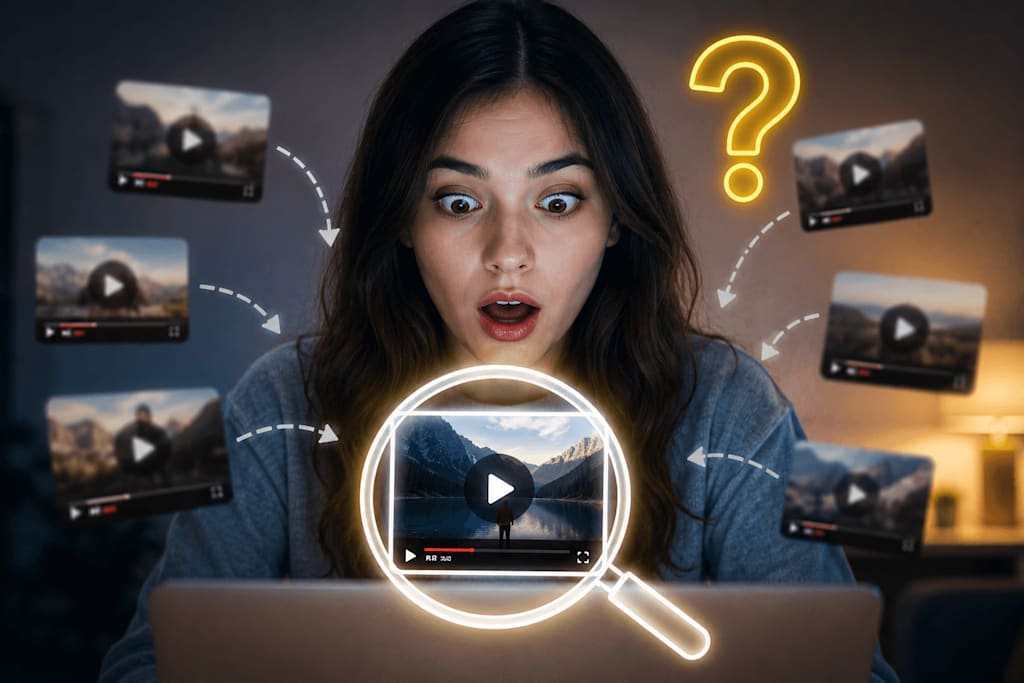
Like many people, I used to think finding the original source of a video is simple. If a video goes viral, I assumed a quick search would show who uploaded it first.
That belief changed when I came across a video that was shared across multiple social media platforms and websites. Every version looked similar, but none of them clearly showed where the video originally came from.
Curious about it, I decided to test six different methods that people often use to find a video source.
My goal was simple. I wanted to find out which methods actually work and which ones are not very useful.
Before starting, I learned a bit about reverse video search.
Reverse video search is a process that helps users find similar videos or identify where a video may have appeared online. Instead of searching with words, it uses visual information from a video. Since most search engines cannot analyze a full video directly, people usually take screenshots from important moments and search using those images. The system then compares visuals with content already available online and shows matching or similar results. This helps in finding reposts, related content, and sometimes the original source.
First, I tried searching for the video’s title.
This seemed like the easiest method. But it did not work well. The same video was uploaded under different titles on different platforms. Some titles were misleading, and some were written in other languages. Most of the results were just copies of the same video instead of the original source.
Next, I used keywords related to what was happening in the video.
This worked slightly better. It helped me find articles and discussions about the video. But it still did not clearly show who uploaded it first.
After that, I checked the comments under the video.
Sometimes people share the original source in the comments or mention the creator. I did find a few useful hints, but most comments were guesses or opinions. It was not a reliable method and took a lot of time.
Then I compared upload dates on different platforms.
I tried to find the earliest version of the video by checking timestamps. This helped me understand how the video spread online. But it was not always accurate because different platforms show dates in different ways.
After that, I used screenshots from the video.
I took images from important moments and searched using those images. This method worked much better. I started finding older versions of the video that did not appear in keyword searches. This made it clear that visual search is more powerful than text search when trying to find video sources.
Finally, I tried reverse video search tools.
While researching, I found a blog about best reverse video search tools that help track videos using visual matching. They mentioned some tools like Revideo.io. Google Lens and Bing Visual Search to find similar content online. I also explored other reverse video search methods that are used for verification work.
This was the most effective method in my test.
It helped me find older uploads and in some cases showed accounts that likely posted the video earlier than others.
After trying all six methods, one thing became clear.
Reverse video search tools gave the best results. They made it much easier to trace the video path and find older uploads that would otherwise be difficult to locate.
Final thoughts
Simple methods like checking titles, keywords, comments, and upload dates can help, but they are not always reliable.
This experiment also showed me how fast content spreads online. A single video can be copied and reuploaded many times in a short period. When that happens, the original source often gets lost.
That is why finding the true source requires the right approach and patience.
From my experience, the best way is to combine visual search with reverse video search tools instead of depending only on text based methods.
Because in most cases, the real source is not in the title, it is hidden in the visuals.
About the Creator
Jan Smith
With over 7 years of experience in the field, Jan Smith is a seasoned content writer known for his ability to craft compelling and engaging content across a variety of industries.
Enjoyed the story? Support the Creator.
Subscribe for free to receive all their stories in your feed.
Comments
There are no comments for this story
Be the first to respond and start the conversation.