
40 Complaint Letters, 5% Valid: What Schools Lose When Parents Stop Talking
The breakdown is simpler than “parents complain too much”: ordinary conversation has stopped working, and complaints are the only trace left.
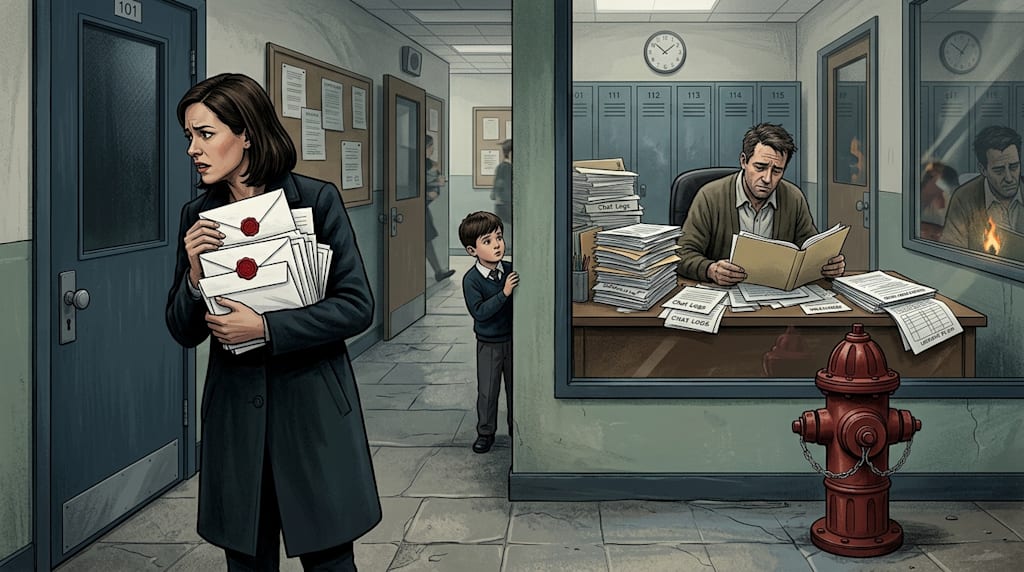
Start with the numbers: 40 complaint letters. After review, substantively valid and compliant complaints accounted for only 5%. What about the rest? A child was bumped by a classmate. Two extra pages of homework. The teacher’s voice was a little loud.
That number can easily be used to prove parents love to complain. I read it differently. Among the 95%, very few were driven by malice. Most were misunderstandings, emotion, information gaps, something that could have been cleared up in a three-minute private message and instead became a stamped letter.
Complaints are a symptom. The closed door to ordinary conversation is the cause. That door has been shut for too long.
A parent asked in the group chat, “Teacher, how are the seats arranged?” No reply for three hours. She privately messaged the homeroom teacher. It showed as read. The next day she got two words: “Unified arrangement.” She asked again: “My child sits in the last row, and his eyesight isn’t great.” This time, not even a read receipt. She thought about it for three days and wrote a complaint letter.
She wasn’t malicious. She just couldn’t find a place where she could talk properly.
She didn’t dare speak in the group chat. Questioning the teacher in front of dozens of parents forces the teacher to respond stiffly, and later her child might receive “special attention.” Private messages went unanswered because the teacher has forty messages to answer a day. Yours sank to the bottom and he didn’t see it. Going to the principal means going over the teacher’s head, and once the teacher finds out, it leaves a knot. Complaining became the only action that left a trace. It gets a number, a process, and someone has to respond.
Cheap, easy complaints are part of protecting rights. You cannot solve “too many complaints” by raising the threshold for complaining. That suppresses bottom-line issues too. A fire hydrant should not be turned on for no reason, but it must work when there is a fire. Locking the hydrant because you fear false alarms burns away more children’s sense of safety.
On the teacher’s side, one complaint means a written statement, two months of chat logs, two rounds of talks, and a meeting to review the case. By the time the process is over, that week the teacher skipped one final hard problem and only put check marks on homework without comments. That time comes out of lesson planning and out of the children.
Once a teacher has been put through this even once, the scale in his mind shifts. Strict management is risk. Keeping his head down is safety. Seek no credit, only no fault. It’s ugly, and it’s what happens. If you curse the teacher in the group chat and send letters upward three times, then expect the teacher to throw himself into your child’s case, that is not realistic. Institutional costs land on relationships, and relationship costs land on children.
If the article stopped here, it would slide toward another conclusion: parents should not complain; they should be sensible. Teachers have it hard; be more understanding. That conclusion looks gentle but is dangerous. It does not solve the problem. It tells the weaker party to shut up.
Teacher self-protection is a rational response. It is not a question of professional ethics. Schools need to handle complaints with more precision instead of asking parents to make up for a broken system with personal favors. Mediate misunderstandings first. Make the first receiver responsible for communication issues. Investigate bottom-line cases directly. Give teachers a channel to appeal and clear their names. After a complaint, issue a one-page explanation. Do not make a teacher carry the label “has been complained about” for a year. Reduce repetitive statements and non-teaching burdens so one complaint does not become three weeks of churn.
On the parents’ side, private messages are better than group chats. The same sentence, “Teacher, I’d like to ask about the seating,” said in a group chat questions the teacher in front of dozens of parents. The teacher can only respond stiffly. In a private message, two adults solve a problem. Do not write a complaint letter when emotions are at their peak. Impulse is the devil, and it is easy to do the wrong thing. But “treat the teacher as a teammate, and only then might he put in extra care for your child” must not become moral blackmail against parents. Parents want their child treated well. They do not want to build a personal relationship with the teacher. What schools need are predictable rules: what goes to the homeroom teacher, what goes to the grade level, what goes to mediation, what is directly reported; how long before a complaint gets feedback; how a teacher’s name is cleared after being complained about; how parents learn the outcome. Communication cannot depend on luck or on parents being sensible.
In several situations, do not hesitate and do not try to communicate. Report directly: physical punishment, verbal abuse, molestation, accepting gifts, and long-term failure to address bullying. These are not up for discussion, and should not be. Think of complaints as fire hydrants. The nuclear-weapon metaphor is too frightening. A hydrant should not be turned on for no reason, but it must work when there is a fire. Treat complaints as an everyday tool of pressure, and what blows up in the end may be your own child. Lock the hydrant because you fear false alarms, and what burns is more children’s sense of safety.
The core problem: normal communication is too hard, complaint handling is too crude, and support for teachers is too thin. Parents should not use complaints as an everyday weapon. Schools should not use complaints as a process for keeping things quiet. Make communication channels work. Classify complaints carefully. Make teacher name-clearing and burden reduction substantive. Then complaints return to where they belong: handling bottom-line issues, not replacing everyday communication.
Between home and school, the quieter danger is that people have forgotten how to talk properly, so complaints are all that’s left.
About the Creator
Jin
Writer of reamstories
https://reamstories.com/jin
Enjoyed the story? Support the Creator.
Subscribe for free to receive all their stories in your feed. You could also become a paid subscriber, letting them know you appreciate their work.
Comments
There are no comments for this story
Be the first to respond and start the conversation.