
The Silence We Never Notice Until It’s Too Late
“In the end, we will conserve only what we love. We will love only what we understand.” -Baba Dioum

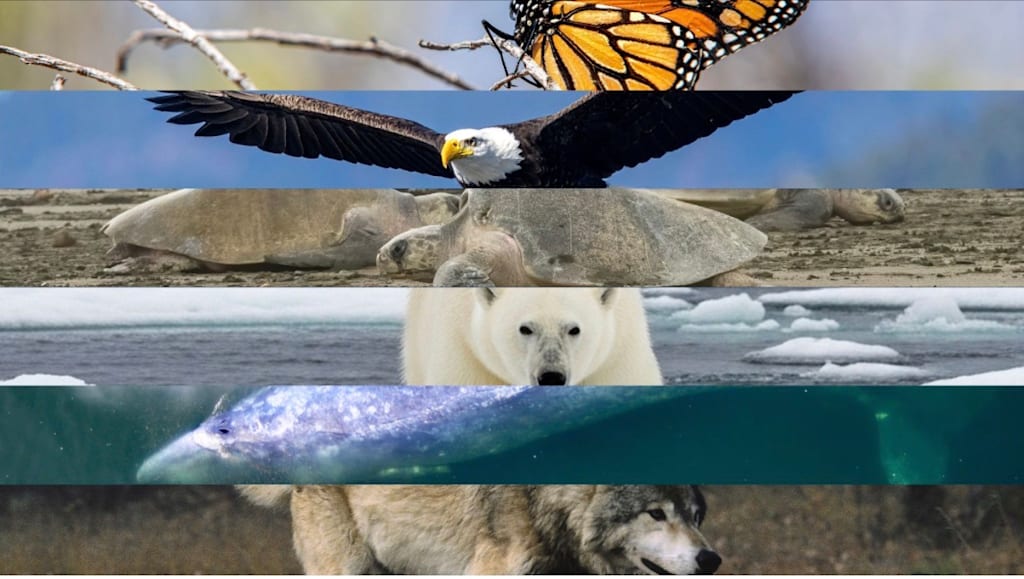
As a child, I couldn’t name every bird that visited our backyard, identify native butterflies, or tell different tree species apart. I paid little attention to conservation policy or endangered species; to me, each season brought its own unique soundtrack.
Spring featured early birdsong before the leaves appeared. Summer nights were brightened by fireflies dancing over the grass. In late summer, monarch butterflies floated gently across open fields on the breeze. Winter showed delicate deer tracks across fresh snow, reminding me that life continued beneath the sleeping landscape.
I once thought those experiences would last forever, but my view changed after I read more about nature and worked directly with animals in aquariums. Now, I know that the natural world is incredibly fragile. This isn’t due to weakness in wildlife but because every creature depends on a crucial need we often overlook: a home. A home is much more than just a place; it’s where animals feed, rest, raise their young, migrate, and survive.
This truth came to light with a recent change to the Endangered Species Act, which sparked renewed national debate on wildlife protection. The Trump administration repealed a longtime federal rule that defined what “harm” means under the law. Supporters say this change reflects Congress’s original intent by limiting the agencies’ reach, while conservationists warn it weakens important protections for endangered species, leading to ongoing federal court battles.
While legal experts, judges, and politicians argue over legal language and precedents, nature keeps to its own timeline. Birds search for nesting sites, sea turtles come ashore to lay eggs, salmon fight their way upstream, and monarch butterflies make their incredible migrations. Wildlife can’t pause these essential journeys while humans debate legal terms.
Habitat Is More Than Land
When people hear the word habitat, they often picture mere scenery, like a vast prairie, a dense forest, a calm marsh, or a colorful coral reef. However, for wildlife, habitat is not just a backdrop; it is essential for survival.
Think about what happens when habitats disappear. Imagine waking up to find your home, roads, grocery store, workplace, and local hospital missing. Even if you are physically unharmed, your ability to survive has been dramatically changed overnight. This is the harsh reality animals encounter when their habitats are lost.
Critical environments support countless organisms. A single old tree can provide a home for generations of birds. A wetland can nourish and protect hundreds of species. A healthy coral reef serves as a lively underwater city. Destroying these vital ecosystems causes effects that go far beyond the initial damage.
Researchers repeatedly point to habitat destruction as a key factor in global biodiversity loss. While threats like climate change, pollution, invasive species, disease, and overuse remain, losing the essential spaces needed at different life stages makes it much harder for species to recover.
In the end, protecting wildlife cannot happen without also protecting the places they live.
Extinction Is Usually Quiet
We often picture extinction like a scene from a movie, with a dramatic moment when the last animal takes its final breath. But in reality, it is much quieter.
Extinction does not usually happen because someone wants to wipe out a species. Instead, it results from many small, everyday actions: clearing a nesting site here, draining a wetland there, polluting a stream until fish cannot spawn, or paving over a stretch of prairie for a parking lot.
On their own, these losses do not seem serious. Together, though, they slowly unravel entire ecosystems. Food becomes limited, fewer young survive, populations shrink, and genetic diversity decreases.
Small, everyday choices gradually destroy the environments where wildlife can survive. Eventually, people are left asking the painful question: “When was the last time anyone saw one?”
Conservation Is About People, Too
Every day, natural ecosystems perform critical services free of charge. Forests are responsible for filtering our drinking water, wetlands for absorbing flood waters, productive soils for providing food, mangroves for protecting coastal communities from hurricane surges, and coral reefs for maintaining fish stocks and protecting against coastal erosion.
Wildlife conservation, far from being a "noble" waste of resources, is actually an important investment. We do not realize how much we need natural resources before they are gone, and wildlife conservation is not an alternative to meeting human needs; it is a way to fulfill them.
In the end, wildlife conservation leads to healthy ecosystems, which then lead to healthier human societies.
America’s Greatest Conservation Successes
History is replete with examples of environmental recovery, both in America and around the globe, and is full of species that have bounced back from the brink of extinction.
We can take inspiration from bald eagles that continue to soar over our country because we chose to fight, rather than retreat; because we cared enough to ensure the survival of American alligators and gray whales; and because we persevered, peregrine falcons regained their former haunts in our cities and along our shores.
It took an immense effort on the part of hundreds of different groups and thousands of individuals for these and so many other success stories to be realized.
Scientists, conservationists, Native Americans, farmers, ranchers, veterinarians, zoo and aquarium personnel, hunters, anglers, volunteer workers, legislators, and landowners - all were needed.
Conservation causes are truly none of the above; however, they will be splendid victories for all if we all care about leaving a thriving world for our children and grandchildren.
What Will Our Children Remember?
I wonder if they'll remember these things fifty years from now. My children, the next generation, will probably never know about these things. Will they remember spending summer nights chasing fireflies? Will they hear the symphony of frogs after a summer rainstorm? Will they be able to see flocks of monarch butterflies gathering to migrate, or see dolphins swimming alongside a boat? Will it all just be stories and picture shows for them?
The serene woods we traverse, the majestic rivers that sculpt the landscape, and the diverse array of creatures that call these environments home are all integral parts of the natural world. We did not create any of them at all.
We don't get to keep this planet; it is up to us to preserve it.
Hope Is Still Stronger Than Despair
While news about the environment can make us feel helpless, our past successes give us reason to believe that things will turn out well.
Communities around the world have brought rivers that no one expected to bloom back to life, rethought through wastelands that became wetlands, and even helped specific species escape extinction.
Hope is powerful, but it's not foolish optimism. It's a determination that results in action. It's when we go out and do things like plant wildflowers in our garden that attract native bees and butterflies, restore the streams in our community, donate to organizations that protect our environment, teach our kids about local wildlife, and speak up about protecting our planet.
Whether it's voting, volunteering, or just learning, it's up to us to make a difference.
Before The World Grows Quiet
The central idea is that for wildlife to survive, their habitats must be protected. All nature requires for its survival is clean rivers, fertile land, undisturbed nests, space for migration, and breeding grounds.
Regardless of the law or any changes to it, the idea that the habitats of wild animals must be preserved is an obligation. Once they are gone, it will be impossible to bring them back. This is an irreversible process, so regardless of elections or laws, votes or protests, petitions or speeches, if animals have no habitat, they will soon disappear.
Decades from now, someone will be in the woods that we can only dream of. Whether for them, that morning will begin with the music of a chorus of songbirds, the haunting howls of wolves, and the rhythmic return of sea turtles to the sand, or whether it will be silent, depends on us.
In the future, people will remember not the skylines or the markets, but a world that surrounds us, where every dawn awakens music, rivers, forests, and fields. They will remember how we lived on this planet and whether we left it a world where children know that all wild animals are worth protecting and that this world is our home.
About the Creator
Jenna Deedy
Just a New England Mando passionate about wildlife, nerd stuff & cosplay! 🐾✨🎭 Get 20% off @davidsonsteas (https://www.davidsonstea.com/) with code JENNA20-Based in Nashua, NH.
Instagram: @jennacostadeedy
Enjoyed the story? Support the Creator.
Subscribe for free to receive all their stories in your feed. You could also become a paid subscriber, letting them know you appreciate their work.
Comments
There are no comments for this story
Be the first to respond and start the conversation.