Sustainability
Why Continuous Pyrolysis Plant Is More Eco-Friendly Than Batch System
As the world grapples with mounting waste, particularly plastic, tires, and oil sludge, innovative recycling technologies are crucial in reducing environmental harm. Pyrolysis, a thermochemical process that converts waste into valuable products like fuel and carbon black, has gained attention. But not all pyrolysis systems are created equal. In this blog, we will explore why continuous pyrolysis plants are generally more eco-friendly and efficient than their batch counterparts in the recycling of plastic, tires, and oil sludge.
By Bestonpyrolysisabout a year ago in Earth
Agrivoltaics: How Solar Panels Are Revolutionizing Farming
Imagine a farm where rows of crops thrive under the gentle shade of solar panels, and the same panels generate clean electricity to power homes, businesses, and even the farm itself. Sounds futuristic, doesn’t it? Welcome to the world of agrivoltaics—the cutting-edge partnership between solar energy and agriculture.
By Kenneth Annanabout a year ago in Earth
The Long Shadow: How the Russia-Ukraine War Changed the World
The Long Shadow: How the Russia-Ukraine War Changed the World On February 24, 2022, the world awoke to a harsh new reality. Russia, under President Vladimir Putin, had launched a full-scale invasion of Ukraine. What many thought would be a swift operation turned into a long, brutal war that would have ripple effects across continents, from the cost of bread in Cairo to the energy bills in London.
By Wings of Time about a year ago in Earth
The Global Plastic Pollution Crisis: Challenges and Innovations in Tackling a Modern Plague. AI-Generated.
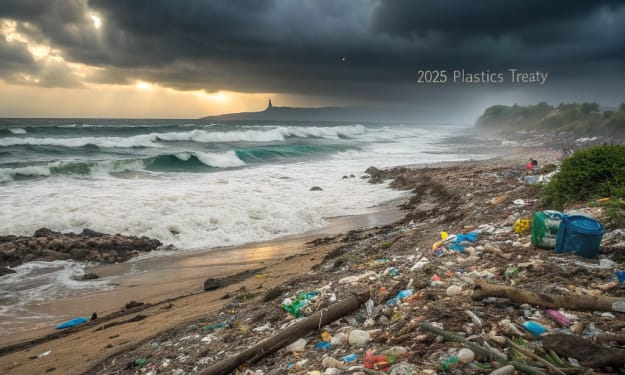
Plastic pollution has emerged as one of the most pressing environmental challenges of the 21st century, choking oceans, harming wildlife, and infiltrating human ecosystems. With over 400 million tons of plastic produced annually, the world grapples with a crisis that transcends borders, driven by single-use plastics and inadequate waste management. Yet, global efforts are rising to combat this issue through innovation, policy, and activism. This post explores five key facets of the plastic pollution crisis, highlighting its impacts, innovative solutions, and the collective push for a cleaner planet. Dive into the urgent battle against plastic waste, where science, policy, and human resolve converge to forge a sustainable future.
By Arjun. S. Gaikwadabout a year ago in Earth
🌊 Is a Mega Disaster Looming Over Pacific Nations?
🔴 A Powerful Earthquake Hits Russia – Magnitude 8.8 On July 30, 2025, the world witnessed a massive natural disaster when a magnitude 8.8 earthquake struck near the Kamchatka Peninsula in far-eastern Russia. The quake, which occurred in one of the most seismically active zones on earth—the Ring of Fire—sent tsunami alerts across the Pacific Ocean. Although the main impact was felt in Russia, the tremors and potential tsunami waves created panic in Japan, South Korea, the U.S. West Coast, Hawaii, Canada, China, and even parts of Latin America. Authorities in Japan quickly evacuated over 2 million people from coastal regions, fearing a disaster similar to the 2011 Fukushima earthquake and tsunami, which had caused a nuclear crisis. While tsunami waves were recorded in several regions, ranging from 4 to 8 feet, the worst-case scenario was avoided thanks to advanced early warning systems and timely evacuations. However, the quake’s intensity and reach serve as a reminder that the Pacific Basin remains a fragile zone where the earth's crust constantly shifts. 🐟 The Mysterious Oarfish Sightings — Harbingers of Doom? Soon after the Russian quake, social media lit up with videos and news reports of giant oarfish being seen near the shores of Japan, the Philippines, and even Mexico. These rare deep-sea creatures, which can grow up to 10 meters in length, have long been associated with ancient Japanese legends as “messengers of the sea god.” In February 2025, an oarfish was spotted near Baja California, Mexico—just months before the Russian earthquake. Similarly, oarfish were seen in early 2011, just before the devastating Japan earthquake and tsunami in March of that year. This has fueled public speculation that these fish can sense deep-sea seismic activity and rise to the surface in response. But what does science say? According to marine biologists and geological experts, there is no proven connection between oarfish behavior and earthquake prediction. Most scientists agree that these fish may rise to the surface due to sickness, changing ocean temperatures, or pollution—not to warn humanity of a coming disaster. Yet, the timing of these appearances is hard to ignore for many people around the world, especially in earthquake-prone areas. 📖 A Prophecy from 1999 – Was it Fulfilled? The story gets even more chilling when we recall a prophetic vision by a Japanese manga artist, Ryo Tatsuki, who published her predictions in 1999. One of her most alarming prophecies said that “on July 5, 2025, a mega disaster will hit Japan, boiling the sea.” When July 5 passed without any major event, many dismissed the prophecy. But just a few weeks later, on July 30, the massive earthquake struck Russia, shaking the Pacific basin and triggering tsunami alerts across Japan. Many are now linking her vision to this recent disaster, suggesting she may have foreseen the event two decades in advance. It’s not the first time that Tatsuki’s predictions have caught attention. Some of her past forecasts—like economic crises and natural disasters—have reportedly aligned with real-world events. However, scientific communities remain cautious and do not support the use of prophecies in disaster preparedness. Still, to ordinary people, such coincidences raise eyebrows and add to the fear surrounding natural events. 🐋 Whales Surfacing in Japan – Another Sign? Adding to the mystery, residents of coastal Japan have reported whales and other marine life appearing unusually close to shore. In Japanese culture, such unusual behavior is often interpreted as a natural signal of unrest under the sea. Some researchers have proposed that low-frequency vibrations caused by tectonic stress may disturb whales and other marine animals, forcing them to move or beach themselves. While the scientific link remains under investigation, historical data does show whale beachings have occurred days or weeks before major seismic events in some cases.
By Ikram Ullahabout a year ago in Earth
"I Am Green"
Not just in color, but in soul, in spirit, in the quiet rhythm that moves with the wind. I am the fresh breath of morning dew clinging to the grass. I am the shade that rests upon weary travelers when the sun burns too bright. I am the promise of renewal, the gentle reminder that life can begin again—always.
By Hanif Ullah about a year ago in Earth
Upper Mustang Trek
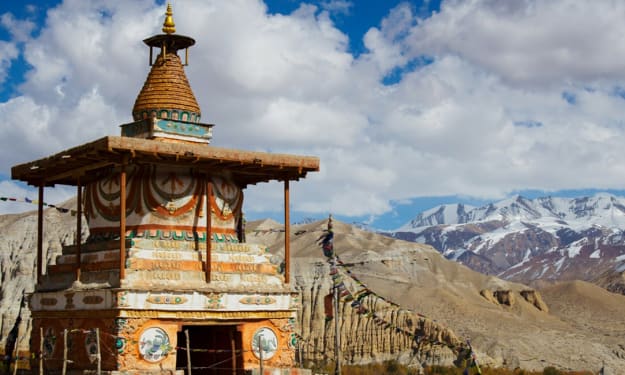
Upper Mustang Trek Upper Mustang is a unique part of Nepal that feels like stepping into another world. It is hidden behind the tall mountains of Annapurna and Dhaulagiri. It was once a restricted area but it still holds strong Tibetan traditions, old monasteries, and a dry desert like landscape that is very different from the rest of the country.
By Nepal Hiking Trekabout a year ago in Earth
What You Should Know About California Proposition 65 and Product Compliance
California is known not only for its innovation and environmental leadership but also for its strict safety regulations. One of the most impactful and far-reaching among them is California Proposition 65—officially titled the Safe Drinking Water and Toxic Enforcement Act of 1986.
By Mahgol Nikpayamabout a year ago in Earth
Earthquake and Tsunami Warnings. Understanding the Science and Saving Lives.
What is an Earthquake? An earthquake is a sudden shaking of the ground caused by the movement of tectonic plates beneath the Earth’s surface. These movements release energy that travels in waves, shaking the land and everything on it. Earthquakes can cause buildings to collapse, roads to crack, and landslides to occur. In coastal areas, earthquakes under the ocean can also trigger tsunamis—massive sea waves that rush toward the shore with great force.
By Tariq jamilabout a year ago in Earth
Vanishing River Eggs and Deadly Floods: Pakistan’s frightening Climate Crisis. AI-Generated.
Asif Mohmand At least 279 people died and more then 600 injured in early predicted harsh monsoon in Pakistan, devastating monsoon rains have wreaked havoc across Pakistan. The country has witnessed intense rains, storms and flash floods since June 26 till the end of July, from the capital Islamabad to remote villages, in various viral videos across the country, cars submerged in floodwaters, tourists in the northern areas, children and women sinking have shocked the nation. The Pakistan Meteorological Department PMD admitted that extreme weather events increasing in last 15 years, and the experts link this surge in extreme weather events to climate change, while some experts believe that Pakistan’s floods have a different tale. Why do floods occur? Who is responsible for the disappearance of river eggs? Why is Pakistan so vulnerable to flooding? Were the floods that predate human civilization purely destructive, or can floods also bringing benefits.
By Asif Mohmandabout a year ago in Earth
The Augmented Reality Renaissance: Transforming How We Live, Work, and Play. AI-Generated.
Augmented reality (AR), the technology that overlays digital information onto the physical world, is sparking a renaissance in how we interact with our environment. By blending virtual and real worlds through devices like AR glasses and smartphones, this innovation is revolutionizing education, work, healthcare, and entertainment. With the global AR market projected to reach $300 billion by 2030, this transformative technology is not just enhancing reality—it’s redefining it, unlocking new dimensions of human potential.
By Arjun. S. Gaikwadabout a year ago in Earth
South Korea’s Wellness Revolution: Blending Tradition and Modern Health Practices. AI-Generated.
South Korea’s wellness revolution is redefining health and self-care, merging centuries-old traditions with cutting-edge innovations to create a global model for holistic living. Renowned for its K-beauty industry, traditional medicine, and tech-driven health solutions, South Korea has transformed wellness into a cultural cornerstone that reflects its heritage and forward-thinking ethos. From herbal remedies to AI-powered fitness, this movement promotes balance, beauty, and vitality. This post explores five key facets of South Korea’s wellness culture, highlighting its roots, global influence, and future trends. Dive into the vibrant world of South Korean wellness, where tradition and technology converge in a powerful pursuit of health.
By Arjun. S. Gaikwadabout a year ago in Earth