Sustainability
Copenhagen's Heat-and-Harbour Climate Strategy
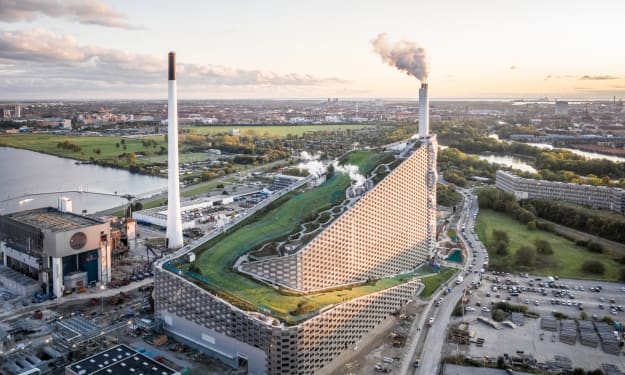
by Futoshi Tachino In a city built on islands and inlets, the wind off the Øresund smells faintly of salt and cycling grease. Copenhagen’s answer to climate change is not a single icon so much as a choreography: heat the homes with shared pipes, cool the business core with seawater, turn rainstorms into parks, and turn trash into watts—then capture the carbon on the way out. The system hums in buried mains and pump rooms, but its logic is legible on the street.
By Futoshi Tachinoabout a year ago in Earth
Singapore's Water-Linked Climate Strategy
by Futoshi Tachino In equatorial Singapore, the late-afternoon thunderheads pile up like mountains, then dissolve into warm rain that runs from green roofs to canals and finally to the sea. The city’s response to climate change is not a single showpiece but an interlocking loop: cool the homes, power the water, harden the shores, and close the carbon cycle. The hum here is chilled water in buried pipes, biogas in co-digesters, and solar panels riding the reservoir’s skin. The strategy is small-state pragmatism at system scale.
By Futoshi Tachinoabout a year ago in Earth
Pakistan's Vast Oil Reserves: oil Locations and Cost Breakdown and affects on India
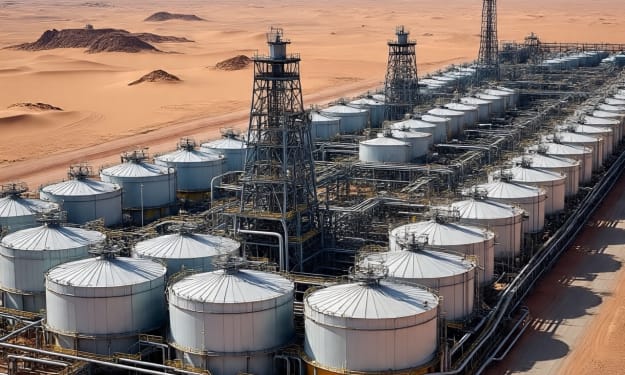
US President Donald Trump says that a deal has been reached between the US and Pakistan to extract Pakistan’s vast oil reserves. In a message released on his social media website ‘Truth Social’ last week, the US president said that Washington has reached an agreement with Islamabad, under which the two countries will work together to convert Pakistan’s vast oil reserves into recoverable reserves. He said that currently, “we are in the process of selecting the oil company that will lead this partnership.” He added that “who knows, maybe one day they will be selling oil to India.” According to data released by Pakistan Petroleum Information Services, domestic oil production fell by 11 percent in the first nine months of the current fiscal year. According to the data, production in Pakistan’s major oil and gas fields decreased during this period. In these fields, apart from the major fields like Kadapur Field, Sui Field, Uch Field, Mari Field, other fields also recorded a decrease. The local production of major oil and gas exploration and production companies operating in Pakistan also recorded a decrease. In such a situation, after this statement was made by the US President, many users were seen asking the question, where are the reserves that are being talked about? Also, in which areas oil exploration was done in Pakistan and can the announcement of US partnership in this sector affect China's investment in Pakistan? many oil reserves does Pakistan have? Various companies are working in the oil exploration sector in Pakistan, but no significant increase has been seen in the exploration and production of oil in the country in the last few decades. Pakistan's Petroleum Minister Ali Pervez Malik says that international studies have proven that Pakistan has vast reserves of oil and gas. On the other hand, according to data released by the Pakistan Petroleum Information Services, the country's oil reserves were up to 23.8 million barrels as of December 2024. Muhammad Wasi Khan, an energy expert who has held senior positions in several oil companies, said that the oil produced locally in Pakistan meets only 10 to 15 percent of the country's needs, while the rest 80 to 85 percent is imported from abroad. He said that according to an assessment by the US Energy Information Administration, Pakistan has petroleum reserves of up to nine billion barrels, but according to him, they cannot be considered proven reserves until they become commercially viable. Muhammad Wasi said that past efforts to explore oil in Pakistan have not been very successful due to lack of investment in this work and the required technology. He said that under the announcement made by the US President, it appears that the US government will ask a major oil company to work to extract oil reserves in Pakistan. Where is oil exploration taking place in Pakistan? Pakistan’s Petroleum Minister Ali Pervez Malik said that Pakistan has invited bids for auction in different blocks for offshore oil and gas exploration. Speaking to local media, he said that auctions will be held for drilling wells in two blocks for offshore oil and gas exploration. The Petroleum Minister said that tenders have been issued for the auction of 26 blocks in the Indus Basin and 14 blocks in the Makran Basin for offshore oil and gas exploration. He said that domestic and international companies will submit expressions of interest or expressions of interest by October this year. Ali Pervez Malik said that companies from the United States, Turkey, China and Kuwait want to come and work in Pakistan. The Petroleum Minister said that 33 blocks should be auctioned on those offshore and a Turkish company wants to invest in Pakistan. Pakistan has not yet achieved significant success in offshore oil and gas exploration, and the country's production depends on these reserves found on the surface. Currently, oil exploration is taking place in all four provinces of the country. According to experts in this field, the most work in this regard is being done in Sindh province. According to the Pakistan Credit Rating Agency's report on oil and gas exploration and production in Pakistan, the total number of oil and gas wells in Sindh is 247, in Punjab this number is 33, while in Khyber Pakhtunkhwa 15 and in Balochistan four wells are being worked on. According to the report, work has been completed on many of these wells, that is, oil and gas have been extracted and are now dry, while work is underway on others. According to Dr. Aafia, an energy expert at the Pakistan Institute of Development Economics, technically, nothing special is being done in Balochistan and Khyber Pakhtunkhwa at the moment, the main reason being security concerns, tax and revenue structures, etc. She said that the provinces can be asked to fulfill their security responsibilities by giving them a higher share in revenue sharing. In Pakistan, the Oil and Gas Development Company discovered large reserves of gas and oil in Betni FR area of Lakki Marwat district of Khyber Pakhtunkhwa in September 2021 and the Mari Petroleum Company in June 2022 in Tehsil Shiva in Bannu West Block located in North Waziristan, which was the last major discovery in this regard. Parliamentary Secretary of the Petroleum Division Mian Khan Bugti said that a lot of work is currently being done in Sindh, while there are oil reserves in Balochistan and Khyber Pakhtunkhwa, which the government is working to extract. Regarding US President Trump's announcement, he said that it is too early to say anything about it, but he described the statement as a positive development for the country's oil sector. any American company worked on devellrese in Pakistan in the past?
By Real contentabout a year ago in Earth
Market Viability of Biochar Carbon Removal Projects
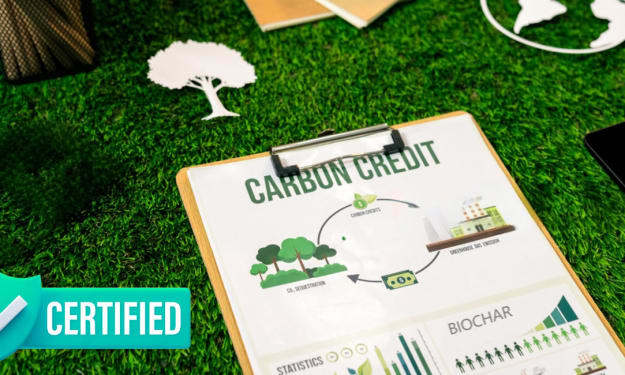
As the global economy intensifies its pursuit of net-zero emissions, biochar-based carbon removal projects are emerging as pivotal assets in the climate mitigation portfolio. Derived from thermochemical conversion of biomass in an oxygen-limited environment, biochar not only functions as a stable carbon sink but also serves as a co-beneficial soil amendment. The commercialization of this pathway is accelerating, supported by advancements in pyrolysis plant infrastructure and the monetization of carbon removal credits.
By Wayne Shenabout a year ago in Earth
Getting Started With Agrivoltaics: A Beginner-Friendly Guide
If you’ve ever dreamed of a future where farming and clean energy grow side by side, you’re in the right place. Welcome to agrivoltaics, the exciting new frontier that blends agriculture with solar power to create farms that feed us while generating renewable energy.
By Kenneth Annanabout a year ago in Earth
The Rise of Giant Rats: What’s Lurking in Britain's Backyards?
When a pest control technician recently stepped into a quiet house in Normanby, North Yorkshire, he wasn’t prepared for what he found. Inside a wall cavity, hidden from view, was a rat unlike any local resident had ever seen — measuring a staggering 22 inches from nose to tail, roughly the size of a small cat. For the family living there, it was a shock. For the rest of Britain, it’s a warning sign.
By Kamran Zebabout a year ago in Earth
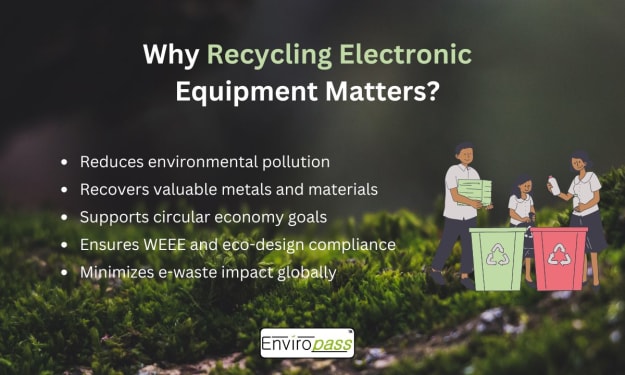
Recycling Electronic Equipment
In today’s world, almost everyone uses electronic devices—whether it's a smartphone, laptop, home appliance, or wearable tech. But what happens when those devices break, become outdated, or are simply no longer wanted? Unfortunately, many of them end up in landfills, contributing to one of the fastest-growing waste streams globally: electronic waste, or e-waste.
By Mahgol Nikpayamabout a year ago in Earth
Understanding the Role of Rare Earths in Advancing the Green Energy Transition with Stanislav Kondrashov
Nowadays, as Stanislav Kondrashov, founder of TELF AG, often points out, rare earths are directly contributing to the technological and energy development of our civilization. They are a group of 17 chemical elements found in the periodic table.
By Stanislav Kondrashovabout a year ago in Earth